
Recently, the 38th Annual Meeting of the International Society of Gynecologic Endoscopy (ISGE) was held in Algiers, Algeria, bringing together experts from around the world in the field of minimally invasive gynecological medicine to explore cutting-edge technologies and women's health protection. The Obstetrics and Gynecology Network continues to monitor international academic trends, focusing on topics such as cervical cancer care and minimally invasive innovation. It reports on the latest achievements of Chinese experts on site, conveys China's voice, and supports in-depth exchange and collaborative development in the field of gynecology between China and abroad.
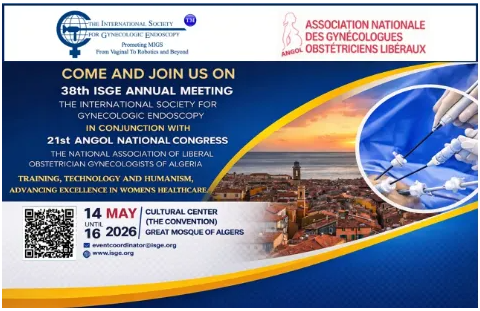
Professor Zi Dan from Guizhou Provincial People's Hospital was invited to attend this conference, and the Obstetrics and Gynecology Network specially invited Professor Zi Dan for an exclusive interview.
Doctor of Medicine, Professor/Chief Physician, PhD supervisor Director of the Guizhou Provincial Gynecology Quality Control Center, Director of the Obstetrics and Gynecology Teaching and Research Office at Guizhou Provincial People's Hospital, Director of the Standardized Training Base for Resident Physicians, and Director of Gynecology Member of the American Association of Gynecological Laparoscopists (AAGL). Executive member of the 3rd Committee of the Colposcopy and Cervical Pathology Branch (CSCCP) of the Chinese Association of Eugenics Member of the 13th Committee of the Obstetrics and Gynecology Branch of the Chinese Medical Association Member of the 6th Committee of the Gynecologic Oncology Branch of the Chinese Medical Association Member of the Second Committee of the Tumor Prevention and Control Professional Committee of the Chinese Preventive Medicine Association Member of the 4th Committee of the Obstetricians and Gynecologists Branch of the Chinese Medical Doctor Association Executive Committee Member of the World Chinese Association of Obstetricians and Gynecologists Chairman of the Gynecologic Oncology Branch of the Guizhou Medical Association Deputy Director of the Obstetrics and Gynecology Branch of the Guizhou Medical Association He has participated multiple times in domestic and international academic conferences and conferences, led and completed 13 National Natural Science Foundation and provincial research projects, and published nearly 60 academic papers including SCI in domestic and international academic journals. Specializes in the application of Da Vinci robotic single-port laparoscopic and traditional artificial hysteroscopy in benign and malignant gynecological diseases. Vigorously promoting the latest minimally invasive technologies, successfully holding multiple gynecological minimally invasive conferences and training courses on transumbilical and transvaginal single-port laparoscopic procedures Obstetrics and Gynecology Network: You have been deeply involved in the international session on minimally invasive treatment of gynecological benign diseases at the 38th ISGE Annual Conference. What outstanding value did this forum bring in terms of academic exchange and discipline leadership? What trends are emerging in China's international influence in the fields of minimally invasive and minimally invasive gynecological medicine? At this ISGE conference, I was honored to serve alongside ISGE Chair Professor Anneli Linnamägi as the chair of the Gynecological Benign Diseases sub-forum. The academic value of this forum goes far beyond technical exchange; it is a thoughtful innovation that breaks disciplinary barriers and focuses on patients' long-term well-being, establishing a "full lifecycle" health perspective: the forum deeply integrates minimally invasive gynecological techniques with reproductive surrogacy and fertility protection. It delves into the pros and cons of medication or surgery for infertility combined with adenomyosis, focuses on the long-term impact of endometriosis on fertility outcomes, and advocates for full-cycle management from initial intervention to postpartum follow-up. This "integrated obstetrics, gynecology, and reproductive integration" perspective elevates the treatment goal from simply "treating diseases" to safeguarding women's overall health from puberty to perimenopause. Focusing on "fertility protection" and responding to urgent clinical needs: The session's topics precisely connected young patients with "organ preservation and fertility preservation," perfectly aligning with China's active efforts to build a fertility-friendly society. The conference shared solutions for uterine fibroid care in unmarried women and minimally invasive treatment of complex endometrioses, sending a clear message of "care first," perfectly aligning with the global trend of humanized diagnosis and treatment shifting from "curative treatment" to balancing "quality of life and fertility hope." Regarding the trend of China's influence, during the meeting, as U.S. President Trump visited China for exchanges and I heard that Russian President Putin is about to visit, both gave me more to think about. China's all-around rise, including healthcare, has gradually shifted from learning from others to technology export, and now to leading globally, demonstrating our "hard power" and "soft responsibility" China's international influence in the field of minimally invasive gynecological treatments, especially with Haifu technology, single-port laparoscopy, and transvaginal laparoscopy, has gradually evolved from mere follow-up learning to a leading trend combining original technology, standard setting, and global empowerment: Technology Leadership and Concept Output: China is not only a practitioner of minimally invasive technology but also a proposer of new concepts. At the conference, Professor Wang Jianliu led the establishment of the global "Cancer Fertility Protection Alliance (ATFP)" and systematically introduced his pioneering endometrial cancer conservation "4R" concept and the "One Antibody, Three Reductions" plan (complete remission rate increased to about 90%), marking that China's approach is becoming an international model. Global Empowerment of Original Equipment: China's original focused ultrasound ablation technology (Haifudao ®) has been applied in over 400 medical institutions across 37 countries and regions, treating over 360,000 cases cumulatively. Through the global collaborative service center, Chinese experts can remotely guide surgeries in real time, achieving "Chinese technology, global sharing." At this ISGE Gynecological Benign Disease Sub-Conference, Professor Lubomir Mikulasek from the Czech Republic shared drug treatment for infertility combined with adenomyosis, and in surgical management, he specifically mentioned the efficacy and experience of using China's original Haifudao for adenomyosis. Overall, this forum not only showcased the hardcore progress of global micro-non-invasive technology in being "more precise and safer," but also witnessed China's leap from technological follower to global leadership. This influence lies not only in the broad coverage of original devices but also in the "conservation first" humanistic philosophy led by Chinese experts, which is reshaping the value orientation of global gynecological diagnosis and treatment. Obstetrics and Gynecology Network: At this conference, Czech experts shared their experience with China's original Haifudao in treating adenomyosis. How do you evaluate the performance of China's minimally invasive technology on the international stage? What insights does this bring to the global diagnosis and treatment of benign gynecological diseases? The performance of China's minimally invasive technology on the international stage can be summarized in three stages: Phase One: Original Technology and Standard Output to Establish a Foothold Unlike traditional surgery, Haifudao uses high-intensity focused ultrasound to precisely ablate internal lesions from outside the body, achieving no surgery, no bleeding, and uterine preservation. This concept of "surgery," originating from China, was not widely accepted at first. But now, this technology has been endorsed by authoritative authorities: Inclusion in top-level guidelines: In 2025, focused ultrasound ablation technology will be officially included in the global guidelines of the International Federation of Obstetrics and Gynecology (FIGO). In January 2026, the top international journal Nature reported the pioneering achievements of the Chongqing Haifu team in the field of high-intensity focused ultrasound. For 37 years, Professor Wang Zhibiao has embraced the patriotic belief that "only original innovation can uphold the backbone of Chinese technology," focusing on ultrasound as a "game-changing and revolutionary therapeutic technology," achieving breakthroughs in basic research, technology development, equipment development, clinical application, and standard setting from zero to one globally. Stage Two: Clinical value resonates globally, becoming one of the mainstream choices The sharing by Czech experts itself shows that Chinese technology is being actively researched and validated by international peers. The clinical value behind it is key: it delivers precise efficacy, protects fertility, treats adenomyosis, ablates lesions, alleviates dysmenorrhea, has a one-year postoperative recurrence rate of only 8%, far below the 60% of traditional surgery, and more importantly, does not damage the uterine muscle layer. Among patients with infertility combined with adenomyosis, compared to adenomyosis lesion resection and radiofrequency ablation, the postoperative pregnancy rate reached 53.4%, the best outcome among the three surgeries, with no cases of uterine rupture, providing the safest and most effective option for patients with fertility needs. Phase Three: Global Empowerment to Build China's Medical Calling Card China is not only exporting equipment but also building a global service and training network: Leading scale: Haifu Technology's products currently cover benign and malignant tumors, common gynecological diseases, rehabilitation and health care, ENT and other fields, with more than thirty models. It has obtained market access in more than 40 countries and regions, including China's NMPA and EU CE. By the end of 2025, its equipment will be exported to 36 countries and regions including the UK, Germany, and Saudi Arabia, with cumulative treatment of over 350,000 benign and malignant tumor patients. A single center like Suining Central Hospital has not only treated over 12,000 cases but also trained doctors from 48 countries. Remote guidance: Through public welfare initiatives such as "Global Multi-Center Remote Collaborative Surgery," Chinese experts can provide real-time guidance for global surgeries, achieving "Chinese technology, global synchronized sharing." ▶ Insights for the diagnosis and treatment of benign gynecological diseases worldwide This technology has brought deeper insights to the global medical community: Redefining "Cure": From Organ Removal to Preserving Function. Haifudao has shown the medical community that for benign diseases like uterine fibroids and adenomyosis, "curing" does not mean "removing it." Preserving the uterus, preserving reproductive function, and improving quality of life can fully become the core of "cure." Better treatment options require technology to be inclusive. Professor Pan Xiangbin once said: "Surgery that only a few people can perform is not a good surgery." Haifudao has used mobile treatment vehicles to reach remote areas, making advanced technology no longer the "privilege" of a few top hospitals, which is especially valuable given the current global medical resource disparity. A new paradigm of Sino-foreign cooperation: from one-way output to two-way verification. Czech experts sharing their experience in applying Chinese technology marks a new stage of Sino-foreign cooperation—foreign scholars are no longer just learners, but validators and co-developers, whose real-world data will further enrich the global evidence-based medical evidence for this technology. In summary, Chinese minimally invasive technology represented by Haifudao is continuously gaining international recognition through its trinity of "originality, clinical value, and global service." This is not only the successful overseas expansion of Chinese medical devices, but also a global transmission of the medical philosophy of "treating patients with less harm." At this ISGE conference, I personally witnessed and participated in the founding of the Alliance for Cancer Fertility Protection (ATFP), a watershed event in the field of reproductive oncology. It is not just an academic organization, but more like a horn sounding a horn, awakening the global medical community's attention to the "complete lives" of young cancer patients. The profound significance of ATFP: a global consensus from "Survive" to "Live Well." For a long time, the goal of tumor treatment has often been a "cure," but the cost may be that young patients lose the chance to become parents forever. The establishment of the ATFP was precisely to break this dilemma. Driving a fundamental shift in diagnostic and treatment philosophy: The core of ATFP is to drive the global paradigm of gynecologic oncology diagnosis and treatment from "tumor-centered" to "patient-centered." It is dedicated to consensus among the medical community: successful cancer treatment not only extends life but also safeguards patients' fertility and long-term quality of life. "China Solutions" Become a Global Engine: The Chinese team played a key leading role in the creation of ATFP. The alliance chair Professor Wang Jianliu's team pioneered the "4R" concept for endometrial cancer (reversing tumors, preserving organs, reconstructing function, achieving fertility) and the innovative "one antibody, three reductions" plan, which have raised the complete remission rate of care therapy to about 90%, successfully extending to breast cancer, hematologic malignancies, and other fields. This enables China's advanced experience to be systematically transformed into globally shared norms. Addressing urgent practical needs: In recent years, the survival pressure of environmental pollution and economic decline during follow-up visits has led to an increasing number of young patients with multiple malignant tumors. The data is harsh: 66% of young patients worry about impaired fertility, but ultimately only 4% receive effective intervention. ATFP will bring together top experts from more than 20 countries to form a powerful synergy, aiming to bridge this gap and transform fertility protection from a privilege for a few into a universal, accessible right. The Road Ahead: Deepening international cooperation and advancing scientific research implementation ATFP has already mapped out a clear action pathway, and China should continue to cultivate these directions in the future: letting technology "go global" and "sink down." On one hand, we should rely on the ATFP training system to systematically export Chinese conservation technologies and concepts to the world; On the other hand, these advanced technologies also need to be standardized through training domestically and implemented at grassroots hospitals, allowing more young patients to benefit right at home. Let data speak for itself, leading international standard setting: actively participate in ATFP-initiated international multicenter clinical studies, using high-quality evidence-based medical evidence to incorporate China's diagnostic and treatment experience and standards into international guidelines. This fundamentally establishes our leading position in this field. Breaking down disciplinary barriers and building a full-cycle management system: fertility protection is a systematic project that requires deepening multidisciplinary collaboration (MDT) in gynecologic oncology, reproductives, endocrinology, psychology, and more. The future clinical model should integrate full-process closed-loop services from the moment a patient is diagnosed, including tumor treatment, fertility assessment and protection, psychological support, and even post-rehabilitation assisted reproduction. From pursuing the length of life to safeguarding its integrity, this is one of the most compassionate advances in modern medicine. The establishment of ATFP has made the hope of fertility for young cancer patients worldwide no longer an unattainable dream. Professor Zi Dan systematically reviewed China's leapfrog development in the field of minimally invasive gynecological medicine, from learning technology to global leadership, and profoundly revealed the trend of humanized diagnosis and treatment centered on "fertility protection." From international certification and remote empowerment of original technologies like Haifudao ®, to the establishment of the Cancer Fertility Protection Alliance (ATFP) and the global export of China's "4R" concept, China's strength has earned international recognition through solid clinical data and innovative equipment, promoting global diagnosis and treatment of gynecological benign diseases from "organ removal as the cure" to "full life-cycle health protection."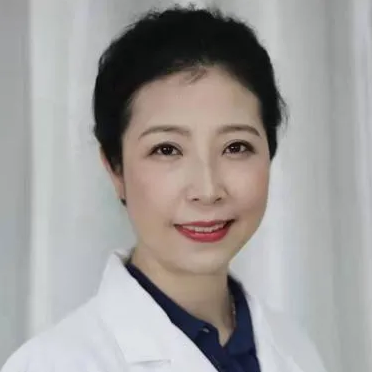
Editor:lucy