
On May 12, 2026, a major health policy initiative published online in The Lancet announced that after an unprecedented and rigorous multi-step global consensus process, "Polycystic Ovarian Syndrome (PCOS)", which affects more than 170 million women worldwide, will be officially renamed "Polyendocrine Ovarian Syndrome (PMOS)" Metabolic Ovarian Syndrome)” 。
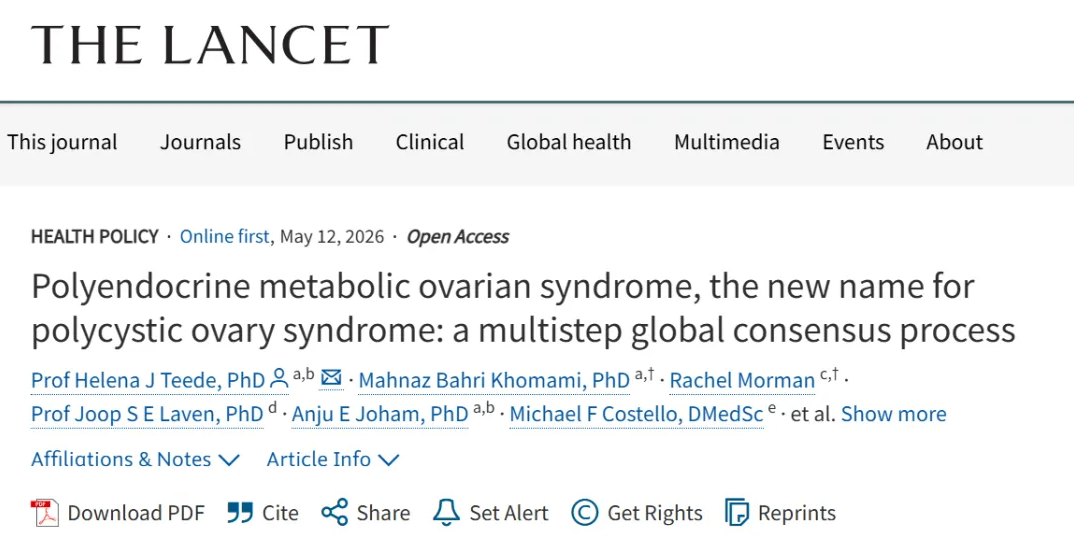
The study explicitly states that the name "PCOS" is inaccurate, suggesting the presence of pathological cysts in the ovaries, obscuring the disease's diverse endocrine and metabolic features, leading to delayed diagnosis, fragmented care and stigma, and hindering the development of research and policy frameworks.
This historic name change was spearheaded by Monash University in Australia, bringing together 56 leading academic, clinical and patient organisations from around the world, and was funded by the Australian National Health and Medical Research Council. The entire consensus process follows the James Lind Alliance's process, using a modified Delphi survey method and nominal group technical workshops to ensure that the voices of multidisciplinary medical professionals and patients from different parts of the world are represented. For many years, PCOS was diagnosed on the basis of at least two of the following in adults: oligoovulation/anovulation, clinical or biochemical hyperandrogenism, polycystic ovaries on ultrasound, or elevated anti-Millerian hormone (AMH) – but the name "polycystic ovaries" remained misleading, although the complexity of the disease was clarified. Although follicular arrest is common, the disease does not actually increase the incidence of abnormal ovarian cysts. This misrepresentation significantly contributes to delayed diagnosis – up to 70% of patients remain undiagnosed – and leads to low patient satisfaction. Table : Iterative development process of naming principles, naming schemes, key terms, combination names, and acronyms The naming principles cover support for clinical care, research and patient benefits, scientific and medical accuracy, clarity and ease of communication, avoidance of stigma, cultural and linguistic adaptability, and implementation feasibility. In terms of naming schemes, the preferred option was to adopt a new, symptom-based name (86% of patients and 71% of medical professionals voted for it), followed by a generic name (such as "diabetes" or "asthma"), and finally to keep the PCOS acronym. After an initial screening of the Delphi survey, Workshop A further revealed terminology-specific preferences. The terms "endocrine" and "metabolic" are strongly supported, but concerns about reproductive-related terms are very consistent. The Working Group recognizes that the use of words directly linked to birth in some cultures or parts of the world can lead to social stigma and harm. Therefore, in subsequent votes, the word "ovarian" was given priority over "ovarian" or "ovulating". After a series of iterative screenings, the final voting name combination was determined to include "polyendocrine", "metabolic" and "ovarian". Eventually, the new name of the disease adopted by this consensus is polyendocrine metabolic ovary syndrome (PMOS). The successful implementation of this global change will need to go through eight stages, including publishing and academic communication; co-design of multilingual patient-clinician resources; Global communication and engagement; Integration into electronic health records; engage with research funders and journal editors on policy research alignment; Formal engagement with international organizations such as the World Health Organization (WHO) to promote inclusion in the ICD disease classification system; a three-year transition period and future improvement; and is expected to be formally integrated into the guidelines when the international guidelines are updated in 2028. Researchers and clinicians point out that although there is no immediate announcement of ICD code changes in 2026, there will be a three-year transition and evaluation period for the global implementation of the term PMOS. Researchers and clinicians say the name change is expected to enhance awareness of the disease, reduce barriers to diagnosis, improve the quality of care and patient experience, and facilitate more research on its metabolic and systemic system effects. The diagnostic framework still continues to use oligoovulation/anovulation and hyperandrogenemia, plus polycystic ovaries or elevated AMH, while adolescents only require the first two criteria to reduce overdiagnosis. PMOS is considered a complex condition due to insulin, androgen, neuroendocrine, and ovarian hormone disorders, with metabolic effects involving impaired glucose tolerance, metabolic-related fatty liver disease, type 2 diabetes, dyslipidemia, hypertension, and an increased risk of cardiovascular disease. The data showed that compared with women without PMOS, patients with PMOS had a heart attack ratio (OR) of 2.50 and a stroke OR of 1.71. The renaming to PMOS is expected to help bring the complexity of this pathophysiology into clinical routine diagnosis and facilitate early referral and discussion on preventive and integrative treatments. Content source: Teede H, Khomami M, Morman R et al. Polyendocrine metabolic ovarian syndrome, the new name for polycystic ovary syndrome: a multistep global consensus process. The Lancet, 2026; 0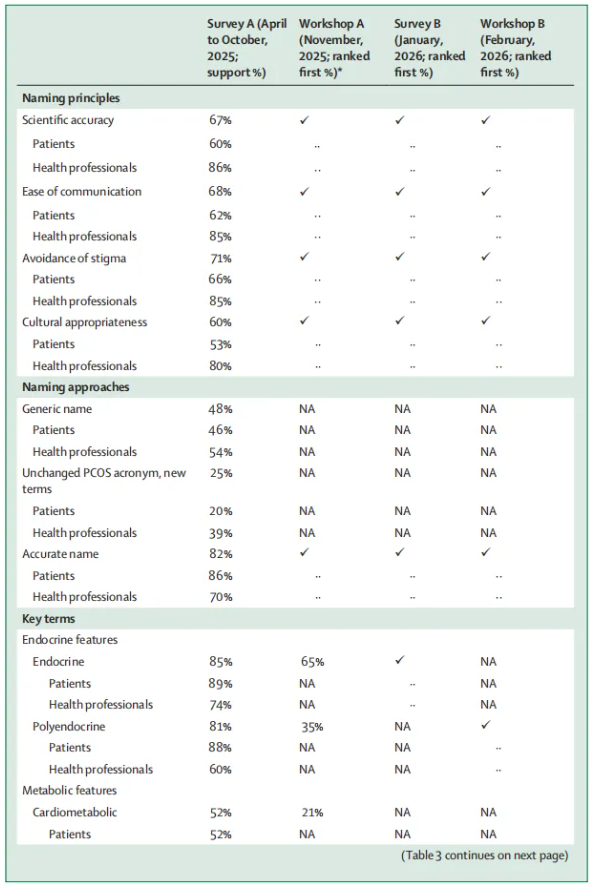
Editor-in-charge:lucy