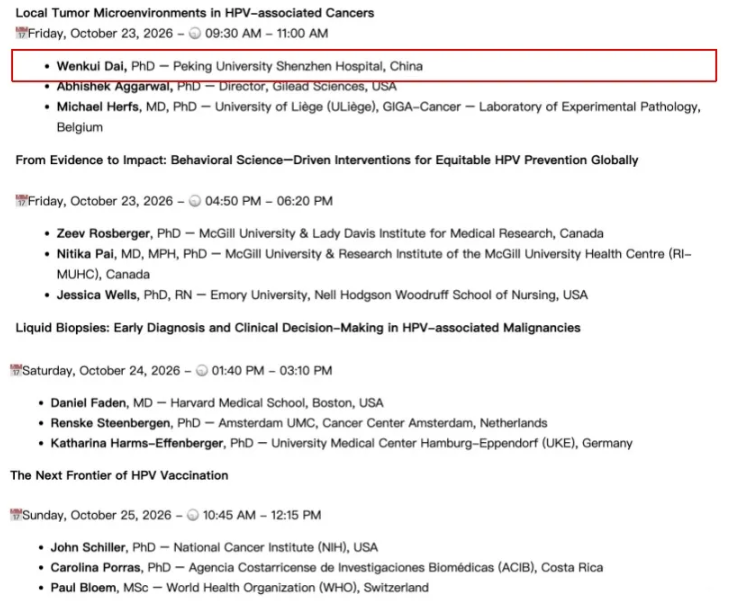
The research on the microecology of the reproductive tract at the Obstetrics and Gynecology Center of Peking University Shenzhen Hospital continues to make original breakthroughs. Dr. Dai Wenkui was invited to give a keynote speech at the IPVS conference held in Athens, Greece in October 2026, becoming the only invited keynote speaker in Asia, highlighting the international influence of the Chinese team in this field.
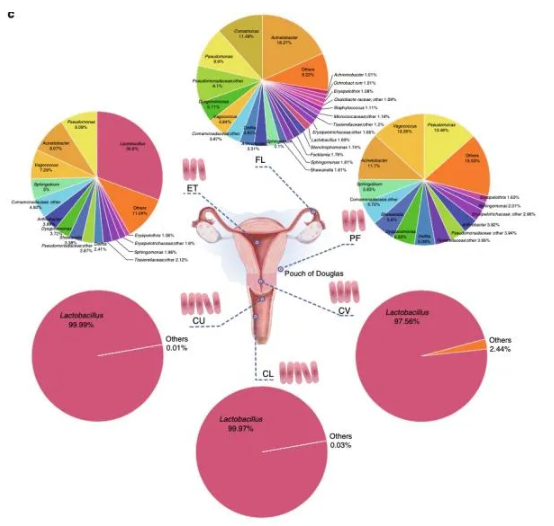
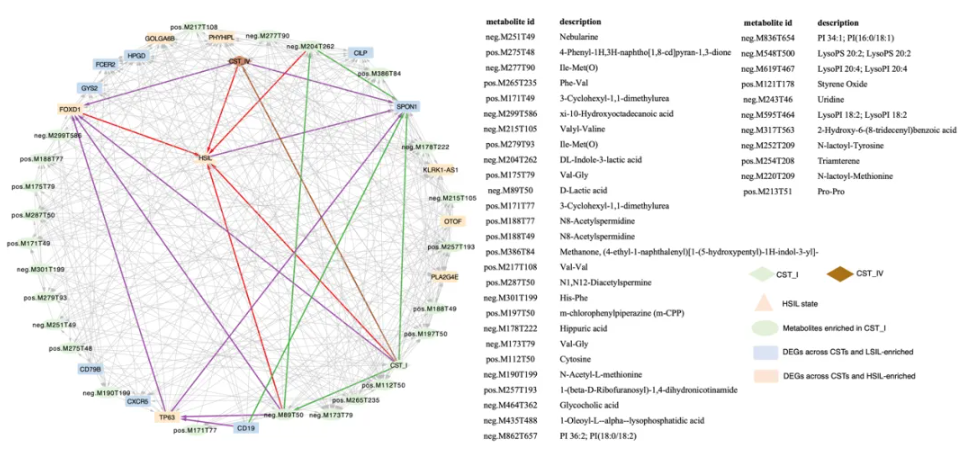
Recently, the International Papillomavirus Society Annual Meeting (IPVS 2026) announced the list of keynote speakers, and Dr. Dai Wenkui, a core expert in reproductive system disease research at the Obstetrics and Gynecology Center of Peking University Shenzhen Hospital, was invited to give a keynote speech. The conference will be held in Athens, Greece in October 2026, and Dr. Dai Wenkui is the only invited keynote speaker in Asia. This invitation reflects the high recognition of the international academic community for the research work of the female reproductive tract microecology of the Obstetrics and Gynecology Center of Peking University Shenzhen Hospital. In recent years, the Obstetrics and Gynecology Center of Peking University Shenzhen Hospital has continued to develop healthily under the leadership of Professor Li Changzhong, and has made a series of breakthroughs in gynecological tumors, reproductive health, complex uterine diseases, genital tract infections and microecology, and its comprehensive discipline strength has been continuously improved. Among them, the reproductive tract microecology research team led by Professor Wu Ruifang, director of the Institute of Obstetrics and Gynecology of Peking University Shenzhen Hospital, has become an important innovative force in this field in China. For a long time, the female upper genital tract has been considered a sterile environment, which constitutes an important basic theory of modern obstetrics and gynecology. Professor Wu Ruifang's team systematically demonstrated for the first time that there is a stable, low-abundance and biologically significant symbiotic flora in the female upper genital tract through multi-site sampling and multi-omics analysis under strict sterile conditions, and found that the vagina, cervix, uterine cavity and fallopian tube flora showed continuous gradient changes. In 2017, the team published original research results in Nature Communications, proposing the theory of the microbiota continuum of the female reproductive tract for the first time. This study rewrote the traditional perception of the "sterile environment" of the female upper reproductive tract and is considered to open up a new research direction in obstetrics and gynecology. After the publication of the results, it was featured in "Scientific American" and mainstream scientific media in the United Kingdom, Germany and other countries, and the related paper was cited more than 1,000 times, and was selected as a highly cited paper by the Ministry of Education in 2022. On this basis, the team further carried out research on the microecological mechanism of gynecological diseases, found that there are characteristic changes in the differential flora of the reproductive tract in many types of gynecological diseases, and revealed that they are closely related to the occurrence and development of endometriosis, cervical lesions, diffuse uterine lesions and infertility. At present, the team has gradually established a research system of "microbiota-metabolism-host interaction" to promote the in-depth development of female reproductive tract microecology research from microbiota description to functional mechanism research. Up to now, the team has published nearly 100 SCI papers related to reproductive tract microecology and female reproductive health, forming a strong systematic female reproductive tract microecology research platform in China. It is reported that Dr. Dai Wenkui will systematically introduce the team's latest research progress on the interaction mechanism between HPV-related diseases and reproductive tract microecology in the keynote report of the IPVS 2026 conference. IPVS 2026 announces keynote speech theme and guest list In 2017, the original research result was published in Nature Communications, the distribution of the genital tract flora Original work published in the Journal of Translational Medicine in 2026: Microbiota-metabolism-host interaction network Source: Professor Wu Ruifang's team Editor-in-charge:lucy