
Embryo quality is a core determinant of clinical outcomes in assisted reproductive technology (ART). Poor embryo quality and repeated implantation failure remain critical challenges in reproductive medicine, with a lack of effective clinical interventions currently available.
Recently, a prospective clinical study led by Professor Hao Guimin's team at the Second Hospital of Hebei Medical University was officially published in Frontiers in Cell and Developmental Biology (IF=4.3).
The study confirms that intervention with the innovative compound Reco18 can significantly improve embryological parameters and clinical pregnancy rates in patients with a history of IVF/ICSI failure and poor embryo quality. It provides high-level clinical evidence for fertility restoration in populations of advanced maternal age and those with repeated ART failure.
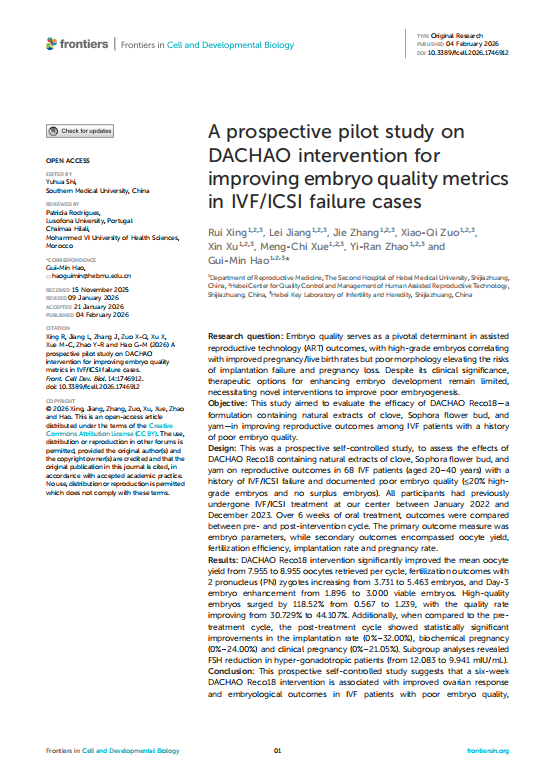
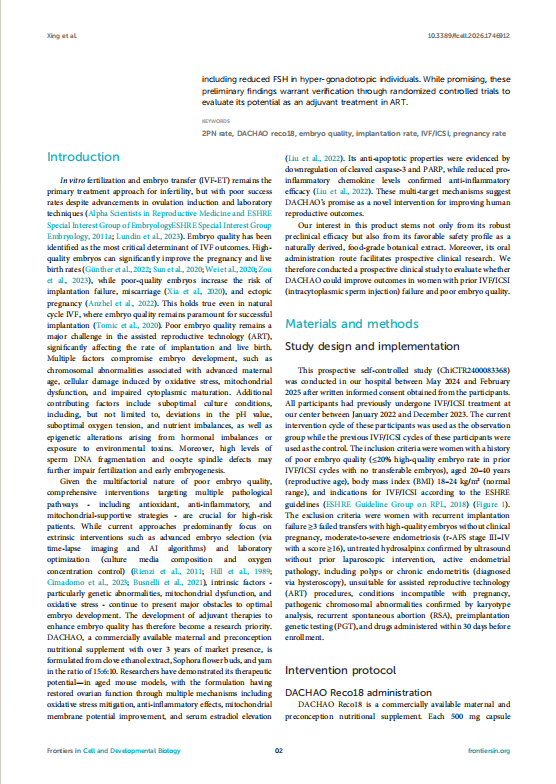
Image Source: Frontiers in Cell and Developmental Biology
01 Core Clinical Findings: Comprehensive Improvement in Key Metrics, Breakthrough in Pregnancy Rate
This study employed a prospective self-controlled design, enrolling 68 patients aged 20-40 with a history of IVF/ICSI failure and a high-quality embryo rate ≤20%. After 6 weeks of oral Reco18 intervention, reproductive outcomes were compared with those of the patients' previous treatment cycles. The core data showed statistically significant improvements:
• The number of retrieved oocytes increased from 7.955 to 8.955 per cycle (p<0.05), indicating its efficacy in enhancing ovarian response and follicle recruitment.
• Following conventional IVF, the number of 2PN fertilized oocytes also increased significantly from 3.731 to 5.463 (p<0.05), confirming that Reco18 improves oocyte fertilization competence.
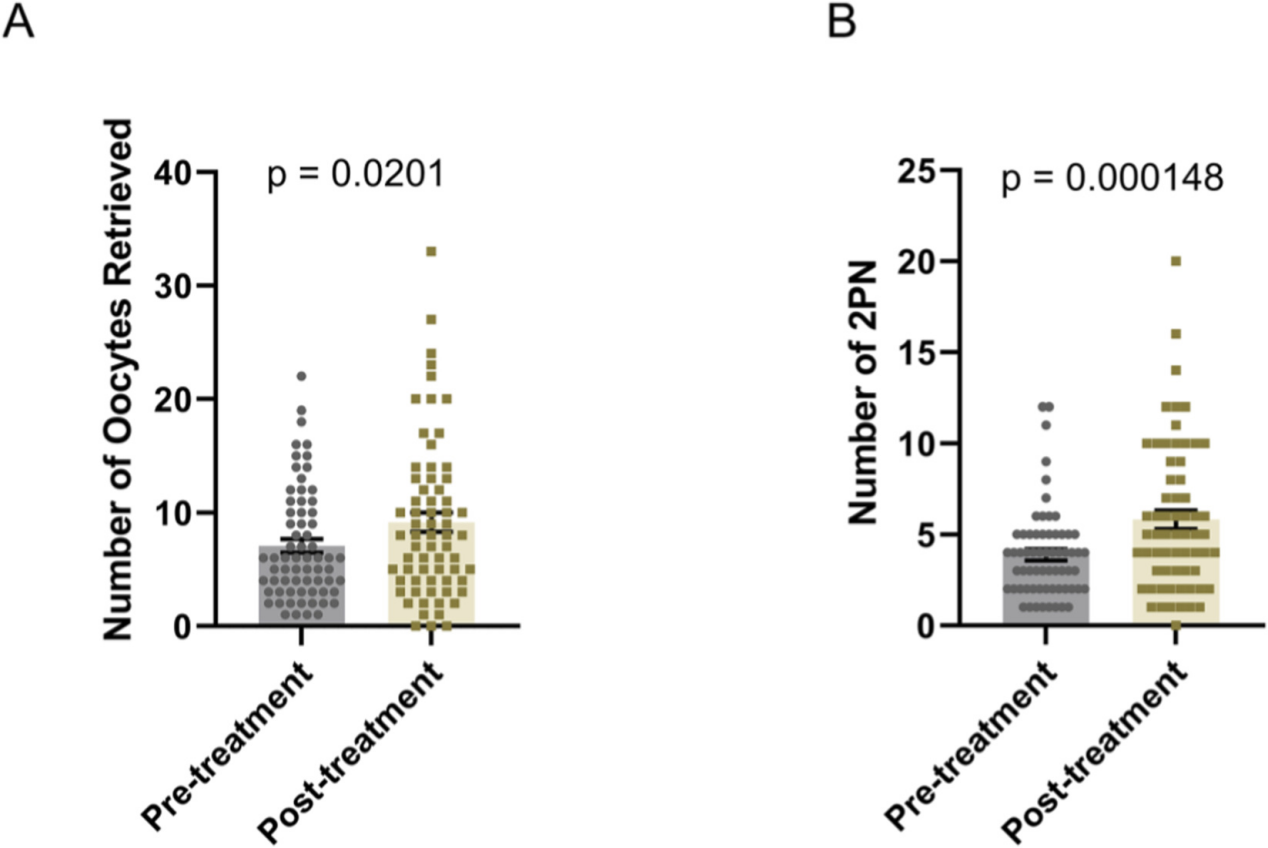
The effect of Reco18 supplementation on the number of retrieved oocytes and fertilization rate. (A) Reco18 significantly increased the total number of retrieved oocytes; (B) Reco18 supplementation increased the number of 2PN fertilized oocytes.
Image Source: Frontiers in Cell and Developmental Biology
• The number of high-quality embryos increased significantly from 0.567 to 1.239 (p<0.05), an increase of 118.52%.
• The high-quality embryo rate rose from 30.729% to 44.107% (p<0.05). These results indicate that Reco18 supplementation not only increases the quantity of embryos but also significantly enhances their quality, suggesting a positive impact on ART outcomes.
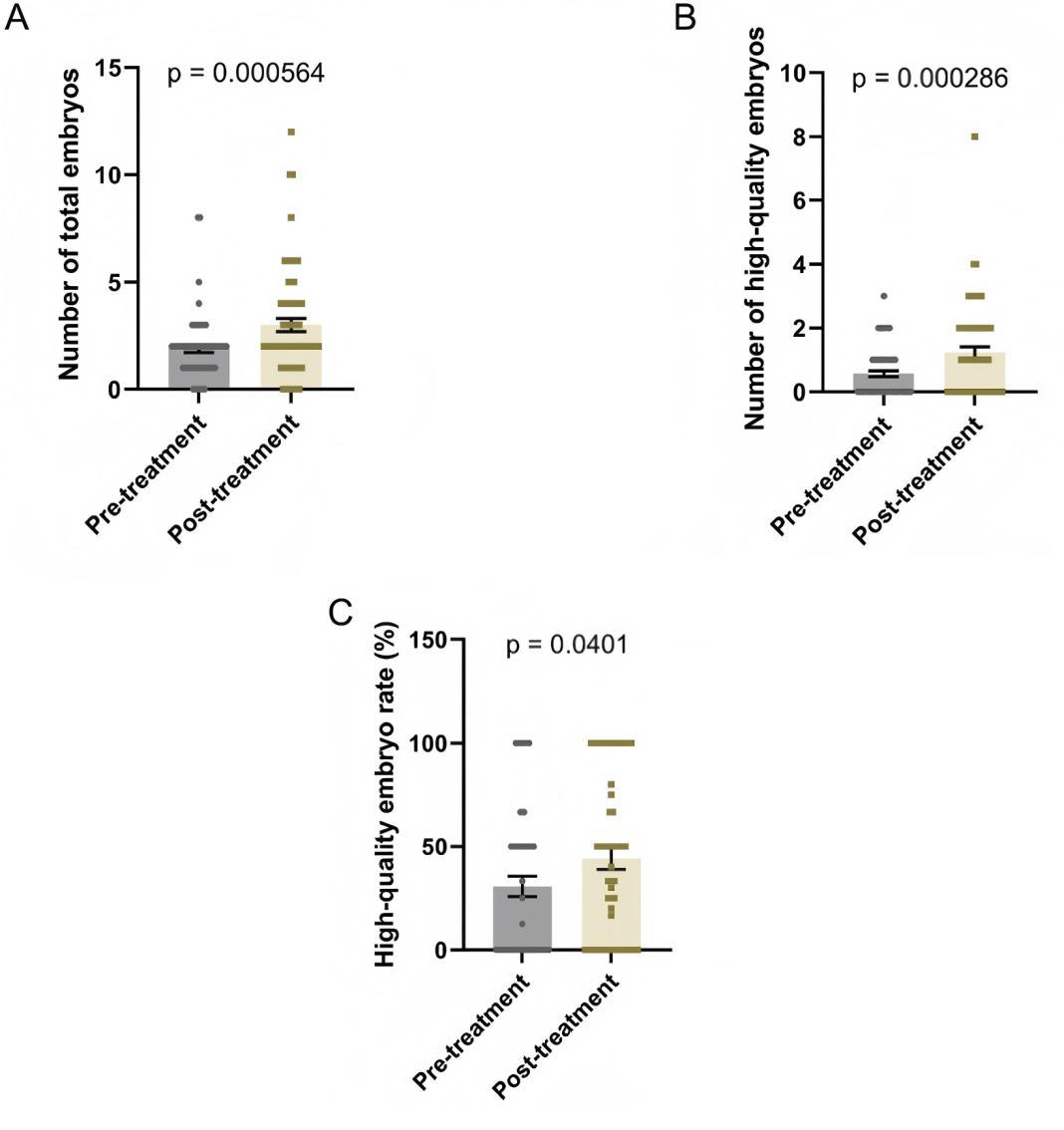
The effect of Reco18 supplementation on total embryo number, number of high-quality embryos, and high-quality embryo rate. (A) Reco18 significantly increased the total number of embryos per patient; (B) Reco18 increased the number of high-quality embryos per patient; (C) Reco18 improved the high-quality embryo rate per patient.
Image Source: Frontiers in Cell and Developmental Biology
• Furthermore, compared to the pre-treatment cycle, the clinical pregnancy rate in the post-treatment cycle increased from 0% to 24%, with an implantation rate of 21.05%.
• Subgroup analysis showed that patients with high gonadotropin levels had a significant reduction in FSH levels, decreasing from 12.083 mIU/mL to 9.941 mIU/mL.
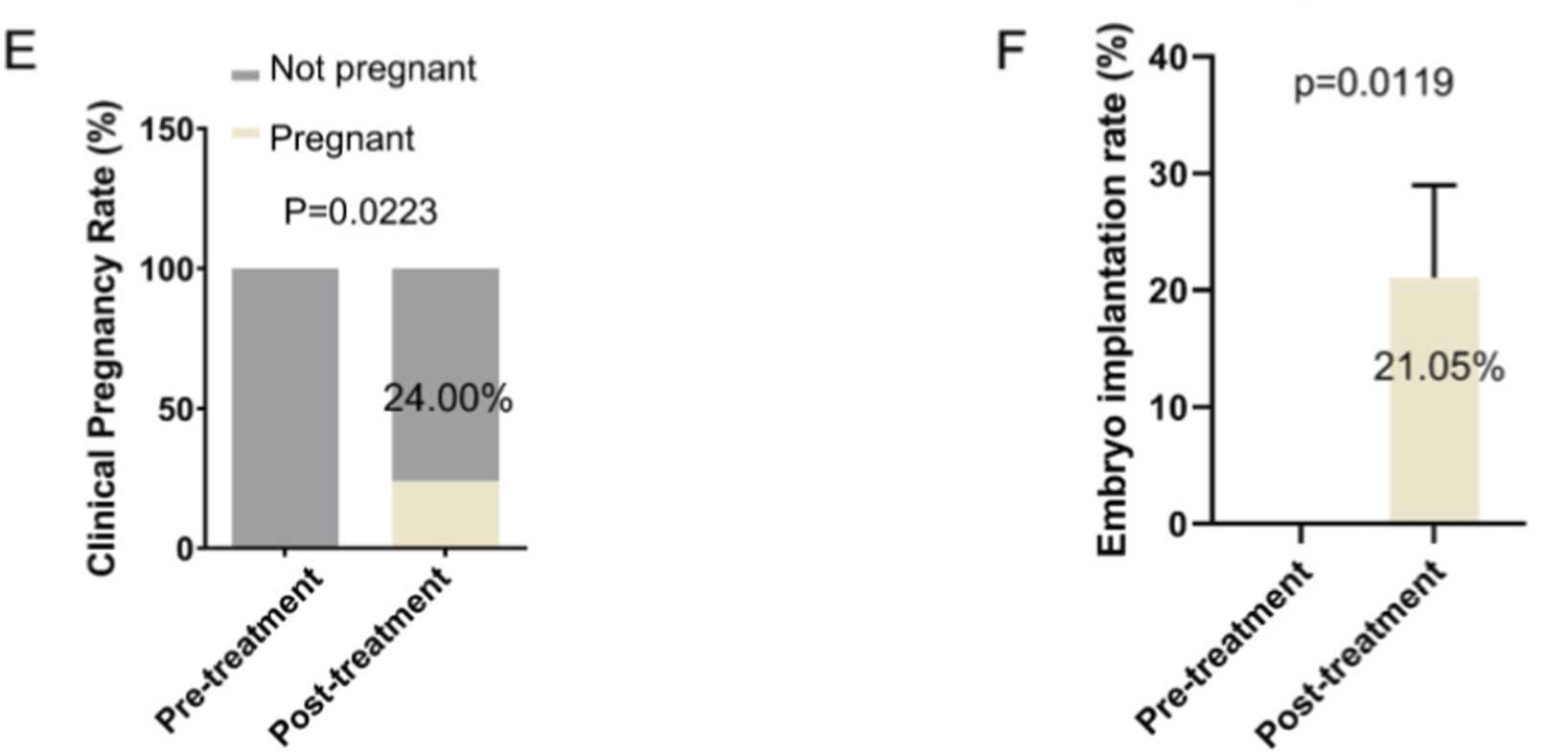
The effect of Reco18 supplementation on reproductive outcomes. (E) Reco18 treatment increased the clinical pregnancy rate; (F) Reco18 treatment improved the embryo implantation rate.
Image Source: Frontiers in Cell and Developmental Biology
• Subgroup analysis showed that patients with high gonadotropin levels had a significant reduction in FSH levels, decreasing from 12.083 mIU/mL to 9.941 mIU/mL.
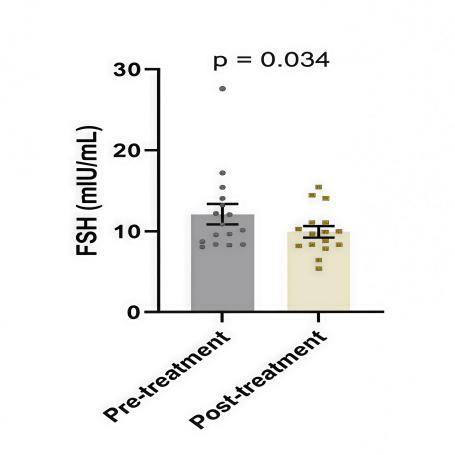
Reco18 reduced FSH levels in patients with elevated baseline FSH (>8 mIU/mL).
Image Source: Frontiers in Cell and Developmental Biology
02 Mechanism of Action of Reco18: Molecular Basis for Multi-Target Synergistic Regulation of Ovarian Function and Embryo Development
Prior to this clinical study, the State Key Laboratory of Reproductive Medicine at Nanjing Medical University had completed and published animal experiment validation of Reco18 in the SCI journal Frontiers in Endocrinology, laying a solid foundation for the clinical research.
Reco18 is a natural active ingredient extracted from plants using patented technology. Its clinical efficacy is not mediated by a single pathway. Instead, it achieves systemic improvement of reproductive function by promoting the proliferation of ovarian granulosa cells, reducing cumulus cell apoptosis, improving the expression of antioxidant and inflammation-related factors in the ovary, thereby enhancing oocyte quality and optimizing the ovarian microenvironment. The mechanisms are explained as follows:
1. Reco18 Promotes Granulosa Cell Proliferation and Reduces Apoptosis
After Reco18 administration, the number of PCNA-positive signal points in granulosa cells surrounding follicles was higher than in the non-administered group, indicating that Reco18 can promote granulosa cell proliferation. Furthermore, western blot analysis of apoptosis-related protein expression levels showed that the expression of cleaved-caspase-3 and cleaved-PARP in the ovaries was much lower in the Reco18 group. This indicates that Reco18 administration can reduce the level of apoptosis in aging ovaries.
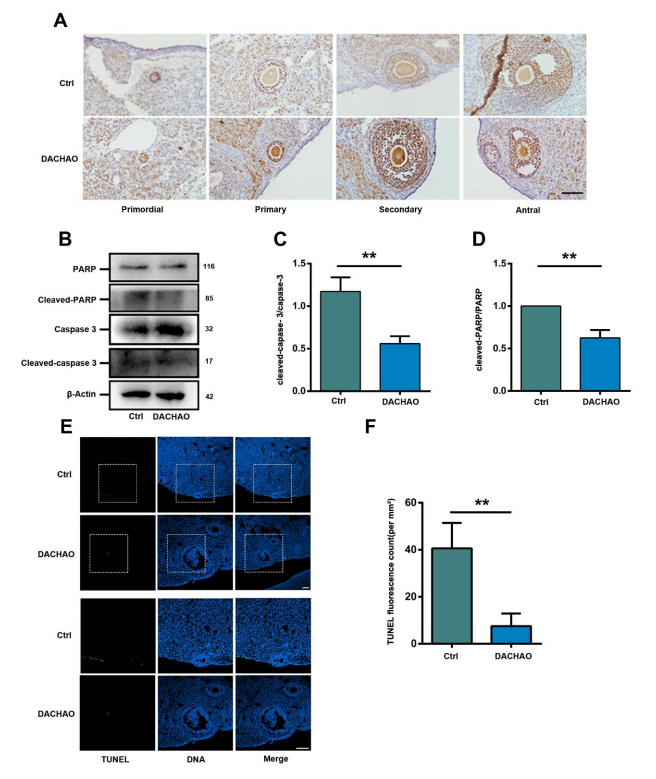
Reco18 improves fertility in aged female mice by promoting ovarian granulosa cell proliferation and reducing apoptosis. (A) Immunohistochemical staining of PCNA in ovaries at different follicular developmental stages; (B) Western blot of apoptosis-related protein expression in mouse ovaries; (C-D) Grayscale value analysis and ratios (cleaved-caspase-3/caspase-3, cleaved-PARP/PARP) from (B); (E) TUNEL staining of ovaries from aged female mice; (F) Statistical graph of TUNEL-positive signal points in ovaries (n=3/group).
Image Source: Frontiers in Endocrinology
2. Reco18 Enhances Ovarian Responsiveness, Optimizing Follicle Recruitment and Development
Reco18 does not directly stimulate the ovarian reserve. It works by upregulating the expression of FSH receptors in ovarian granulosa cells, enhancing follicular sensitivity to gonadotropins, providing negative feedback regulation of the pituitary-ovarian axis, thereby improving ovarian responsiveness. This ameliorates the state of poor ovarian response and optimizes follicle recruitment and development.
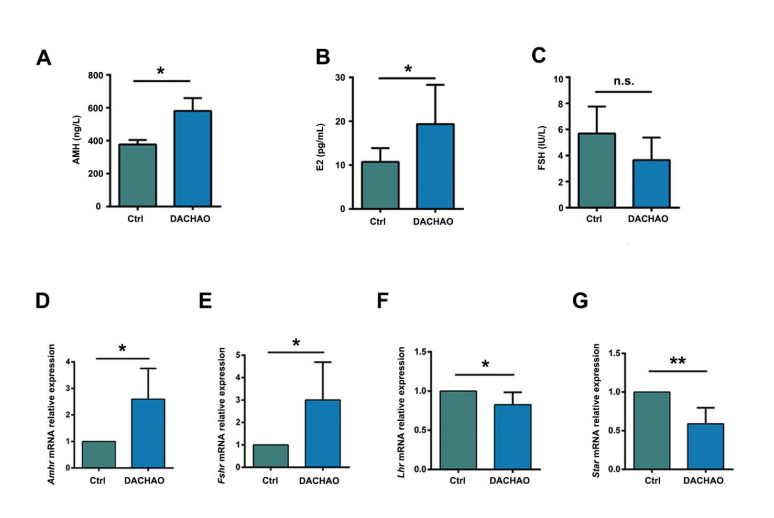
Reco18 improves fertility in aged female mice by increasing serum sex hormone levels and the expression of hormone-related mRNAs in the ovary. (A-C) Statistical graphs of serum AMH, E2, and FSH values in aged female mice (n=8/group); (D-G) Statistical graphs of relative expression of hormone-related mRNAs (Amhr, Fshr, Lhr, Star) in ovaries (n=3/group).
Image Source: Frontiers in Endocrinology
3. Improves Oocyte Quality, Laying the Foundation for Embryo Development
Reco18 can act directly on oocytes, improving mitochondrial membrane potential, reducing reactive oxygen species (ROS) levels, thereby decreasing oxidative stress damage and meiotic abnormalities in oocytes. Simultaneously, it inhibits early oocyte apoptosis, enhancing fertilization competence and cleavage potential, ensuring the initial quality of embryo development from the source.
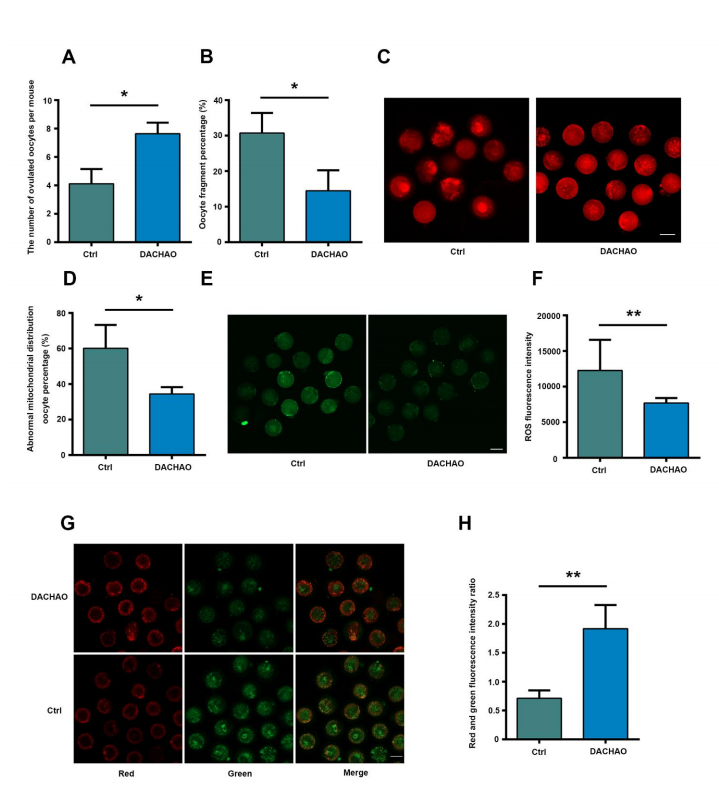
Reco18 administration increases the quantity and quality of oocytes in aged mice. (A) Number of ovulated oocytes after superovulation (n=31/8 mice? Note: Original says n=318, likely a typo; adjusted for sense); (B) Oocyte fragmentation rate after superovulation; (C) MitoTracker staining showing mitochondrial distribution in oocytes (n=71); (D) Percentage of oocytes with abnormal mitochondrial distribution; (E) ROS fluorescence staining showing ROS levels in oocytes (n=60); (F) Statistical graph of ROS fluorescence intensity; (G) JC-1 staining showing mitochondrial membrane potential in oocytes (n=64); (H) Statistical graph of red/green fluorescence ratio from JC-1 staining.
Image Source: Frontiers in Endocrinology
03 Clinical Value and Academic Significance of This Study
Poor embryo quality and repeated IVF/ICSI failure are central challenges in ART practice, with a current lack of safe and effective pre-treatment intervention strategies. This prospective self-controlled study confirms that 6 weeks of Reco18 intervention, through multi-target regulation of reproductive pathways, can significantly increase the number of retrieved oocytes, 2PN fertilized oocytes, and the high-quality embryo rate. It also reduces serum FSH levels in the high-FSH patient subgroup and significantly improves the clinical pregnancy rate. This provides a new, non-hormonal, safe, and reliable nutritional pre-treatment strategy for this refractory patient population.
The study provides high-level evidence for the application of natural plant extracts in the field of assisted reproduction, filling a gap in clinical interventions for embryo quality optimization. Subsequent larger-sample, multi-center randomized controlled trials are needed to clarify the optimal intervention protocol and applicable subgroups.
Current evidence has sufficiently validated the clinical value of Reco18, opening a new direction for clinical management in assisted reproduction and fertility preservation.
Image and Text Source: Frontiers
Reference: Xing R, Jiang L, Zhang J, Zuo X-Q, Xu X, Xue M-C, Zhao Y-R and Hao G-M (2026) A prospective pilot study on DACHAO intervention for improving embryo quality metrics in IVF/ICSI failure cases. Front. Cell Dev. Biol. 14:1746912. doi: 10.3389/fcell.2026.1746912
Editor: Lily