





















Many expectant mothers fall into the trap of traditional "bed rest" myths: feeling heavy and fatigued, they opt to sit rather than stand, and lie down rather than walk. Office workers sit from dawn till dusk, while those resting at home often spend hours sunk into the couch scrolling on their phones. Clinical data reveals that 1 in 5 pregnant women experience adverse outcomes such as gestational hypertension, gestational diabetes mellitus (GDM), preterm birth, and fetal growth restriction. These complications not only subject mothers to the misery of edema, dizziness, and strict glucose control but also elevate long-term cardiovascular and metabolic risks for both mother and child.
Adverse pregnancy outcomes represent a significant public health challenge. With the rise of digital workspaces, sedentary time among pregnant women is climbing. Yet, current guidelines recommending yoga or jogging—moderate-to-high intensity exercises—pose high barriers to entry. For women suffering from morning sickness, placenta previa, or general fatigue, adherence is difficult; fewer than 1 in 4 pregnant women meet these exercise standards. Recently, both domestic and international guidelines have added a new recommendation: replace sitting with light activity—essentially, "sit less, move more."
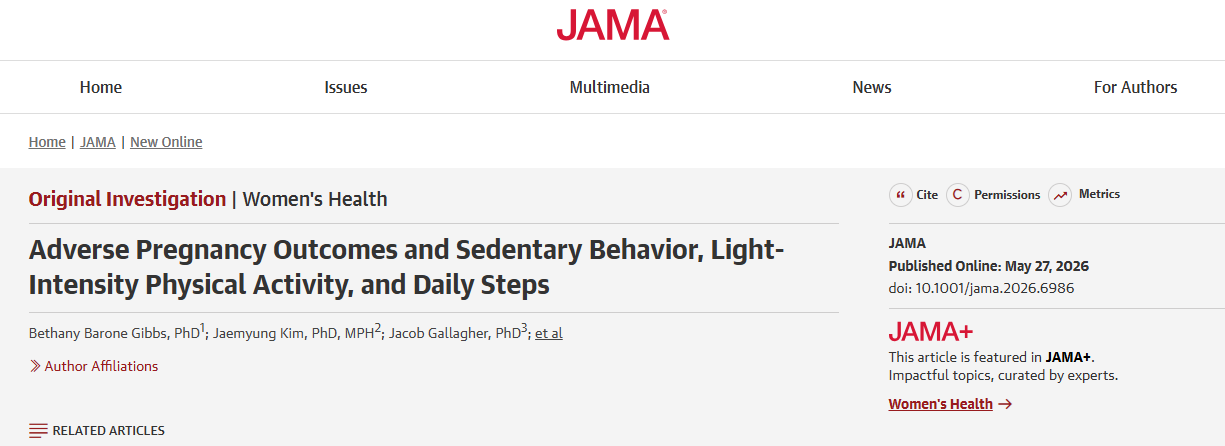
In May 2026, the prestigious Journal of the American Medical Association (JAMA) published a prospective three-center cohort study involving 470 women in their first trimester. Using wearable devices, researchers tracked activity levels across all three trimesters, yielding a zero-barrier maintenance strategy. Here is a detailed breakdown based on the authoritative data.
Snapshot: Risk Comparison by Activity Pattern
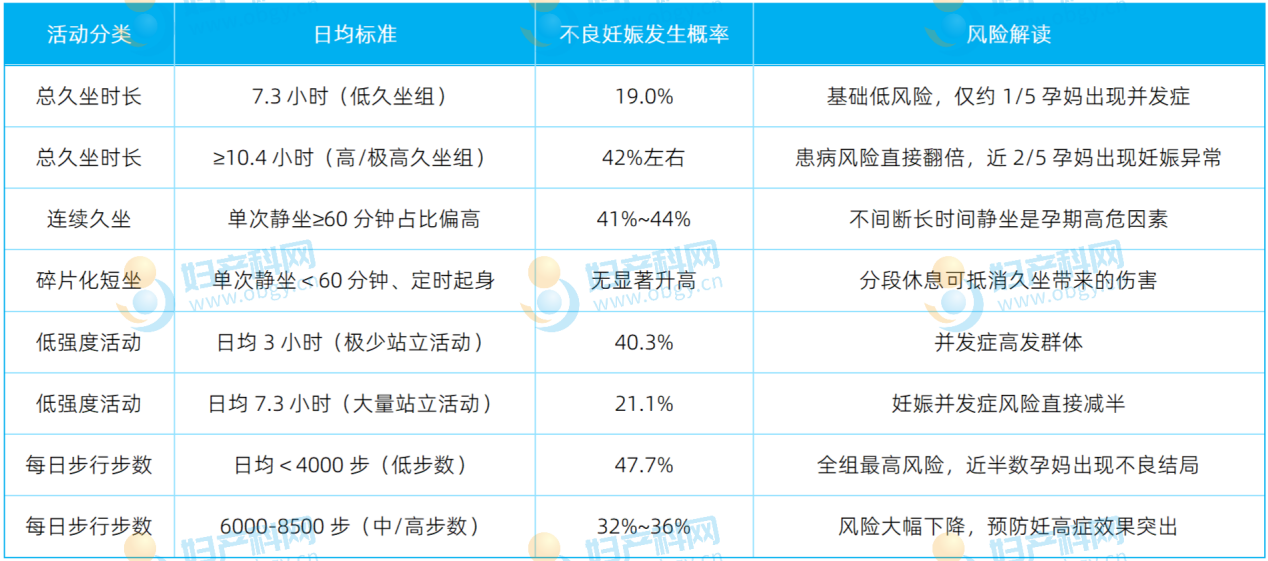
(Table 1: Risk comparison of adverse pregnancy outcomes across different daily activity patterns)
The research quantified the risk gap: Women sitting for ≥10 hours per day faced a 122% higher risk of adverse outcomes compared to those sitting only 7 hours daily. Conversely, adding just 4 hours of light activities—such as standing or slow walking—halved the complication risk. Furthermore, daily step count showed a clear negative correlation with adverse outcomes; women maintaining 6,000–8,500 steps per day saw significantly lower rates of complications than those taking fewer than 4,000 steps.
Three Game-Changing Findings That Challenge Conventional Wisdom
1. It’s Continuous Sitting That Hurts—Brief Breaks Are Safe
The study distinguished between two sitting patterns. Fragmented sitting (episodes under 1 hour) did not significantly raise pregnancy risks. However, uninterrupted sitting exceeding 60 minutes without movement drastically increased the likelihood of gestational hypertension and preterm birth. Habits like lying down continuously for 2–3 hours during an afternoon nap or sitting through a full workday without moving act as invisible health hazards. Recommendation: Every 45–60 minutes, stand up and move around for 2–5 minutes to break the sedentary state.
2. Standing Activities Beat Casual Walking for Fetal Protection
Most mothers assume that "going for a walk" is the gold standard for exercise. The monitoring data suggests otherwise: Low-intensity standing activities—such as doing dishes, standing at a desk, or stretching—offer the strongest protection against gestational hypertension. Slow, casual walking alone had a limited effect on improving outcomes. Everyday tasks like washing dishes, folding laundry while standing, or even "standing while binge-watching" are low-cost, high-reward behaviors for a healthy pregnancy.
3. Forget 10,000 Steps—6,000 is the Sweet Spot
Pregnant women taking fewer than 4,000 steps per day had an adverse outcome rate approaching 50%. However, accumulating a stable 6,000–8,500 steps daily provides clear protective benefits—and there's no need to do it all at once. Splitting walks into short morning, afternoon, and evening segments, or simply walking to the mailbox or strolling slowly around the neighborhood, is sufficient to meet health standards.
The Science: Why Less Sitting and More Standing Works
Physiologically, prolonged sitting slows systemic blood flow, disrupts glucose and lipid metabolism, and reduces placental perfusion—dramatically increasing the risk of preeclampsia and GDM. In contrast, light activities like standing and slow walking improve peripheral circulation, stabilize blood sugar and lipids, and alleviate anxiety, providing a more stable intrauterine environment for the fetus.
Notably, the study found that adding high-intensity exercise yielded no additional protective benefits. In short, mothers don't need to force themselves into fitness routines or jogging; daily light activity is enough.
Universal Applicability: A Zero-Threshold Solution
After adjusting for confounding variables—including pre-pregnancy BMI, weekly moderate-to-vigorous physical activity, age, and parity—the protective conclusions remained robust. Simply put: Even if you have zero time for yoga, jogging, or gym workouts, simply reducing sitting time, increasing standing time, and accumulating daily steps can effectively safeguard maternal and infant health.
For women in their first trimester experiencing nausea and fatigue, those on bed rest due to placenta previa or threatened miscarriage, advanced maternal age, obesity, or those at high risk for GDM, this zero-burden regimen is the preferred health management strategy.
A Balanced View: Acknowledging the Limitations
While this is a high-quality Grade A prospective cohort study and a vital reference in obstetrics, certain limitations must be acknowledged by clinicians and patients alike:
1. Correlation vs. Causation: The study demonstrates a strong association between activity levels and outcomes but cannot prove absolute causation. It should not be used in isolation to formulate mandatory clinical intervention guidelines.
2. Population Specificity: 87.7% of participants were white American women. Differences in race, geography, diet, and lifestyle compared to Chinese mothers necessitate caution when applying these findings directly. We await validation from local Chinese cohort studies.
3. Lack of RCT Data: There is currently a lack of Randomized Controlled Trial (RCT) intervention data. Further interventional clinical trials are needed to confirm that modifying daily habits actively reduces adverse pregnancy rates.
Clinical Implications
1. Routine Counseling: Emphasize to office workers, advanced-age mothers, those with pre-pregnancy obesity, or prior histories of hypertensive disorders that total daily sitting should ideally remain under 10 hours. Dispel the myth that "complete stillness protects the baby." Advise simple swaps: stand for 5–10 minutes every hour; replace couch-sitting with short walks.
2. Individualized Guidance: For first-trimester mothers with fatigue or bleeding requiring rest, do not force outdoor walking. Prioritize intermittent standing and ankle pump exercises in bed. For second and third-trimester mothers with no contraindications, encourage a cumulative 6,000 steps per day.
3. High-Risk Interventions: For mothers with histories of GDM or hypertension, incorporate "breaking continuous sitting" and "increasing daily standing" into baseline prevention plans, alongside dietary and weight management.
4. Scientific Communication: Educate patients on both the strengths and limitations of this research. Clarify that this is a foundational health measure, not a treatment, and does not replace regular prenatal check-ups or clinical medication.
This multi-center, full-trimester JAMA study offers a revolutionary approach to pregnancy wellness that doesn't require breaking a sweat. The core strategy involves three simple habits: avoid prolonged continuous sitting, engage in daily standing activities, and aim for roughly 6,000 steps per day. By acknowledging the study's limitations and adapting these tips to individual health conditions, mothers can significantly reduce complication risks, ensuring both comfort and safety throughout their pregnancy journey.
Source: Barone Gibbs B, Kim J, Gallagher J, et al. Adverse Pregnancy Outcomes and Sedentary Behavior, Light-Intensity Physical Activity, and Daily Steps. JAMA. Published online May 27, 2026. doi:10.1001/jama.2026.6986
Disclaimer: This content is intended for medical professionals for educational purposes only and should not be used as a sole basis for clinical decisions. Clinical practice must integrate patient-specific factors, institutional capabilities, and the latest clinical guidelines. Multidisciplinary consultation is advised when necessary.
Editor: Lily