





















Manchester Procedure vs. Sacrospinous Ligament Fixation: Which Yields Superior Sexual Function Postoperatively? Insights from a New RCT in AJOG
Manchester Procedure vs. Sacrospinous Hysteropexy: Which Offers Better Sexual Outcomes? Insights from a New RCT in AJOG
Uterine prolapse is a common subtype of pelvic organ prolapse (POP), causing not only physical discomfort such as vaginal heaviness and bulge but also significantly impairing sexual function and reducing quality of life. Consequently, improving postoperative sexual function and preventing dyspareunia have become core objectives in pelvic floor reconstructive surgery. Both the Manchester Procedure (MP) and Sacrospinous Hysteropexy (SSH) are mainstream uterine-sparing surgical options. MP achieves anatomical restoration through cervical amputation combined with uterosacral ligament plication, whereas SSH suspends the uterus to the sacrospinous ligament. These two techniques differ markedly in their anatomical approaches and operative characteristics.
While there is widespread clinical focus on sexual function improvement following POP surgery, the incidence of de novodyspareunia remains a shared concern for both surgeons and patients. Recently, the American Journal of Obstetrics & Gynecology(AJOG) published a prespecified secondary analysis of a large-scale randomized controlled trial (RCT). Utilizing 2-year follow-up data from the SAM trial, this study employed the standardized Pelvic Organ Prolapse/Urinary Incontinence Sexual Questionnaire (PISQ-IR) and stratified analyses based on sexual activity status to head-to-head compare the impact of these two procedures on sexual function and dyspareunia. The findings provide updated evidence for clinical decision-making regarding uterine-sparing surgery for mild-to-moderate uterine prolapse.
Source: AJOG
Methods
Study Population: Between 2018 and 2020, 434 treatment-naïve patients with mild-to-moderate uterine prolapse (POP-Q point D ≥ -1 cm) were enrolled and randomly assigned to the MP group (n=197) or the SSH group (n=196). A total of 393 patients completed the 24-month follow-up and PISQ-IR assessments.
Assessment Tool: The Pelvic Organ Prolapse/Urinary Incontinence Sexual Questionnaire, Revised (PISQ-IR), analyzed via stratification by sexually active/inactive status.
Primary Endpoint: Change in total PISQ-IR score from baseline to 24 months postoperatively. An equivalence margin of ±0.31 points (the minimal clinically important difference, MCID) was prespecified.
Secondary Endpoints: Incidence of dyspareunia, rate of de novodyspareunia, and transition in sexual activity status.
Key Results
1. Sexually Active Women (MP: n=101; SSH: n=99)
(1) Sexual Function Scores: Both groups showed significant improvement. MP improved by 0.27 points, and SSH improved by 0.20 points. The between-group difference was 0.09 points (95% CI 0.01–0.17), which fell entirely within the prespecified equivalence margin. This suggests clinical equivalence in sexual function improvement, with MP being marginally superior, though not clinically meaningful.
(2) De Novo Dyspareunia: Occurred in 5% of the MP group and 13% of the SSH group. When including patients who became sexually inactive postoperatively, the rates were 6% for MP and 11% for SSH; no statistically significant difference was observed between the groups.
(3) Disease Impact Domain: Significant improvement was seen in both groups, indicating a marked reduction in the negative impact of prolapse on sexual life.
2. Sexually Inactive Women (MP: n=59; SSH: n=64)
(1) Disease Impact Scores: Both groups showed a significant decrease, indicating substantial relief in prolapse-related restrictions on sexual activity, with no differences between the groups.
(2) Transition to Activity: Approximately 24% of patients transitioned from sexually inactive to sexually active postoperatively, with similar proportions observed in both groups.
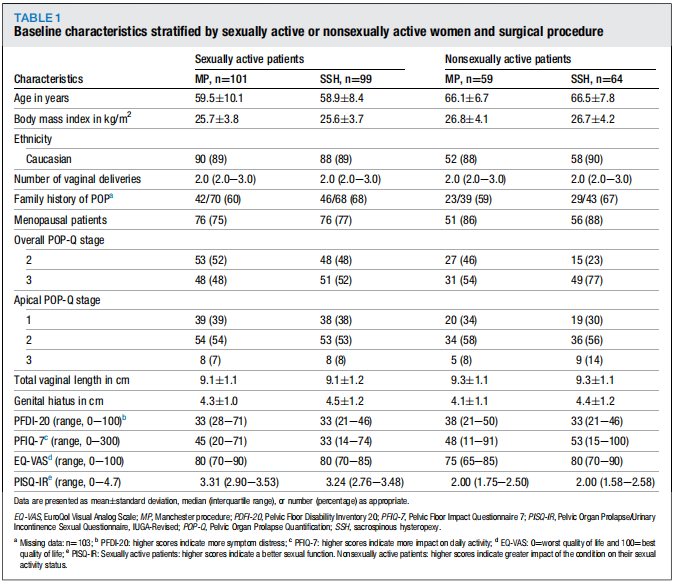
Table 1: Baseline Characteristics Stratified by Sexual Activity Status and Surgical Group
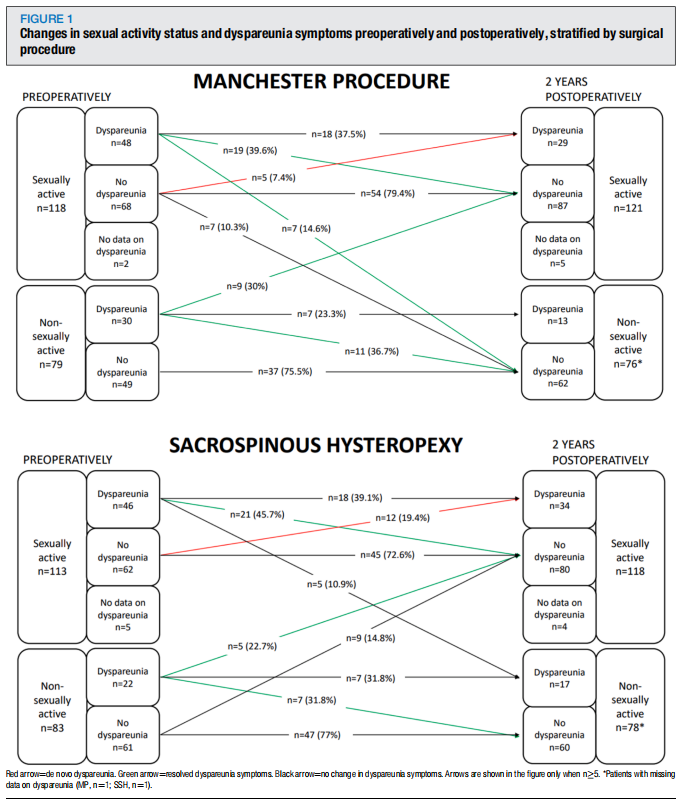
Figure 1: Changes in Sexual Activity Status and Dyspareunia Symptoms Pre- vs. Post-Surgery by Surgical Group
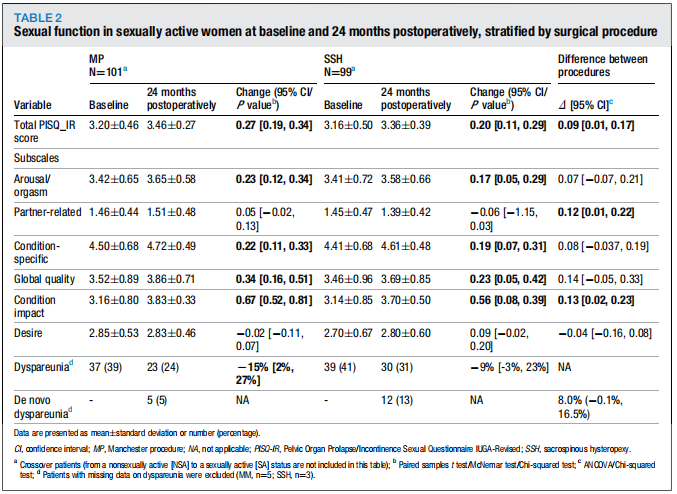
Table 2: Sexual Function in Sexually Active Women Preoperatively and at 24 Months Postoperatively by Surgical Group
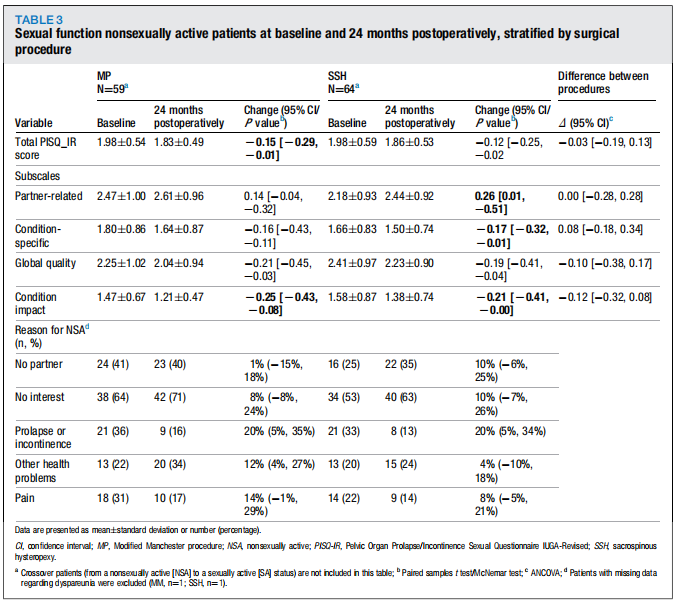
Table 3: Sexual Function in Sexually Inactive Women Preoperatively and at 24 Months Postoperatively by Surgical Group
3. Overall Outcomes
(1) Approximately 1 in 10 patients experienced de novodyspareunia postoperatively, with comparable risks between the two surgical techniques.
(2) Patients in whom surgery was deemed successful exhibited better sexual function improvement than those in whom it failed, although the effect size was modest.
Clinical Implications
Functional Equivalence: MP and SSH demonstrate equivalent improvements in sexual function at 2 years postoperatively, with no significant difference in the risk of de novodyspareunia.
Comprehensive Optimization: Integrating previous evidence on anatomical outcomes, the Manchester Procedure offers both superior anatomical success rates and comparable sexual benefits for uterine-sparing surgery in mild-to-moderate uterine prolapse.
Applicability to All: These conclusions apply to both sexually active and inactive patients, providing robust data for clinical patient-physician communication and surgical decision-making.
Conclusion
In the treatment of mild-to-moderate uterine prolapse, the Manchester Procedure (MP) and Sacrospinous Hysteropexy (SSH) demonstrate clinical equivalence in improving sexual function at 24 months postoperatively, with both maintaining acceptable levels of de novodyspareunia risk. Considering previously established evidence confirming MP’s advantages in anatomical restoration and surgical success rates, MP emerges as a preferred uterine-sparing option when evaluating both "surgical efficacy" and "sexual function outcomes." During preoperative counseling, clinicians should objectively inform patients about the comparative risks of dyspareunia associated with each technique. Ultimately, decisions should be individualized based on patient age, sexual health needs, and the degree of prolapse to achieve a balance between anatomical cure and enhanced quality of life.
Source: Sexual function after the manchester procedure versus sacrospinous hysteropexy in women treated for uterine prolapse: a planned analysis of a randomized clinical trial. American Journal of Obstetrics & Gynecology, 2025; 234, 1112-1120.
Editor: Lily