





















Ovarian cancer is known as the "silent killer of gynecological tumors". Its early symptoms are insidious and more than 70% of patients are detected at an advanced stage. According to the latest global epidemiological estimates, there are about 310,000 new cases and nearly 200,000 deaths every year, of which high-grade serous carcinoma (HGSC) accounts for 80% of ovarian cancer deaths. In the past few decades, despite continuous advances in chemotherapy and surgery, the overall 5-year survival rate has hovered around 40-50% for a long time. For patients with non-BRCA mutations and advanced stages, this number is even as low as 30%.
Over the past 15 years, Nature Reviews Cancer has published three consecutive heavyweight expert recommendations, forming a rare "science trilogy".
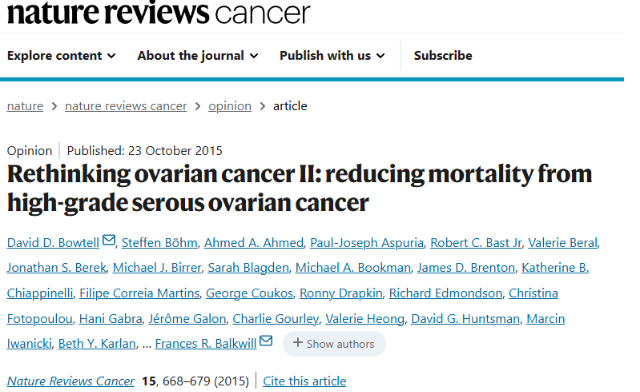
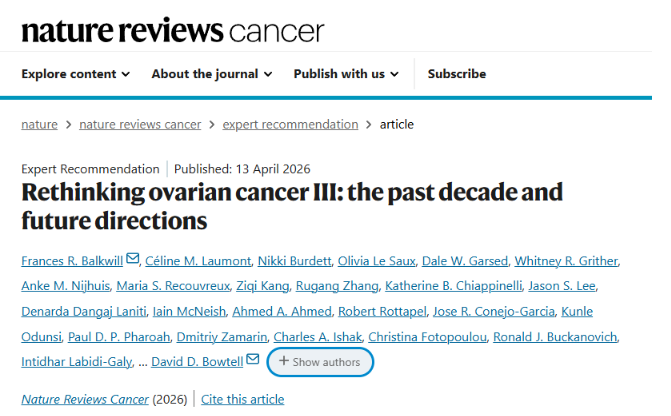
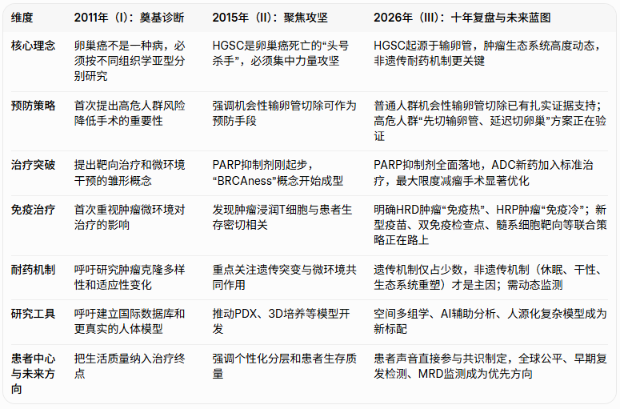
2011 (I): Rethinking ovarian cancer: recommendations for improving outcomes – the first systematic "rethinking": ovarian cancer is not a "one" disease. 2015 (II): "Rethinking ovarian cancer II: reducing mortality from high-grade serous ovarian cancer" - targeting the deadliest HGSCs, giving a 10-year action roadmap. 2026 (III): "Rethinking ovarian cancer III: the past decade and future directions" - based on the 15th Helene Harris Memorial Trust International Forum in October 2024 (38 leading experts + four major ovarian cancer charitable foundations jointly jointed), a rigorous review of the past decade and a blueprint for the next decade. Published online on April 13. At this forum, four major charitable foundations (Ovarian Cancer Action UK, Ovarian Cancer Research Alliance USA, Ovarian Cancer Canada, and Ovarian Cancer Research Foundation Australia) specially invited patient advocates – patients or survivors who have actually gone through the journey of ovarian cancer. They recorded videos of their personal experiences in advance and played them before each topic was discussed. The videos hit the nail on the head: they repeatedly emphasized that "we need more effective, less toxic treatments, as well as early attention to recurrence." This is not an isolated three papers, but a scientific narrative of diagnosis, focus, review and iteration. Today, we will completely disassemble the three papers to take you to see the scientific context, real progress, stubborn pain points, and the most cutting-edge hope in the past 15 years - where have we come in the face of ovarian cancer?
Foundational work (2011): Ovarian cancer is not a "one" disease
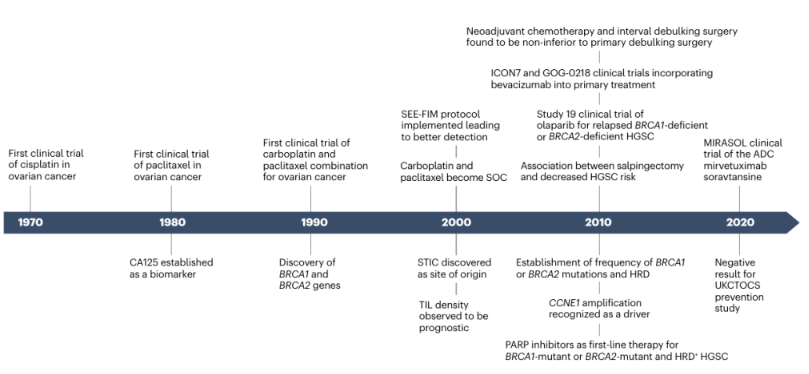
In 2011, more than 20 international experts reached a consensus at the Helene Harris Memorial Trust meeting and published the first article in the series. There is only one core point: the biggest misunderstanding was to treat ovarian cancer as a "disease" in the past. They make 9 key recommendations that lay the philosophical foundation for the entire series: 1. Clarify the molecular origin of different histological subtypes (HGSC, clear cell carcinoma, endometrial carcinoma, etc.) - HGSC mainly comes from the fallopian tubes, rather than the traditional ovarian surface epithelium; 2. To improve clinical trial design, it must be stratified by subtype and cannot be "one-size-fits-all"; 3. Prioritize prevention and early detection, especially risk-reducing surgery for people at high risk of BRCA1/2 mutations; 4. Discover new therapeutic targets and take advantage of genomic instability (e.g., the prototype concept of PARP inhibitors); 5. Targeting tumor microenvironment (TME): angiogenesis, inflammation, immunity; 6. Dealing with tumor adaptation and drug resistance: study clonal diversity and encourage serial biopsies; 7. Establish an international alliance of large-scale multi-omics datasets; 8. Develop a more realistic human model (3D culture, animal model); 9. Incorporate quality of life as an endpoint: not only to prolong survival, but also to reduce toxicity. This paper pushes "heterogeneity" to the forefront for the first time, telling doctors and researchers that they can no longer use the same set of schemes to fight all ovarian cancers, but must attack as accurately as they treat "different enemies". Focus on tackling tough problems (2015): Locking in HGSC, 10-year roadmap In 2015, the second article in the series, led by David D. Bowtell and written by more than 40 experts, was longer and more focused. The title directly states: Reducing mortality from high-grade serous ovarian cancer. Core Upgrades: 1. HGSC accounts for 70-80% of ovarian cancer deaths and is the real "culprit". 2. Molecular origin consensus: The vast majority of HGSCs originate from the fallopian tube secretory epithelium (FTSEC), and TP53 mutation is an early event; Approximately 50% have homologous recombination defects (HRD, including BRCA1/2 mutations 15-17%). 3. Clinical pain points: Initially sensitive to platinum, but very easy to recur; Peritoneal metastasis preference; TME is highly immunosuppressed; Clonal heterogeneity is extremely high. The roadmap emphasizes: 1. Develop better models (PDX, 3D culture, genetically engineered mice). 2. In-depth drug resistance mechanisms (BRCA revert mutation, metabolic reprogramming, microenvironment remodeling). 3. Immunotherapy potential: CD8+ T cell infiltration is positively correlated with survival in patients with BRCA mutations. 4. Prevention: opportunistic salpingectomy; Early detection of prototypes (liquid biopsy). 5. Surgical optimization: minimizing residual lesions. Integrating multi-omics, personalised stratification, patient-centered outcomes (survival + quality of life). This article, from focusing on "generalized ovarian cancer" to focusing on "HGSC specialization", sets the tone for research from 2015 to 2025. PARP inhibitors and BRCAness concepts have been quickly implemented under this framework. Ten-year review + new blueprint (2026): hope is in sight The third article, published on April 13, 2026, is the latest and most comprehensive "Ten-Year Review + New Chapter". It is based on the consensus of the 2024 forum and is the first time that the four major charitable foundations will participate. The full text is divided into seven sections: introduction, prevention and early detection, tumor ecosystem, immunity and immunotherapy, acquired drug resistance, new treatment strategies, and conclusions. 1. Real report card of the past ten years PARP inhibitors are the biggest breakthrough: significantly prolonging progression-free survival in first-line maintenance therapy in patients with BRCA1/2 mutations or HRD. Upgrade of surgical concept: even if the tumor load is high, the maximum tumor reduction surgery does not increase the mortality rate; Secondary debulking surgery also has clear inclusion criteria in the event of recurrence. Bevacizumab (anti-angiogenic) and somituximab (FRα ADC) have become new standard options. The cruel reality: the overall 5-year survival rate is still ≈ 50%; only 30% of patients with advanced non-BRCA mutations; 50-70% of patients have multiple relapses; Platinum + paclitaxel ± bevacizumab are still the first-line backbone for most patients. 2. Prevention and Early Detection: A Revolutionary Pivot The origin of the fallopian tubes has been globally agreed upon. STIC (serous intraepithelial carcinoma of the fallopian tubes) is a precursor to HGSC, and TP53 mutations are prevalent. A new mechanism was found: postmenopausal tubal remodeling + BRCA heterozygosity → replication stress + oxidative stress of high-risk mesenchymal stem cells (hrMSCs) → STIC formation. Major upgrade of prevention strategies: high-risk groups are verifying that "fallopian tube removal first, ovary removal delayed" is being verified to preserve hormone function and quality of life; There has been a number of epidemiological evidence that "opportunistic salpingectomy" (cut during hysterectomy or sterilization) in the general population can significantly reduce the incidence of ovarian cancer, and the cost-benefit model supports its promotion and even extends to gallbladder resection and bariatric surgery. Breakthroughs in early detection: cfDNA fragmentomics + protein markers, cervical sampling DNA methylation, LINE-1 ORF1p and other new biomarkers, the sensitivity far exceeds CA125. Older screening trials such as UKCTOCS have not shown survival benefit, but new tools are on the way. 3. Tumor ecosystem (TME): from "black box" to "targetable" HGSC TME is highly complex: immune cells, cancer-associated fibroblasts (CAFs), mesenchymal stem cells (MSCs), adipocytes, sensory neurons, extracellular matrix (ECM). New findings: CAFs with high expression of NNMT promote tumor migration; LOXL2 inhibitors and versican regulate T cell migration; Sensory neuronectomy improves immunity; NACT remodels the TME and induces inflammatory CAF. Appeal: Spatial transcriptome + proteome + AI, develop humanized complex models (organ-on-a-chip, tumor slice culture, humanized PDX). 4. Immunity and Immunotherapy: From Disappointment to New Concepts HGSC was once considered an "immune cold" tumor, and large phase III trials of ICIs as a single agent or in combination with chemotherapy have mostly failed. However, endogenous immune responses (tumor-infiltrating T cells, tumor-infiltrating B cells, and tertiary lymphoid structures) are strongly associated with long-term survival. Key insights: HRD tumor immunity is "hot", HRP tumor immunity is "cold"; Neoadjuvant chemotherapy can induce T cell depletion in the TIGIT–NECTIN2 axis; MYCN, PI3K-AKT and other pathways suppress immunity. New strategies include personalized vaccines (targeting alternative splices, neoantigens, cryptic peptides), dual immune checkpoints, ADCs, CAR-T/γδ T cells, myeloid cell targeting (TREM2, COX-PGE2), metabolic regulation, etc. KEYNOTE-B96 and other trials showed that PD-1 combined with paclitaxel had a progression-free survival benefit in platinum-resistant patients, suggesting great potential for combination therapy. 5. Acquired resistance BRCA revert mutations and other genetic mechanisms account for only a few; Non-genetic mechanisms (dormancy, dryness, ECM remodeling, metabolic reprogramming) are more critical. TME remodeling and immune escape are common after NACT. Calls for sequential biopsy, dynamic monitoring of ctDNA, and study of the vulnerability of "non-replying" tumor cells. 6. New treatment strategies and clinical trial design ADC, CCNE1 amplification subset targeting (CDK2, WEE1), and DNA damage response inhibitors (ATR, CHK1). Trial design upgrades: window-of-opportunity study, MRD monitoring, basket trial, patient stratification. Emphasize the opening of industry test samples and international cooperation. Source: "Rethinking ovarian cancer III: the past decade and future directions" Source: OC Study Notes public account Significant progress: PARP, surgical optimization, and prevention concepts are implemented. Pain points are stubborn: non-BRCA patients, drug resistance, immunocold, early detection still does not have a universal screening gold standard, and global equity gaps. The biggest takeaway: science is iterative. The trilogy proves that "rethinking" is not a one-time process, but a continuous process. The blueprint has been drawn, and doctors and patients work together to respond to the "silent killer" with action In 15 years, three "Nature Reviews Cancer" reviews are like a scientific epic: from "problem diagnosis" to "precise tackling", and then to "ten-year inspection + future direction". In the face of ovarian cancer, we finally see where we are - there are both real progress, pain points that still need to be tackled, and a clear blueprint of hope. In Chinese mainland, high-risk groups can undergo BRCA genetic testing and consult genetic counselors as soon as possible. Ordinary women can take the initiative to discuss opportunistic salpingectomy with their doctors during hysterectomy or sterilization surgery; Patients and their families who are undergoing treatment can pay attention to the ongoing domestic window of opportunity research (clinical trials to quickly verify the effect of new drugs in the short term), new ADC drugs and clinical trials of immune combination therapies, actively participate in sample sharing projects, and support local ovarian cancer research institutions and charitable foundations, so that more Chinese patients can use the latest results faster. The trilogy is not the end, but the beginning of the next 5 or 10 years. When prevention, early detection, precision treatment and patient-centered concepts are truly integrated, the survival curve of every cancer warrior will continue to rise. References: Vaughan S et al. Nat Rev Cancer 2011 Bowtell DD et al. Nat Rev Cancer 2015 Balkwill FR et al. Nat Rev Cancer 2026 Content source: OC Study Notes public account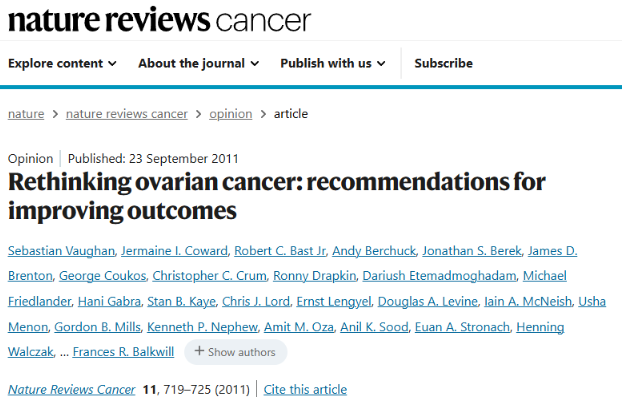
Editor-in-charge:lucy