





















"Pregnant and brain-dead for three years" is a self-deprecating phrase countless mothers are all too familiar with. Forgetfulness, distraction, and lack of focus – it's as if childbirth caused the brain to "regress." However, a 2026 prospective study published in Nature Communications, building on the team's previous series of findings in Nature Neuroscience, completely shatters this misconception: Pregnancy does not make women less intelligent; rather, it induces a long-term, precise, and stage-specific adaptive neural reorganization of the brain. The remodeling pathways, functional emphases, and network activation patterns in the maternal brain are fundamentally different between the first and second child. Each birth provides the maternal role with a unique neural "upgrade."

Image Source: Nature Communications
Click "Read Original" at the end of the article to view the source.
I. Research Background: The Scientific Inquiry from "First-Birth Brain Remodeling" to "Second-Birth Brain Differences"
As early as 2017, this research team was the first to confirm that a first pregnancy induces long-term structural changes in the female brain. The regional reduction in gray matter volume is not neural damage, but rather a form of "neural pruning" to adapt to motherhood—optimizing resource allocation and enhancing core functions like mother-infant bonding, social cognition, and emotional empathy. This conclusion has been replicated and verified by multiple independent studies worldwide.
However, a key question remained unanswered: If the first pregnancy profoundly reshapes the brain, does the second pregnancy merely repeat the same changes, or does it initiate a completely new adaptation pattern? To answer this, the research team conducted the first prospective pre-pregnancy cohort study to date focusing on women expecting their second child. Using multi-modal magnetic resonance imaging (MRI) technology, they systematically tracked the effects of pregnancy on brain structure, functional networks, white matter fibers, and neuro-metabolism, revealing for the first time the complete picture of brain remodeling differences between first and second pregnancies.
II. Study Design: Longitudinal Tracking of 110 Women, Multi-Dimensional Brain Change Comparison
➱ The study included 110 women, divided into three groups:
• Second Pregnancy Group (PRG2): 30 women who planned and completed a second pregnancy.
• First Pregnancy Group (PRG1): 40 women who planned and completed a first pregnancy.
• Control Group (CTR): 40 nulliparous women with no plans for pregnancy.
All participants underwent multi-modal MRI scans at three time points: pre-pregnancy (PRE), early postpartum (POST, approximately 80 days after delivery), and late postpartum (POST1, approximately 409 days after delivery). The scans included: high-resolution structural MRI, resting-state functional MRI, diffusion-weighted MRI, and magnetic resonance spectroscopy (MRS). This allowed for precise assessment of changes in gray matter volume, cortical thickness, functional network connectivity, white matter microstructure, and neurometabolite concentrations.
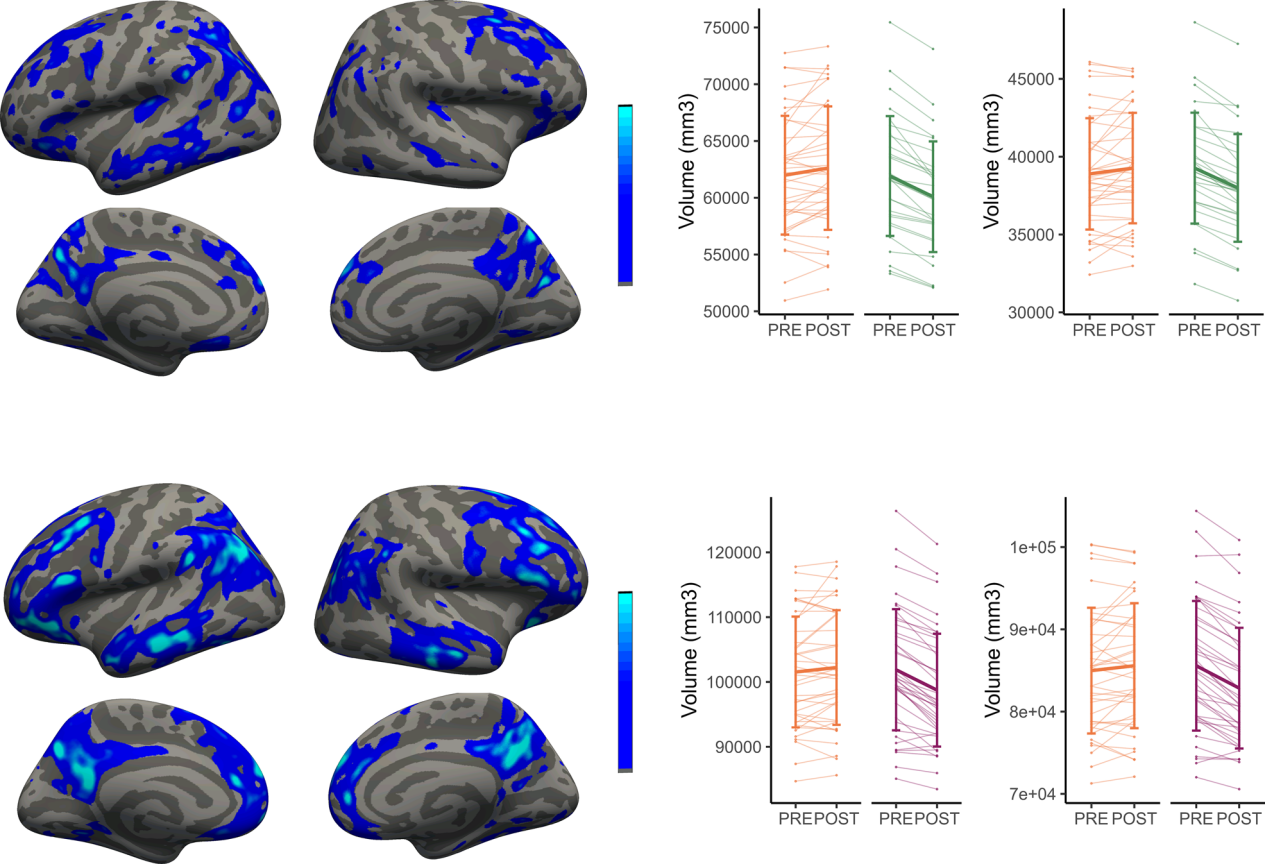
Image Source: Nature Communications
III. Key Findings: First Birth Focuses on "Laying the Empathy Foundation," Second Birth Focuses on "Combat Reinforcement"
01. Gray Matter Volume: Decreases in Both, but with Drastic Differences in Magnitude, Extent, and Regions
Compared to the control group, both first and second pregnancies triggered widespread decreases in cortical gray matter volume. Although there was a slight rebound in the late postpartum period, levels did not return to pre-pregnancy baselines, confirming that brain structural changes induced by childbirth are long-lasting.
• First-time Mothers: Median gray matter volume decrease of 3.1%. The extent of change was 79% larger than in second-time mothers, covering broader brain regions.
• Second-time Mothers: Median gray matter volume decrease of 2.8%. The changes were more subtle, representing fine-tuning on the foundation of the first-pregnancy remodeling.
➱ More crucially, the specific brain regions that changed were highly differentiated:
• First Pregnancy: Changes were concentrated in the Default Mode Network (DMN), the Frontoparietal Network, and the Ventral Attention Network—regions governing self-reflection, social cognition, emotional empathy, and mother-infant attachment.
• Second Pregnancy: The core changes shifted to the Dorsal Attention Network and the Somatomotor Network—regions governing response to external stimuli, rapid attention switching, multitasking, and bodily movement coordination.
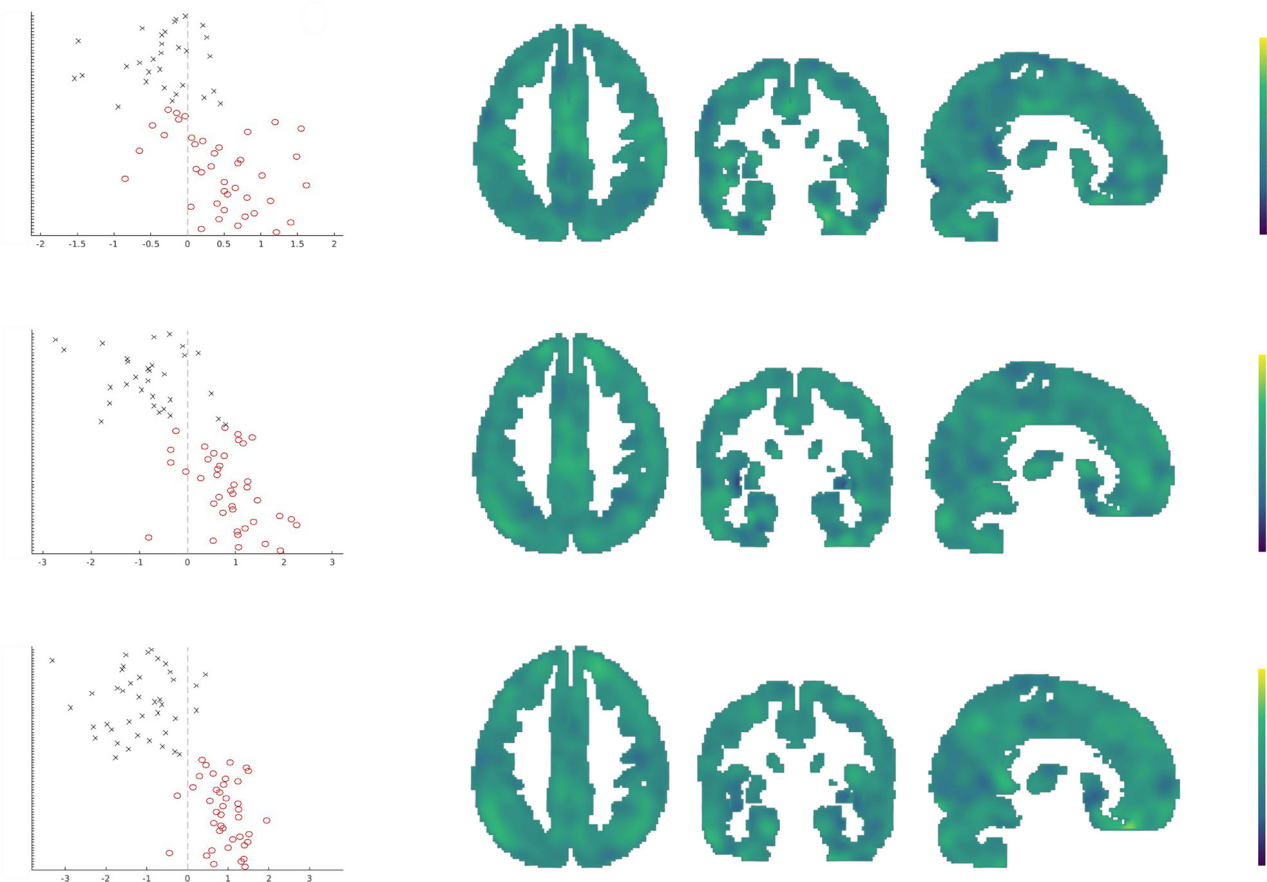
Image Source: Nature Communications
Multivariate pattern classification analysis confirmed that brain gray matter changes alone could efficiently distinguish first-time from second-time mothers. This indicates that the brain remodeling patterns triggered by the two pregnancies are unique and not simple replications, representing two independent and precise neural adaptation processes.
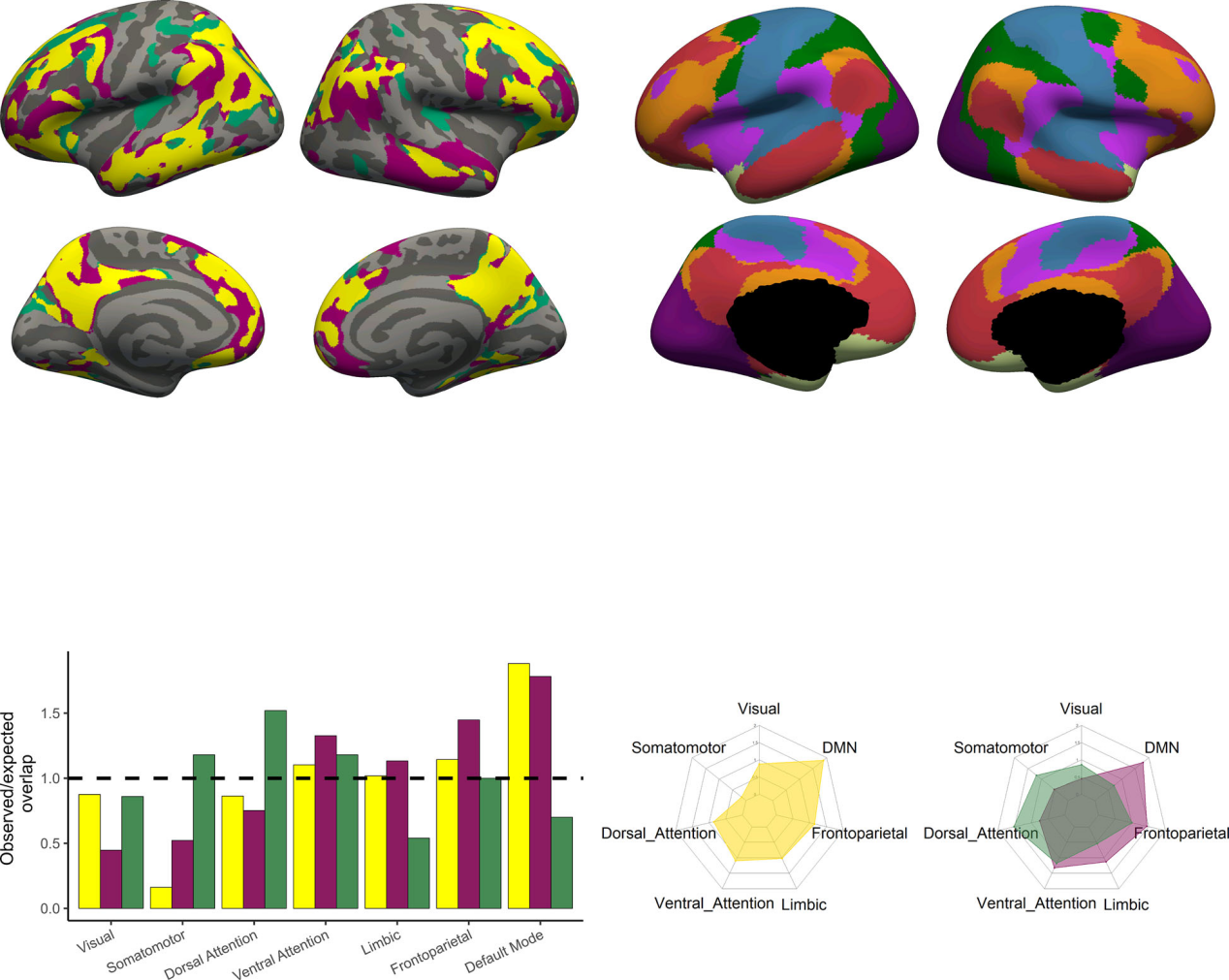
Image Source: Nature Communications
02. Functional Networks: First Birth Builds "Introspective Empathy," Second Birth Strengthens "External Control and Response"
➱ Analysis of brain functional networks clearly shows the functional division of labor between the two births:
• First Pregnancy: The brain undergoes a fundamental "system reinstallation." The functional coherence of the Default Mode Network increases significantly. This network is the core for self-awareness, theory of mind, and mother-infant empathy, helping new mothers rapidly establish maternal-infant bonds, accurately perceive and understand infant needs, and complete the transition from woman to mother.
• Second Pregnancy: The brain achieves "combat function enhancement." Changes in the Default Mode Network are significantly weaker, indicating no repetition of the foundational shaping. Instead, the plasticity of the Dorsal Attention Network and Somatomotor Network is substantially enhanced, precisely adapting to the demands of caring for two children simultaneously—enabling rapid attention allocation, efficient response to external signals, and parallel task processing.
03. White Matter Fibers: Pathway Specialization is Clear, Second-Birth Changes are More Persistent
White matter is the brain's "neural highway." Diffusion-weighted MRI shows significant differences in how the two pregnancies regulate white matter:
• First-time Mothers: Significant decrease in Fractional Anisotropy (FA) in the left Superior Longitudinal Fasciculus (temporal part, SLFt). This fiber tract is involved in language processing and frontoparietal-temporal lobe communication, adapting to the needs of communication and emotional exchange with a newborn.
• Second-time Mothers: Significant decrease in Mean Diffusivity (MD) in the right Corticospinal Tract (CST), a change that persisted until one year postpartum. The Corticospinal Tract is the core pathway of the somatomotor network, responsible for transmitting motor and sensory signals. The strengthening of its microstructure supports the high-intensity physical activity and fine motor coordination required for multi-child care.
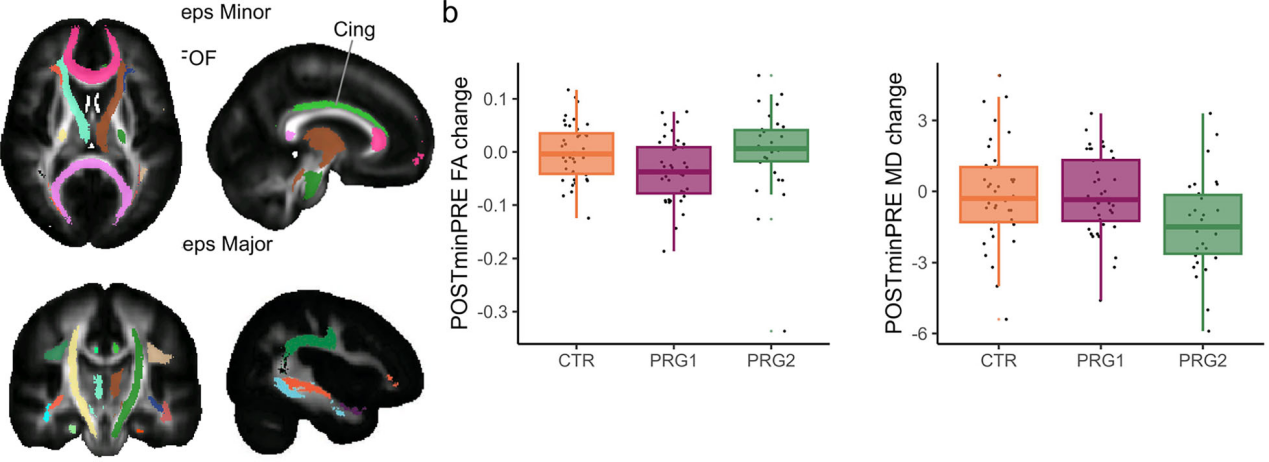
Image Source: Nature Communications
04. Neuro-metabolism: Second Pregnancy Actively Adapts Energy Metabolism to High-Demand Loads
Magnetic Resonance Spectroscopy (MRS) analysis focused on the precuneus/posterior cingulate cortex, detecting five key neurometabolites:
• No significant differences were found between first and second pregnancies in total N-acetylaspartate (tNAA), total choline (tCho), glutamate (Glu), or myo-inositol (Ins).
• Second-time mothers showed a significant increase in total creatine (tCr) concentration. Total creatine acts as the brain's "energy buffer." Its increase suggests the brain actively adjusts energy metabolism to cope with the high cognitive and behavioral loads of multi-child care (Note: This effect did not survive correction for multiple comparisons, suggesting it may be a trend).
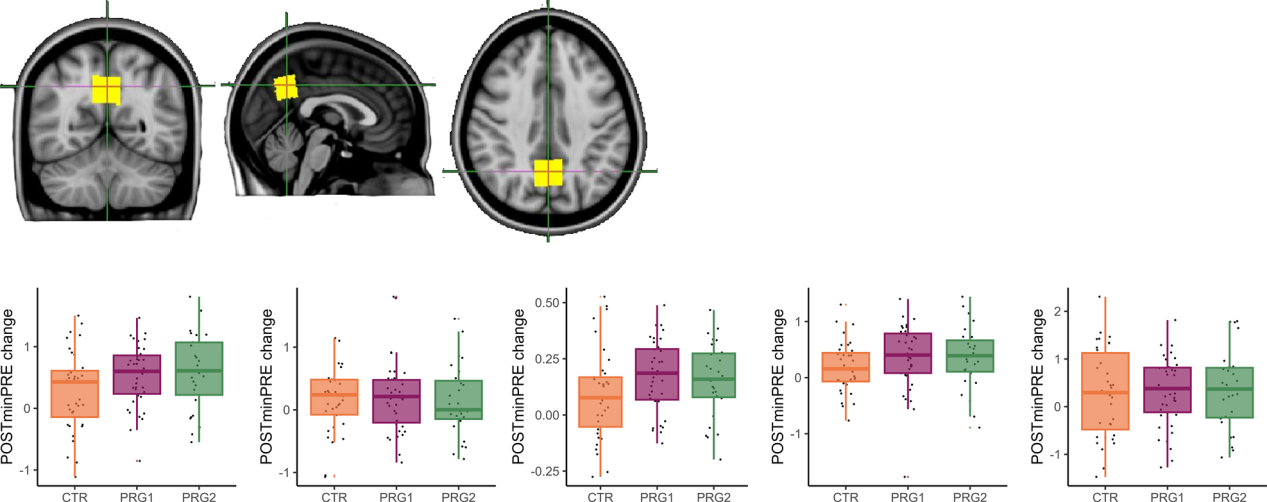
Image Source: Nature Communications
05. Association with Maternal-Infant Behavior and Mental Health
Brain structural remodeling is highly correlated with core maternal functions:
• Brain changes in both first and second pregnancies are positively correlated with mother-infant attachment. More significant changes are associated with higher quality of mother-infant bonding, with a broader range of associations for first-time mothers.
• Brain changes are closely related to perinatal depression and psychological distress. The association for first-time mothers is concentrated in the postpartum period, while for second-time mothers, it is concentrated during pregnancy. This suggests differences in the psychological adaptation time windows for the two pregnancies.
IV. Scientific Interpretation: Not Getting Dumber, but Evolving "Maternal Superpowers"
From a neuroscience perspective, "pregnancy brain" is a complete misnomer. This Nature Communications study reveals that brain remodeling triggered by human pregnancy is an exquisitely evolved adaptive mechanism:
• First Birth: Accomplishes the foundational construction of maternal capabilities, strengthening empathy, attachment, and social cognition—enabling mothers to "understand their baby."
• Second Birth: Achieves precise upgrades in maternal capabilities, strengthening attention, motor coordination, and multitasking—enabling mothers to "efficiently care for multiple children."
Each pregnancy leaves a unique and lasting neural imprint on the female brain. These changes are not regression, but targeted optimization to protect children and adapt to the maternal role. From a new mother to a mother of multiple children, the brain is constantly and silently upgrading itself. This is the most tender, yet most powerful, adaptation of life—unique to mothers.
Content Source: Straathof, M., Halmans, S., Pouwels, P.J.W. et al. The effects of a second pregnancy on women’s brain structure and function. Nat Commun 17, 1495 (2026). https://doi.org/10.1038/s41467-026-69370-8
Responsible Editor: Huo Pan