





















Advanced epithelial ovarian cancer (AEOC) accounts for approximately 70% of epithelial ovarian cancer (EOC) cases. Most patients are diagnosed at FIGO stage III–IV, often with extensive peritoneal dissemination. Many present with poor performance status and significantly lower surgical tolerance compared to early-stage patients, particularly when multivisceral resection is anticipated. Thus, initial treatment decision-making for AEOC remains a major challenge in gynecologic oncology.
Primary cytoreductive surgery (PCS) is the cornerstone of ovarian cancer management, but inappropriate application can lead to serious perioperative complications, delaying adjuvant chemotherapy and worsening prognosis. Neoadjuvant chemotherapy (NACT) followed by interval cytoreductive surgery (ICS) is an established alternative, especially for patients unlikely to achieve complete gross resection (R0) or with significant comorbidities. This approach reduces tumor burden, lowers surgical complexity and morbidity, and demonstrates non-inferior survival compared to upfront PCS. The recent SUROVA study showed significantly improved overall survival (OS) with NACT in an Asian population (63.1 vs. 52.6 months, P < 0.05).
Given the lower chemosensitivity of low-grade serous, mucinous, and clear cell carcinomas, NACT applicability remains controversial; this consensus focuses specifically on high-grade serous carcinoma and poorly differentiated endometrioid carcinoma. Pathologic confirmation before initiating NACT is critical. This consensus provides guidance on patient selection, chemotherapy regimens, and ICS timing to standardize NACT use and optimize AEOC management.
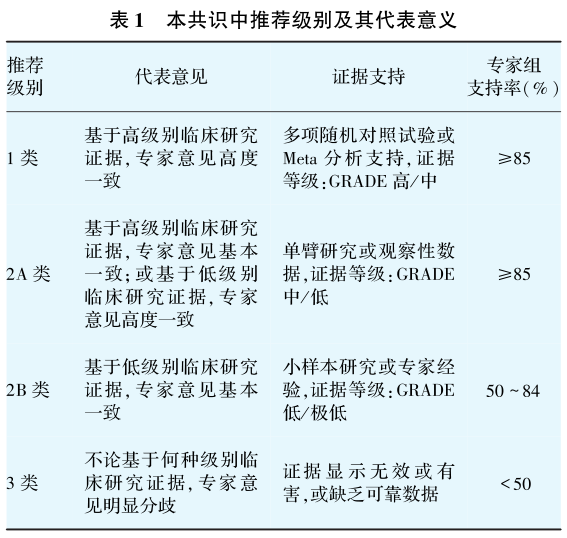
Table 1: Recommendation Grades and Definitions
1. Initial Evaluation of Advanced Epithelial Ovarian Cancer
Evaluation of suspected AEOC must include assessment of disease extent and resectability: CA125, HE4, CEA, CA19-9 (to exclude mucinous carcinoma, etc.), contrast-enhanced abdominopelvic CT, and thoracic imaging (preferably CT). Chest CT effectively identifies pleural metastasis and mediastinal lymph node involvement, informing surgical planning. MRI, FDG-PET, or ultrasound may supplement feasibility assessment.
Risk factors for suboptimal PCS (R0 unattainable) include age ≥60 years, CA125 ≥500 U/mL (ROC analysis suggests ≥600 U/mL improves predictive accuracy), ASA class III–IV, retroperitoneal lymph nodes >1 cm above renal hilum, diffuse small bowel adhesions or thickening, mesenteric deposits >1 cm, root of superior mesenteric artery deposits >1 cm, perisplenic deposits >1 cm, and omental cake >1 cm. The Suidan multifactorial model (Table 2) recommends NACT+ICS if score ≥3.
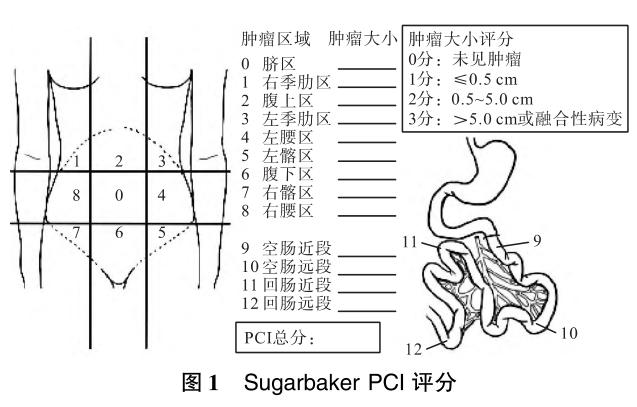
Diagnostic laparoscopy reduces futile laparotomy rates. After excluding extra-abdominal metastasis via CT/MRI, the laparoscopy group had only 2.0% suboptimal cytoreduction vs. 11.1% in the CT-only group. Laparoscopic predictive indices include the Fagotti scoring system (PIV: Predictive Index Value; Table 3) and Sugarbaker Peritoneal Cancer Index (PCI) (Figure 1).
- PIV <8: Proceed with PCS.
• PIV ≥8: Recommend 3–4 cycles NACT, then reassess.
• PCI >20 (high tumor burden): Recommend NACT.
Laparoscopy is not recommended if imaging shows malignant pleural effusion or distant parenchymal metastasis.
Genetic testing for BRCA1/2 germline pathogenic variants and HRD status is recommended before NACT to guide PARPi maintenance therapy and familial risk assessment.
➱ Recommendation:
All suspected AEOC patients should undergo CA125/HE4, abdominopelvic + chest CT. Laparoscopy (Fagotti PIV ≥8 or PCI >20) or advanced imaging (MRI, FDG-PET) is recommended for resectability assessment (Grade 2A). Routine BRCA1/2 germline and HRD testing is recommended (Grade 1).
Table 2: Suidan Model Criteria
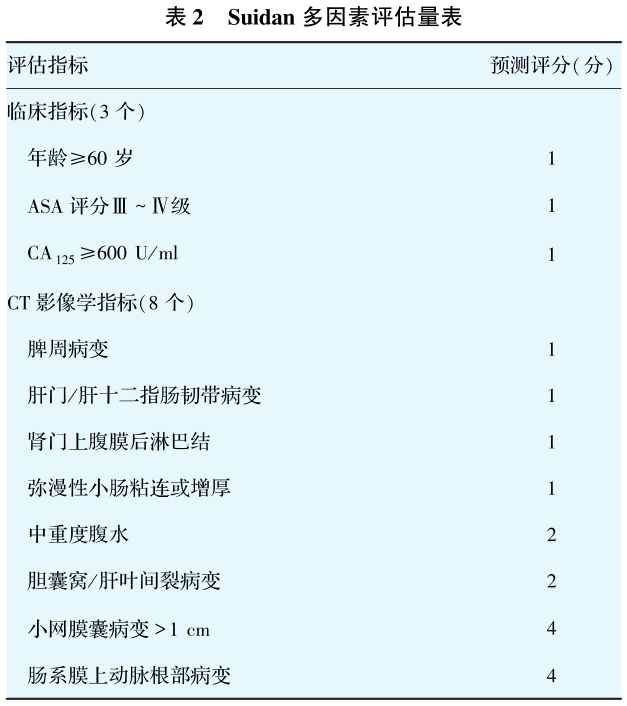
Table 3: Fagotti Laparoscopic Scoring System
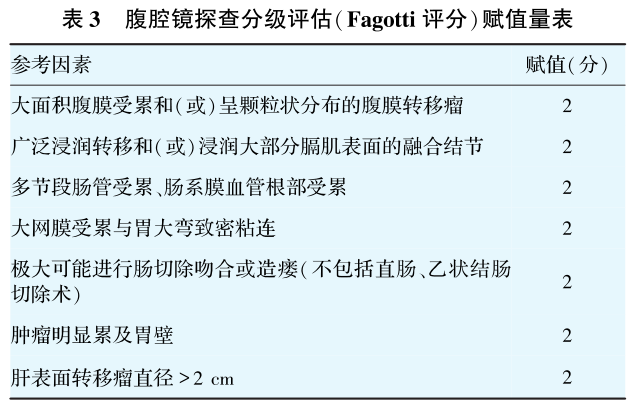
Figure 1: Sugarbaker PCI Mapping
2. Pathologic Basis for Neoadjuvant Chemotherapy
CT has high PPV and sensitivity for stage III disease but limited detection of small extra-pelvic peritoneal implants. Histopathology remains the gold standard; ~3% of patients undergoing NACT based on imaging/cytology alone are postoperatively found not to have ovarian cancer.
Tissue acquisition methods:
• Laparoscopy/laparotomy: 96% concordance with final ICS pathology; laparoscopy offers less blood loss and faster NACT initiation.
- Image-guided biopsy: Core needle biopsy (preferred) provides adequate tissue for histology, IHC, and molecular testing; fine-needle aspiration has lower sample adequacy. Complication rates are <1.5%.
- Ascites cytology: Acceptable only if tissue biopsy is infeasible; requires CA125/CEA ratio >25 to exclude gastrointestinal/other metastases.
➱ Recommendation:
Histopathologic confirmation (core needle biopsy or laparoscopy) is required before NACT, confirming high-grade serous or poorly differentiated endometrioid carcinoma. Ascites cytology (CA125/CEA >25) is acceptable only in exceptional circumstances after excluding other primaries (Grade 2A).
3. Indications for Neoadjuvant Chemotherapy
3.1. Technically Unresectable Disease
NACT+ICS is recommended when PCS is unlikely to achieve R0. Meta-analyses of JGOG0602, SCORPION, EORTC 55971, and CHORUS show NACT improves OS (24.3 vs. 21.2 months, HR 0.76) and PFS (10.6 vs. 9.7 months, HR 0.77), particularly in stage IV disease, with reduced morbidity.
3.2. High Perioperative Risk
Patients with ASA III–IV, age ≥60, ECOG >0, comorbidities, malnutrition, hypoalbuminemia, or new VTE benefit from NACT+ICS to reduce severe complications.
➱ Recommendation:
NACT is recommended if: Suidan score ≥3, Fagotti PIV ≥8, or PCI >20; high perioperative risk (ASA III–IV, elderly, ECOG >0, comorbidities, hypoalbuminemia, VTE); or stage IV AEOC (Grade 2A).
4. Neoadjuvant Chemotherapy Regimens
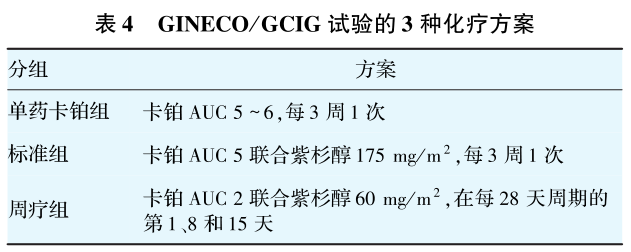
Platinum-taxane remains the standard. Carboplatin (AUC 5–6) + paclitaxel (175 mg/m² q3w) is preferred over cisplatin due to better tolerability and non-inferior efficacy. EORTC 55971 and CHORUS established non-inferiority of NACT+ICS vs. PCS.
Elderly/frail patients:
• Avoid single-agent carboplatin (inferior PFS/OS).
• Dose-dense weekly regimen: Carboplatin AUC 2 + paclitaxel 60 mg/m² (days 1, 8, 15 q3w) improves tolerability and quality of life (MITO-7, ICON8 data).
Bevacizumab addition:
NACT + bevacizumab (15 mg/kg q3w) increases complete resection rates (89% vs. 67%) without increasing AEs. ICS must be scheduled ≥6 weeks after the last bevacizumab dose to avoid wound healing complications.
➱ Recommendation:
First-line: Carboplatin AUC 5–6 + paclitaxel 175 mg/m² q3w. For elderly/frail: weekly carboplatin AUC 2 + paclitaxel 60 mg/m². Bevacizumab may be added for massive ascites/pleural effusion with appropriate surgery timing (Grade 2A).
Table 4: GINECO/GCIG Regimens in Elderly Patients
5. Response Assessment and Timing of Interval Cytoreductive Surgery
Optimal NACT cycles:
GOGER-01 showed no difference in R0 rates or survival between 3 vs. 6 cycles; ≤4 cycles may yield better OS. RCTs recommend 3–4 cycles, with ICS performed once resectability is confirmed.
Response assessment:
• Imaging (RECIST) after 2–3 cycles.
• CA125 kinetics: KELIM score >1.0 predicts higher R0 rates and better OS.
Hyperthermic intraperitoneal chemotherapy (HIPEC):
ICS + HIPEC (cisplatin 100 mg/m²) improves OS (52 vs. 45 months) and PFS (18 vs. 12 months) in patients achieving R0. Requires multidisciplinary management and careful patient selection (avoid in renal impairment, neuropathy, diabetes).
➱ Recommendation:
Assess after 3 cycles using RECIST, CA125, KELIM, and clinical status. Perform ICS after 3–4 cycles (range 3–6), aiming for R0 (Grade 2A). HIPEC may be considered during ICS for stage III–IV with R0 resection and good performance status (Grade 2B).
6. Post-ICS Chemotherapy
• R0 achieved: Minimum 3 postoperative cycles (total NACT+adjuvant = 6–8 cycles).
- Suboptimal resection/Stage IV: Total 6–8 cycles; extending beyond 8 cycles increases toxicity without survival benefit.
- Bevacizumab: Recommended for high-risk cases (based on GOG-0218, ICON7); start ≥4 weeks post-ICS (wound healing).
- Timing: Initiate adjuvant chemotherapy within 2–3 weeks post-ICS if feasible.
➱ Recommendation:
Start adjuvant chemo within 2–3 weeks post-ICS if feasible (Grade 2B). R0: 3 postoperative cycles (total 6–8) (Grade 2A). High-risk: total 8 cycles (Grade 2B). Bevacizumab recommended in high-risk setting with proper timing (Grade 2A).
7. Management of Non-Responders to NACT
Disease progression during NACT portends poor prognosis (median OS <1 year). No RCT-established optimal strategy; options include switching to non-cross-resistant agents (gemcitabine, PLD, bevacizumab) or clinical trials.
Re-biopsy for histology and molecular profiling (including BRCA) is recommended. ICS is generally not advised; focus shifts to palliative chemotherapy and early supportive care.
➱ Recommendation:
For platinum-resistant/refractory progression during NACT, consider re-biopsy, molecular testing, alternative chemotherapy, and clinical trials. Early palliative care integration is recommended (Grade 2B).
8. Multidisciplinary Collaboration and Comprehensive Management
AEOC management requires an MDT (gynecologic oncology, surgery, radiology, pathology, medical oncology, anesthesia, nutrition).
Centralization of care:
High-volume centers and surgeons achieve higher complete resection rates (43.3% vs. 41.0%) and improved OS (42.1 vs. 32.8 months). Rural patients benefit from referral to specialized centers.
Shared decision-making:
Clearly communicate diagnosis, staging, prognosis, and treatment options (PCS vs. NACT), including survival and quality-of-life data.
➱ Recommendation:
Refer patients to high-volume centers or regional cancer centers if local resources are inadequate. MDT is essential for individualized AEOC management (Grade 2A).
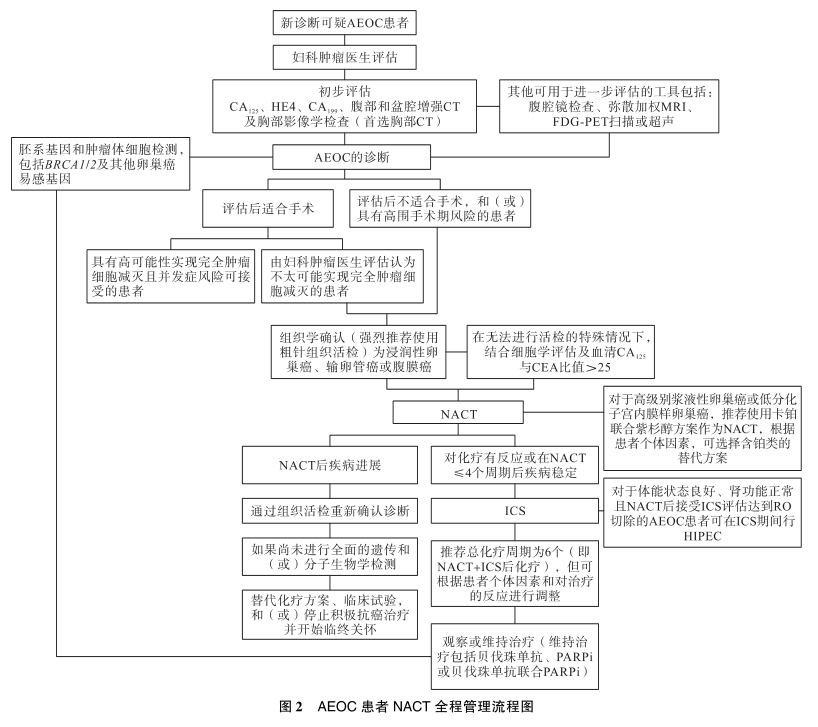
Figure 2: AEOC Management Algorithm
9. Conclusion
This consensus integrates international evidence and expert opinion to guide NACT use in AEOC in China. Key unresolved issues include optimal NACT cycles, immunotherapy/ targeted therapy integration, and management of non-responders. As molecular profiling and prospective data evolve, this guidance will be updated to reflect advances in precision oncology.
Source: Journal of Practical Obstetrics and Gynecology, Vol. 42, No. 2, February 2026.
Editor: Lily