





















From the perspective of a front-line clinician, combined with the 2023 Edition of Guidelines for the Diagnosis and Treatment of Ectopic Pregnancy and the 2024 Edition of Clinical Practice Guidelines for Ectopic Pregnancy, as well as practical clinical experience, I will elaborate on this high-frequency clinical bottleneck thoroughly. This is both a summary of my own experience and a hope to communicate, discuss, and progress with fellow colleagues.
I. Grasp the Core Principle: HCG Elevation Is Not a Bad Sign, but Drug Effect
Multiple clinical studies and guideline data show that approximately 41.8% of patients experience mild HCG elevation 3 to 4 days after single-dose MTX treatment. Most of these patients show a decline in HCG on day 7, and the final conservative success rate is not significantly different from that of patients with immediate HCG decline after treatment. The elevation range is mostly between 1% and 15%. Therefore, whenever I see a slight increase in the value, I am confident that it is not treatment failure, but the drug working regularly.
II. A Core Method: Four-Dimensional Judgment, Do Not Only Focus on a Single Number
These four dimensions are complementary and indispensable. I always adhere to such comprehensive judgment in clinical practice, avoiding many misjudgments caused by a single value. The significance of in-hospital observation is to monitor these four indicators in real time, providing sufficient evidence for clinical judgments rather than making decisions based on intuition.
III. Stratified Management: Conservative When Appropriate, Operate When Necessary, No Hesitation or Abuse of Drugs
- Physiological elevation: Stick to the original regimen, no blind adjustment neededThis is the most common clinical situation, fully meeting the normal standards of four-dimensional judgment. My approach is not to add MTX, adjust mifepristone dosage, or increase traditional Chinese medicine, but to follow the original plan.
- Critical elevation: Salvage treatment, moderate interventionThis situation is rare: HCG rises by 15% to 20% at 3 to 4 days, and the decline on day 7 is less than 15%, but the patient has stable vital signs, no signs of rupture, and no fetal heartbeat. Salvage treatment is needed at this time, but with "minimal effective intervention" instead of aggressive medication.
- Pathological failure: Decisive surgery, laparoscopy first, no delayThis requires the most decisiveness. Once any of the following conditions occur, immediately initiate the surgical process without hesitation: HCG continues to rise by more than 20%, or no improvement after salvage treatment; aggravated abdominal pain, intra-abdominal bleeding, or even pre-shock symptoms in patients; ultrasound indicates fetal heartbeat, mass rupture, or sudden increase in pelvic effusion; or severe adverse reactions to MTX and mifepristone.
For surgery, laparoscopy is the first choice, which is the gold standard of the latest guidelines and our routine clinical operation. Laparoscopy is faster, less invasive, and more effective in hemostasis than laparotomy. For patients with fertility needs, salpingostomy is performed to preserve fertility; for those without fertility needs or with severe mass rupture, salpingectomy is performed to completely remove the lesion. Laparotomy is only considered in extreme cases where the patient is in severe shock and cannot establish pneumoperitoneum.
IV. Sincere Experience: Avoid These 4 Clinical Misconefits
After years of clinical practice, I have also taken detours and fallen into pitfalls on this issue. In summary, there are 4 most worthy clinical misconceptions about transient HCG elevation, which I share here to help fellow colleagues avoid them:
Misconception 1
This is the core cognitive misunderstanding. Guidelines clearly stipulate that the gold standard for effective conservative treatment of ectopic pregnancy is a ≥15% decline in HCG on day 7 after treatment, not a single value at 3 to 4 days. HCG elevation at 3 to 4 days is a normal phenomenon in nearly 40% of patients. Hasty surgery at this time is over-medicalization, which not only increases surgical trauma for patients and wastes the efficacy of combined treatment, but also violates the original intention of minimally invasive treatment to preserve fertility.
Misconception 2
It is easy to fall into the misunderstanding of "higher numerical rise means more severe condition" in clinical practice, rushing to add MTX or increase traditional Chinese medicine. In fact, the trend of HCG changes is far more important than a single elevation range. I have encountered such cases in clinical practice: a patient’s HCG rose by 18% at 3 to 4 days, but dropped sharply by 35% on day 7, and finally achieved conservative success; there were also patients with only 8% elevation, but subsequent continuous HCG rise, eventually requiring surgical intervention. Do not be fooled by a single value; focusing on the 48-hour change trend is crucial. Blind drug addition will only increase the risk of liver and kidney damage in patients, not worth the loss.
Misconception 3
We always adopt integrated traditional Chinese and Western medicine treatment and deeply understand the role of traditional Chinese medicine in the conservative treatment of ectopic pregnancy, but traditional Chinese medicine is by no means a "cure-all" and cannot be used blindly. During physiological elevation, patients have no aggravated abdominal pain or increased pelvic effusion. Blindly increasing traditional Chinese medicine for promoting blood circulation, removing blood stasis, and dissipating masses at this time can easily induce intra-abdominal bleeding, which is counterproductive. Only in cases of critical elevation without surgical indications will we dialectically adjust traditional Chinese medicine to balance mass dissipation and hemostasis, which is a rational medication approach.
Misconception 4
This is the biggest concern of patients and their families, and also a point that needs repeated explanation in clinical practice. In fact, minimally invasive laparoscopic surgery has minimal impact on patients’ fertility. In clinical follow-up, I found that the natural pregnancy rate of patients with patent contralateral fallopian tubes after surgery is not significantly different from that of patients with successful conservative treatment. Even if patients have poor bilateral fallopian tube conditions, mature assisted reproductive technology can provide an effective way for pregnancy preparation. On the contrary, successful standardized combined conservative treatment can maximally preserve the integrity of the fallopian tube, which is more conducive to subsequent natural fertility.
Final Remarks
Guidelines provide clear diagnosis and treatment standards, in-hospital observation builds a solid safety line, and as front-line clinicians, the most important thing we should do is abandon the inherent "numerical-only" mindset and not be led by a single blood value. Supported by authoritative guidelines and clinical research, use the four-dimensional method of "time - amplitude - symptoms - ultrasound" for comprehensive judgment, firmly implement conservative treatment when appropriate, and take decisive intervention when necessary. No blindness, no hesitation, no abuse of drugs — this is not only responsible for patients, but also the core professional literacy of us clinicians.
References
[1] Chinese Society of Obstetrics and Gynecology, Chinese Medical Association. Guidelines for the Diagnosis and Treatment of Ectopic Pregnancy (2023 Edition)[J]. Chinese Journal of Obstetrics and Gynecology, 2023, 58(6): 401-408.[2] American College of Obstetricians and Gynecologists (ACOG). Clinical Practice Guideline for Ectopic Pregnancy (2024)[J]. International Journal of Obstetrics and Gynecology, 2024, 51(2): 161-168.
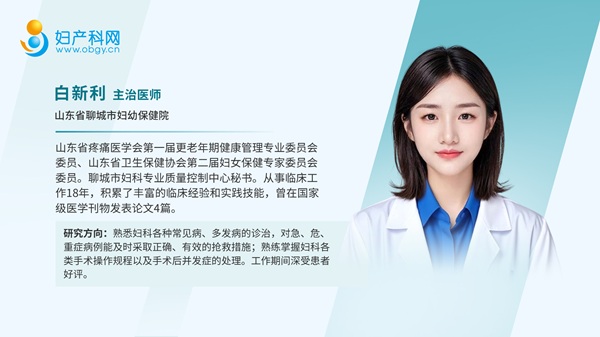
Author Biography
Edited by: Qing Huan
Reviewed by: Ma Ye