





















Preeclampsia is a serious complication of pregnancy. Globally, it contributes to over 70,000 maternal deaths annually. It is also significantly associated with an increased future risk of cardiovascular mortality for both mothers and their newborns. Since 1979, when Crandon and Isherwood first reported that aspirin use during pregnancy could reduce the risk of preeclampsia, and following the WHO's 2011 recommendation for at-risk women to take a moderate dose (75mg/d) for prevention, low-dose aspirin for preeclampsia prevention has been in use for 47 years. In a year-end review in December 2025, Professor Qi Hongbo highlighted one of the three breakthrough advances in obstetric clinical research: higher-dose aspirin demonstrating superior efficacy in preventing preeclampsia. This raises critical questions: What is the appropriate dose of aspirin for preeclampsia prevention? What factors influence the optimal dosage? Why is aspirin ineffective for some pregnant individuals, and does aspirin resistance exist? What are the future research directions?
Part 1: Recent Studies on Different Aspirin Doses for Preeclampsia Prevention by International Organizations
Guidelines vary on the recommended aspirin dose for preeclampsia prevention. Major US medical societies suggest 81mg daily for at-risk women, while the UK's NICE guidelines recommend a dose of up to 150mg. The optimal aspirin dose has been widely debated, with some studies suggesting daily doses of 150mg/162mg.
(1) A retrospective study published in the American Journal of Obstetrics and Gynecology on January 1, 2025: "Comparison of two aspirin doses for preeclampsia prevention in twin pregnancies: a propensity score-matched multicenter retrospective study" [1].
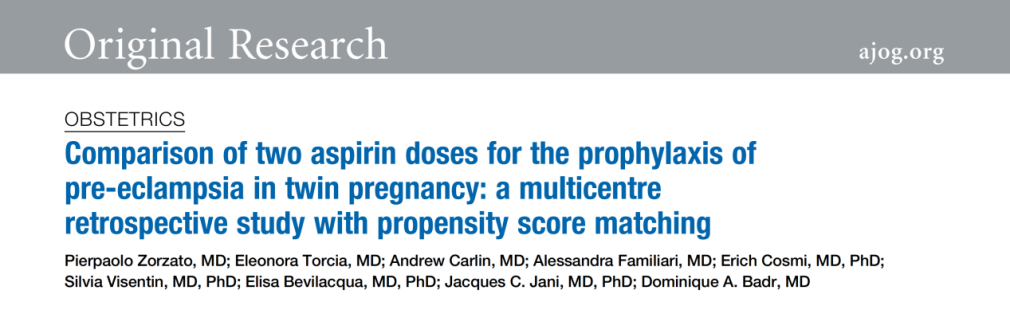
This international multicenter retrospective cohort study analyzed data from 1907 twin pregnancies across 3 European hospitals from 2010-2023. Groups: no aspirin (1423 cases, 74.6%), 80-100mg aspirin (212 cases, 11.1%), and 160mg aspirin (272 cases, 14.3%). After propensity score matching to balance confounders, Cox regression showed the 160mg group reduced preeclampsia risk by 37% (aHR=0.63) and HDP risk by 44% (aHR=0.56). The 80-100mg group showed no significant protective effect. For early-onset preeclampsia (<34 weeks), the 160mg group showed a 91% risk reduction (aOR=0.09). The 160mg dose did not increase risks of SGA, miscarriage, IUFD, neonatal death, obstetric/non-obstetric bleeding, thrombocytopenia, or gastritis. In nulliparous women, 160mg aspirin reduced preeclampsia risk by 68%, but no protective effect was observed in multiparous women. The study concluded that for twin pregnancies, 160mg daily is significantly more effective than 80-100mg in reducing preeclampsia risk, especially for early-onset cases, without increasing adverse maternal or neonatal outcomes.
(2) A study published in the American Journal of Obstetrics and Gynecology in May 2025: "A randomized crossover study comparing the pharmacokinetics and pharmacodynamics of two different doses (75 mg vs 150 mg) of oral aspirin in pregnant women at risk of preeclampsia: implications for assessing aspirin response and patient adherence."
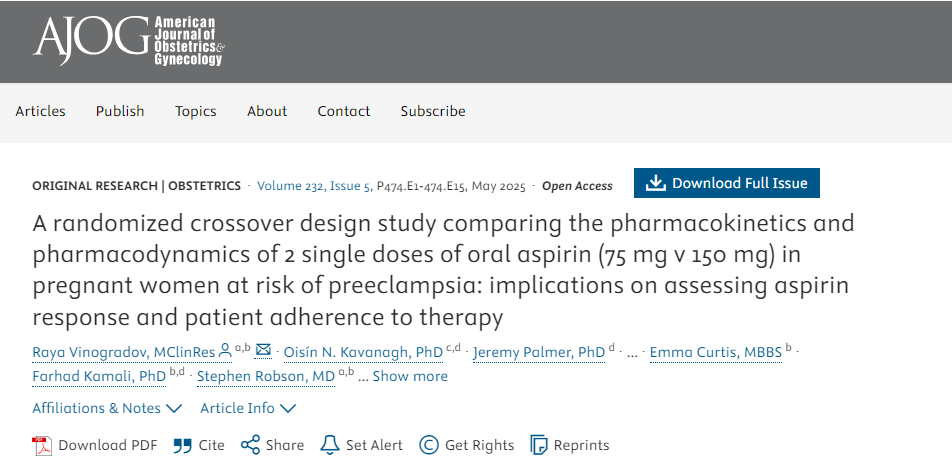
This study provided pharmacodynamic evidence supporting the potential advantage of 150mg aspirin. It was the first to compare the pharmacokinetic and pharmacodynamic differences of single 75mg and 150mg doses in high-risk pregnant women, offering new rationale for higher-dose aspirin use. It supports further investigation into the clinical efficacy of the 150mg dose for preeclampsia prevention. The study also noted the need for randomized controlled trials to assess bleeding risks with higher doses and to explore thromboxane B2 recovery rates to guide discontinuation timing.
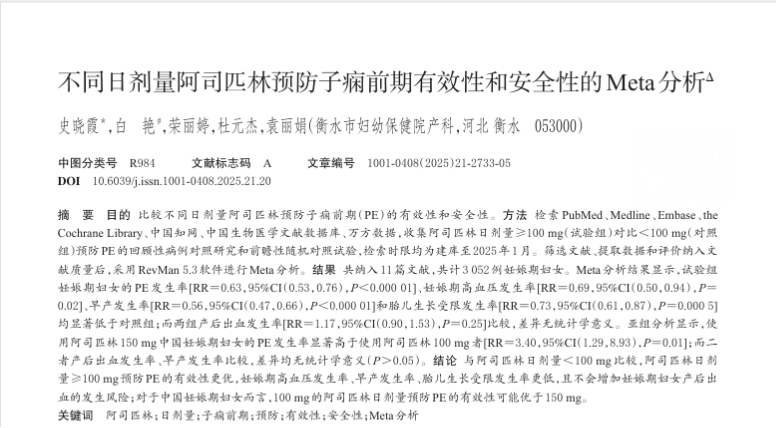
(3) A meta-analysis published in China Pharmacy on December 8, 2025: "Meta-analysis of the efficacy and safety of different daily doses of aspirin for preventing preeclampsia" [2].
Key Conclusions:
1. Low-dose aspirin (<100mg/d): Reduced risk by 26% (RR=0.74), relatively weaker than high-dose.
2. High-dose aspirin (≥100mg/d): Reduced the risk of preterm preeclampsia by about two-thirds, but had limited effect on term preeclampsia. Overall preeclampsia: RR=0.63 (37% risk reduction).
4. Timing: Initiation before 16 weeks of gestation yielded better results, with an interaction between dose and timing; higher doses were more effective when started early.
5. Safety: Low-dose aspirin did not generally increase maternal bleeding risk, but high-dose aspirin might slightly elevate it (RR=1.08). Aspirin did not increase risks of fetal intracranial hemorrhage, placental abruption, or perinatal mortality, but discontinuation before delivery is recommended to reduce intrapartum bleeding risk.
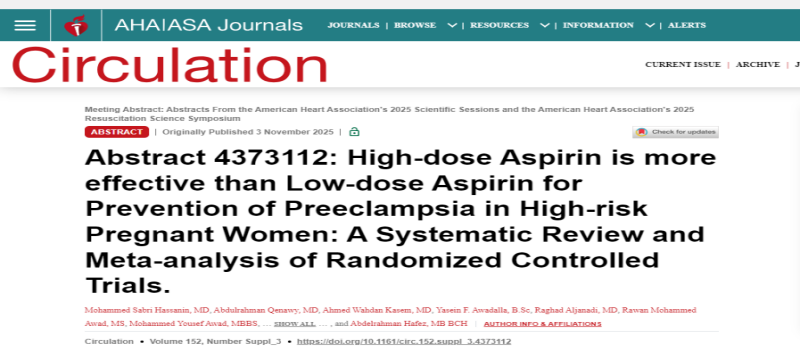
(4) A meta-analysis published in Circulation (American Heart Association) on November 3, 2025: "High-dose aspirin for the prevention of preeclampsia in high-risk pregnant women: a meta-analysis" [3].
This randomized, double-blind, crossover study in high-risk pregnant women compared single 75mg and 150mg aspirin doses. The primary outcome was thromboxane B2 inhibition rate 24 hours post-dose. Conclusion: 150mg aspirin provided superior and more reliable platelet inhibition compared to 75mg in high-risk women, supporting consideration of higher-dose aspirin for preeclampsia prevention.
(5) An open-label RCT published in the American Journal of Obstetrics and Gynecology on March 1, 2025: "Aspirin 162 mg versus 81 mg for preeclampsia prophylaxis in high-risk obese individuals: an open-label randomized controlled trial (ASPREO)" [4].
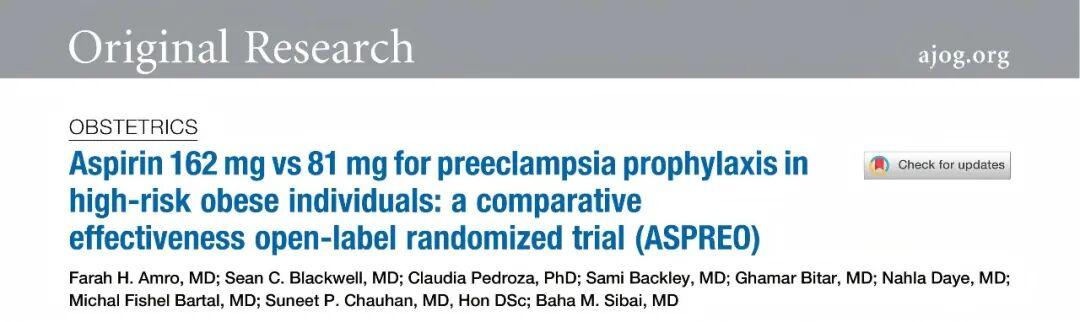
This trial compared 162mg vs 81mg aspirin in high-risk obese individuals (BMI≥30 with additional risk factors). It found that the 162mg group had a 35% incidence of preeclampsia with severe features vs. 40% in the 81mg group, with a 78% probability of reducing this risk. No significant differences were found in other secondary outcomes or adverse events. This study provides new dosage reference for high-risk obese pregnant women.
(6) The "Guidelines for Prediction and Prevention of Preeclampsia" released by the Hypertensive Disorders in Pregnancy Group of the Chinese Society of Obstetrics and Gynecology and the Chinese Society of Perinatal Medicine on May 25, 2025 [5].
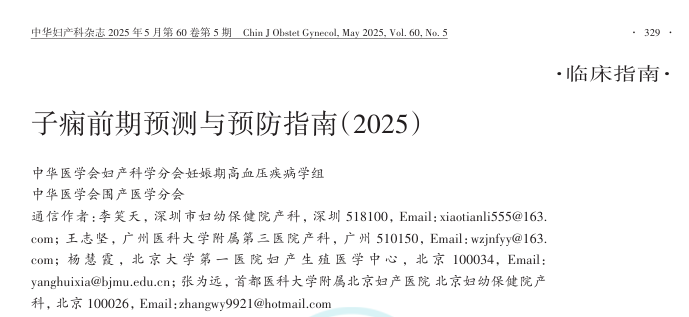
The guidelines recommend that pregnant women with high-risk factors (e.g., history of preeclampsia, placental diseases, renal diseases, hypercoagulable state) can start taking low-dose aspirin (50mg-150mg) daily from early to mid-pregnancy (12-16 weeks), continuing until 26-28 weeks based on individual factors.
(7) Late-breaking research presented at the 2026 Society for Maternal-Fetal Medicine (SMFM) Annual Pregnancy Meeting (February 8-13, Las Vegas) [6].
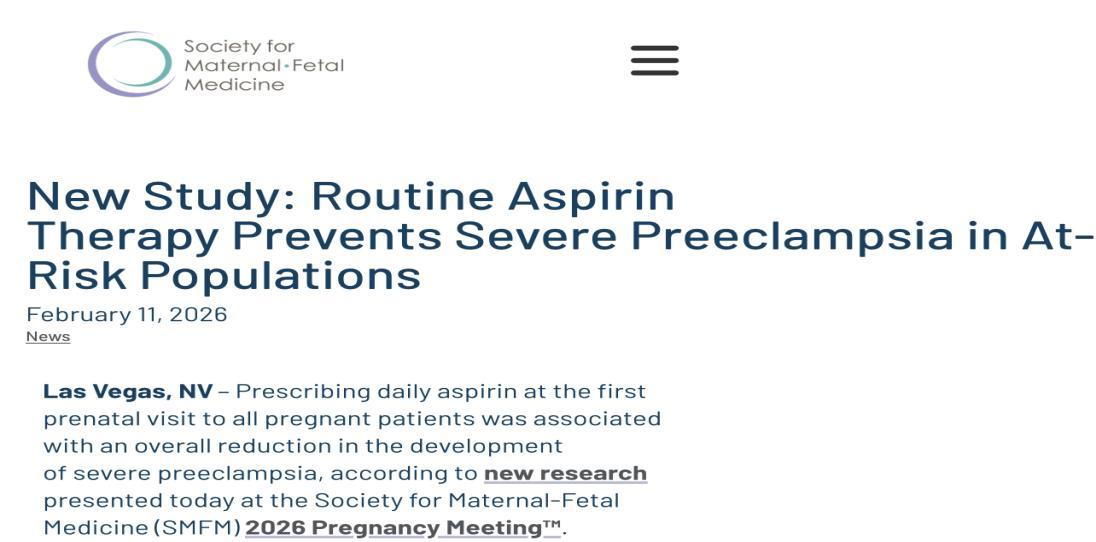
This before-and-after cohort study at Parkland Hospital, Dallas, involved 18,457 high-risk pregnant women in each group. Starting August 2022, the intervention group was directly provided 162mg/d aspirin at the first prenatal visit (≤16 weeks), covering all pregnant women, not just high-risk individuals. This "universal" approach effectively addressed adherence barriers. Results showed a 29% reduction in the risk of severe preeclampsia (7.12% → 5.19%, OR=0.71). The onset of preeclampsia was also delayed. This strategy was effective in subgroups (e.g., those with chronic hypertension) and did not increase risks of postpartum hemorrhage or placental abruption. The clinical significance is that it provides high-level evidence for a potential shift from "prevention in high-risk groups" to "universal prevention."
Part 2: Mechanism of High-Dose Aspirin in Preeclampsia Prevention
01 What is the specific mechanism of 150mg aspirin in preventing preeclampsia?
The core mechanism involves irreversible inhibition of platelet COX-1 to correct the TXA₂/PGI₂ imbalance, improve placental spiral artery remodeling and blood perfusion, regulate angiogenic factor balance, and exert anti-inflammatory and antioxidant effects. Compared to 75mg, 150mg provides more stable platelet inhibition, covers more pathological aspects, and lowers the non-response rate.
1. Core Mechanism: Corrects the thromboxane/prostacyclin balance via irreversible acetylation of platelet COX-1, persistently inhibiting TXA₂ (vasoconstrictor, pro-thrombotic) while sparing endothelial COX-2-derived PGI₂ (vasodilator, anti-thrombotic), improving placental perfusion. The 150mg dose achieves more complete COX-1 inhibition, reducing non-response rate from ~29% to ~5%, and is more effective given increased blood volume dilution during pregnancy.
2. Improves Placental Development & Spiral Artery Remodeling: Promotes trophoblast proliferation, migration, and invasion, repairing inadequate spiral artery remodeling, reducing placental ischemia-hypoxia via pathways like PI3K-AKT-mTOR.
3. Regulates Angiogenic Factor Balance: Reduces placental sFlt-1 and increases PlGF, restoring the sFlt-1/PlGF balance, improving endothelial function.
4. Anti-inflammatory & Immunomodulation: Inhibits NF-κB pathway and pro-inflammatory cytokines (IL-6, TNF-α), promotes anti-inflammatory Th2/Treg responses.
5. Antioxidant & Metabolic Regulation: Reduces placental oxidative stress, protects endothelial and mitochondrial function; regulates metabolic enzymes.

02 Precautions
1. Timing: Initiation at 12-16 weeks, continuing until 1 week before delivery, covering the critical period of placental vascular development.
2. Safety: Still within the low-dose range, does not significantly increase bleeding risk, no clear adverse effects on the fetus.
3. Individualization: Dose and monitoring should be adjusted based on risk stratification (e.g., history of preeclampsia, chronic hypertension, multiples, obesity).
4. Contraindications/Cautions: Thrombocytopenia, bleeding tendency, gastric ulcer, asthma, aspirin allergy.
Part 3: Why Does Aspirin Resistance Exist in Some Cases of Preeclampsia?
A challenge in LDA prevention of PE is the issue of drug resistance/non-response. Clinically, even with strict adherence, nearly one-third of high-risk women still develop PE. There is no unified standard for diagnosing aspirin resistance. Poor adherence, concomitant use of other drugs affecting aspirin absorption or other NSAIDs are common causes.
(1) An article published in Circulation Research on May 7, 2025, by the AHA Basic Cardiovascular Sciences Council: "Pharmacogenomics and Pharmacokinetics of Aspirin in Preeclampsia Prevention" [10].
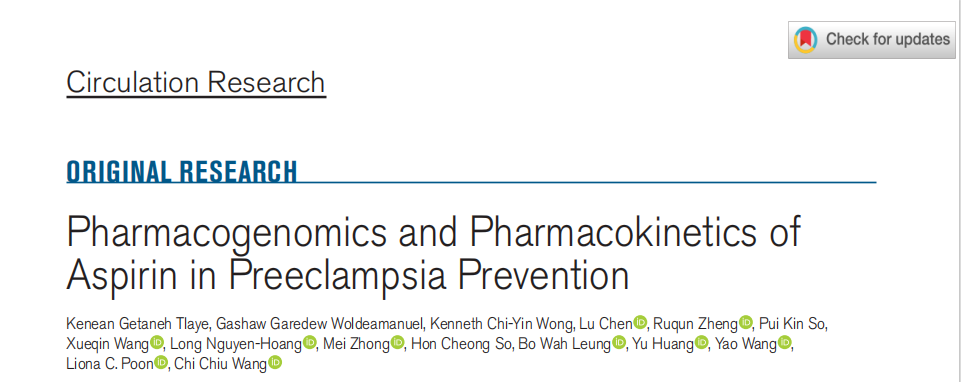
This study investigated why some high-risk women develop PE despite regular LDA. After excluding traditional factors like dose, adherence, and timing, the researchers found that maternal genetic polymorphisms and plasma esterase activity were not key factors. Instead, significant upregulation of placental Glycyl-N-acyltransferase (GLYAT) expression was identified as a core variable affecting drug efficacy. GLYAT overexpression was independently associated with aspirin "non-response" and significantly weakened salicylic acid's (SA) pro-angiogenic, anti-inflammatory, and anti-senescence effects on trophoblasts in vitro. The study proposes that the placenta is not just a drug transport barrier but a "metabolic regulatory site" determining local drug efficacy. It reveals the crucial role of placental metabolic enzymes, especially GLYAT, in mediating aspirin response, offering new perspectives for precision prevention and strategies targeting "modulation of placental local drug metabolism."
(2) Other Potential Factors Affecting Aspirin Efficacy:
1. Adherence Issues: Non-adherence is likely the most common cause of treatment failure.
2. Use of Enteric-Coated Aspirin: Delayed absorption may lead to insufficient antithrombotic effect.
3. Concomitant Use of Proton Pump Inhibitors (PPIs): Some studies suggest PPIs may affect aspirin's function.
4. Body Weight: Obesity is associated with higher thromboxane levels. Standard doses may be insufficient, potentially requiring weight-adjusted higher doses.
Part 4: Conclusion
Aspirin prevention for PE in high-risk populations is evidence-based. Future research directions include risk stratification and personalized dosing to address the limitations of a "one-size-fits-all" approach, exploring weight/obesity-adjusted doses, optimal timing, defining aspirin-resistant populations, and investigating alternative or combination therapies (e.g., with other antiplatelet agents). Providing practical intervention pathways to improve maternal and neonatal outcomes in preeclampsia remains a significant and ongoing endeavor.
References:
[1].Zorzato P, Torcia E, Carlin A, et al. Am J Obstet Gynecol. 2025;233(1):55.e1-55.
[2] 史晓霞,白艳,荣丽婷,等.不同日剂量阿司匹林预防子痫前期有效性和安全性的Meta分析 Δ[J].中国药房,2025,36(21):2733-2737. DOI: 10.6039/j.issn.1001-0408.2025.21.20.
[3].American Heart Association. 高剂量阿司匹林用于高危孕妇子痫前期的预防:一项荟萃分析[J]. 循环, 2025, 152(Suppl 3): 12-18.
[4].Amro FH, Blackwell SC, Pedroza C, Backley S, Bitar G, Daye N, Bartal MF, Chauhan SP, Sibai BM. Aspirin 162 mg vs 81 mg for preeclampsia prophylaxis in high-risk obese individuals: a comparative effectiveness open-label randomized trial (ASPREO). Am J Obstet Gynecol. 2025 Mar;232(3):315.
[5].中华医学会妇产科学分会妊娠期高血压疾病学组, 中华医学会围产医学分会. 子痫前期预测与预防指南(2025)[J]. 中华妇产科杂志, 2025, 60(5): 329-342.
[6].Duryea EL, et al. Universal aspirin administration for prevention of preeclampsia. Presented at: 2026 SMFM Annual Pregnancy Meeting; February 2026; Dallas, TX.
[7].李健鑫, 陈真, 漆洪波. 阿司匹林预防子痫前期:从证据到应用规范[J]. 中华围产医学杂志, 2024, 27(4): 265-271.
[8].Baker PN, Khan KS, Moore VM. Low dose aspirin and pregnancy: how important is aspirin resistance?[J]. BJOG, 2016, 123 Suppl 1: 14-19.
[9] Society for Maternal-Fetal Medicine. (2026, February 11). New study: Routine aspirin therapy prevents severe preeclampsia in at-risk populations.
[10]Tlaye KG, Woldeamanuel GG, Wong KC, Chen L, Zheng R, So PK, Wang X, Nguyen-Hoang L, Zhong M, So HC, Leung BW, Huang Y, Wang Y, Poon LC, Wang CC. Pharmacogenomics and Pharmacokinetics of Aspirin in Preeclampsia Prevention. Circ Res. 2025 May 7.
Author Bio:

Editor: Lily