





















The Advancement of Medicine Never Stops at the Precision of Surgery and Drugs
While we focus on specific lesions and indicators in the examination room, it is crucial to look back at the essence of the doctor-patient connection: listening and empathy. As a physician deeply committed to gynecologic oncology, I constantly witness the resilience and vulnerability of patients on their treatment journeys. They endure the side effects of chemotherapy with strength, hide their fear of the unknown with stoicism. Yet, those silent anxieties and feelings of helplessness often erode the will to live more than the tangible physical pain ever could. This text holds insights from countless late-night conversations with patients, crystallizing deep reflections on the value of "talk therapy." I hope to use gentle words to let the warmth of medicine penetrate the cold clinical processes. I also wish for every medical professional, while advancing their technical skills, to hold fast to the初心 of nurturing the human spirit, ensuring that every patient, beyond their illness, is truly seen and gently healed.
01: The Dimmed Light in the Examination Room
Last Friday in the outpatient clinic, Sister Zhao, a patient diagnosed five years ago with stage IIIC high-grade serous ovarian cancer, came for another visit. It was her third recurrence. Over these five years, we have navigated together through tumor debulking surgery, multiple lines of chemotherapy, intraperitoneal perfusion, targeted therapy, and maintenance treatment. Just in her early forties, her hair is already graying, and her frame is frail, yet she calmly placed the test reports on the desk and said softly, "I'll follow your plan this time." I looked into her eyes, at the light that had dimmed considerably since our first meeting. It wasn't despair, but a silent weariness polished thin by repeated bouts of illness.
Over the years, our "weapons" against cancer have grown more diverse, and Sister Zhao has become a model in our department for long-term survival with advanced ovarian cancer. We have pulled her back from the brink time and again. But watching the light in her eyes gradually fade and her lonely retreating figure, I couldn't help but ponder: Have we truly cured her? Beyond arranging chemotherapy, hospitalizations, and follow-ups, what more can I, as her doctor, do for her?
02: The "Psychological Tumor" We Overlook
As gynecologic oncologists, we often take pride in high R0 resection rates, precise chemotherapy regimens, and extended progression-free survival. These clinical metrics are undoubtedly important. Yet, we seldom ask our patients, "Are you afraid?"
We are accustomed to viewing patients as biological vessels carrying tumors, closely monitoring changes in tumor size on scans, focusing on objective treatment efficacy, while overlooking the living person behind it all—ignoring their hidden fears, anxieties, and helplessness. I have come to realize that each recurrence for a patient is not just a new lesion appearing on an image; it also fosters the growth of a larger "psychological tumor" within their heart.
This tumor is the fear of chemotherapy's agony, the distress of ascites and intestinal obstruction; it is anxiety over treatment costs, family care, and life's burdens; it is, even more, the self-doubt whispering, "Am I a burden to my family?" or "Am I useless?" I call this intangible tumor the "psychological tumor." If left unaddressed, it grows unchecked, devouring the patient's confidence in treatment, making even the most cooperative consider giving up. We exhaust ourselves fighting a tangible tumor measurable in centimeters on a CT scan, yet allow this invisible tumor to spread. This, clearly, is not true healing.
03: Attempts at "Talk Therapy" Across Three Stages of Illness
Aware of this oversight, I began incorporating "talk therapy" into my daily practice—not professional psychotherapy, but the small attempts a clinician can make for their patients. Here, I'd like to share practices and reflections from three stages of illness.
Stage One: Initial Treatment – Giving Fear a Name, Giving Hope a Step
Sister Sun, 42, had just been diagnosed with ovarian cancer. At her first visit, she broke down in tears—not from pain, but from the fear of not seeing her son take the college entrance exam next year. In the past, I might have simply said, "Don't overthink it, just focus on treatment." But such words only stifle fear. Now, I tell her, "I understand how you feel. Anyone diagnosed with cancer would feel their world collapsing. Feeling scared and overwhelmed is normal. We'll take it one step at a time."
I take out paper and pen to draw a simple treatment timeline, breaking down the monumental question of "how long to live" into smaller, tangible goals: "first, get through surgery," "then undergo chemotherapy," "regular check-ups." I've found that openly acknowledging a patient's fear actually helps them relax. Giving patients a sense of control over their treatment can significantly reduce their feelings of powerlessness.
Stage Two: Recurrence – Redefining "Victory"
Sister Zhou, 47, was nearly shattered when her first recurrence was confirmed. She couldn't understand why, despite strict adherence to treatment and follow-ups, the illness had returned. She even felt it was hopeless. That day, I didn't rush to discuss treatment plans. Instead, I pulled my chair closer and said, "This is a setback, not a failure. The first round of treatment kept the tumor at bay for two years. Now that it's resurfacing, we'll use different weapons to fight it again, aiming to make it stay dormant longer."
I drew an analogy to chronic conditions like hypertension and diabetes, explaining that while they may not be curable, they can be actively managed with medication, allowing for a normal life. Ovarian cancer treatment is similar now; we don't necessarily aim to eradicate the tumor completely, but to control it so it doesn't disrupt life. After this conversation, Sister Zhou gradually calmed down. She later told me that thinking of cancer as a chronic disease helped her make peace with it; she would no longer be paralyzed by fear.
Stage Three: End Stage – The Hardest, Yet Most Necessary Act
Aunt Zhang, 71, had failed multiple lines of treatment. Her body was extremely weak, exhausted. Wheeled in by her family, she still asked with hopeful expectation if there were any new drugs, saying she could still endure. That day, I made a difficult decision: to tell her we should pause chemotherapy. She was stunned, her eyes welling up, misunderstanding that I was giving up on her.
I quickly held her hand and explained gently, "Auntie, it's not that we're abandoning you. Your body simply can't withstand the toll of chemotherapy anymore. Pushing through would only cause more suffering. Let's switch to a gentler approach called palliative care. We're not chasing other goals; we just want you to be free from pain, to sleep well at night, to eat a bite of what you crave each day, and to spend time talking and being with your family, comfortably and peacefully." Later, I spoke at length with her son alone. I advised him that at this stage, no amount of treatment could compare to the warmth of companionship. While there was still time, he should speak from the heart—express unspoken gratitude, share love often left unvoiced, and accompany his mother gently, without regret, to the end.
After Aunt Zhang passed, her son texted me saying his mother was very peaceful in her final days, and they had shared many words never spoken before. I know deeply that sometimes letting go requires more courage and wisdom than persisting. High-quality end-of-life care is the ultimate respect for the patient and the greatest solace for the family, allowing their final memories to hold not just sorrow, but also warmth and peace.
04: We Are Not Fighting Alone
To be honest, a clinician's time and energy are limited. We cannot provide in-depth psychological counseling for every patient, nor are we professional psychologists; attempting beyond our scope might backfire. Realizing this, I gradually learned to "ask for help," rallying多方力量 to accompany patients through their ordeal.
I encourage patients to join support groups. I often tell new patients that the "veteran patients" in the group have more practical experience than I do—how to relieve nausea after chemo, which wig feels more comfortable. Their comfort and shared experiences can be more effective than cold medical instructions.
I also place increasing importance on the role of family members, guiding them on how to communicate. Don't say, "You need to be strong." Say, "I know you're suffering, and I'm here with you." Don't just ask about test results; ask, "How are you feeling today?" A warm, ordinary word from family can soothe a patient's soul far more than a barrage of medical jargon.
05: The Destination of Medicine
Writing this, I recall the famous medical aphorism: "To cure sometimes, to relieve often, to comfort always." When I first became a doctor, I firmly believed "curing" was paramount. After over a decade of rigorous study, wasn't that the point—to treat illness and save lives? But the longer I practice, the more I realize the limits of "cure," especially with advanced ovarian cancer. More often than not, we are merely coexisting and maneuvering with the tumor; the number of patients we can truly cure is few.
It is precisely because of this that I have come to appreciate the immense weight of "relieving" and "comforting." "Curing" is a swift, decisive battle; winning brings jubilation. But "relieving" and "comforting" are a long companionship. They are the cup of water offered when a patient grows weary on the marathon of抗癌; the outstretched hand when they stumble and want to give up; the firm "Don't be afraid, I'm here" when they tremble with恐惧.
The treatment of ovarian cancer is itself a marathon with no clear finish line. We, as doctors, are not just tacticians but also pacers running alongside our patients. If they finish strong, we celebrate together. If they don't, we will still accompany them to the very end.
The Chinese character for "cancer" (癌, ái) contains three "mouth" radicals (口, kǒu). We have already used one of these "mouths" to prescribe medicine and perform surgery, fighting the visible, physical tumor. But we have two more "mouths" that urgently need our heartfelt use: One mouth to listen patiently—to patients' fears, their concerns, their hopes for life. Another mouth to speak gently—saying "I understand you," "Let's figure this out together," "You're doing well," "Don't be afraid, I'm here."
This seemingly simple "talk therapy" tests our patience far more than chemotherapy and requires even more持久坚持. But I firmly believe it might be the final, and warmest, prescription we, as doctors, can offer our patients.

A photo shows a handwritten thank-you card from a patient to Director Sun upon discharge, provided by Director Sun.
About the Author
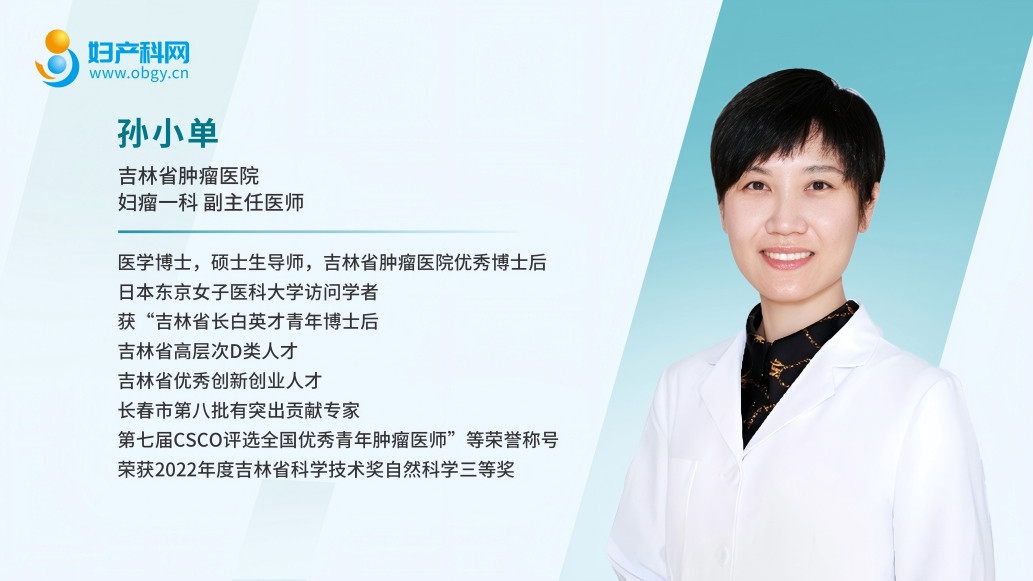
Editor: Lily