





















Clinical Practice Guidelines for PARP Inhibitors in Ovarian Cancer (2025 Edition): A Practical Guide to Holistic Management and Precision Medication
Clinical Practice Guidelines for PARP Inhibitors in Ovarian Cancer (2025 Edition): A Practical Guide to Holistic Management and Precision Medication
Ovarian cancer remains one of the gynecological malignancies with the highest mortality rates, with its 5-year survival rate persistently hovering around 40%. In recent years, the advent of poly(ADP-ribose) polymerase (PARP) inhibitors has fundamentally transformed the therapeutic landscape for ovarian cancer, bringing significant survival benefits to patients. Currently, PARP inhibitors are widely used in clinical practice in China. To further standardize the clinical application of these agents, the Chinese Society of Gynecological Oncology (CSGO) of the Chinese Medical Association has successively formulated the 2020 and 2022 editions of the Clinical Practice Guidelines for PARP Inhibitors in Ovarian Cancer. With the continuous update of clinical research data and the gradual accumulation of clinical experience, it is imperative to revise and refine the guidelines. After thorough discussion and voting by the CSGO expert writing group, the Clinical Practice Guidelines for PARP Inhibitors in Ovarian Cancer (2025 Edition) (hereinafter referred to as "these Guidelines") were finalized.
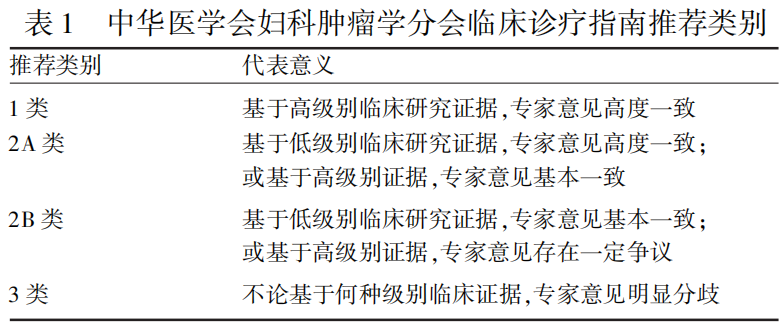
These Guidelines adopt the recommendation categories of the Clinical Practice Guidelines of the CSGO, as shown in Table 1.
In these Guidelines, ovarian cancer includes fallopian tube carcinoma and primary peritoneal carcinoma. These Guidelines do not cover PARP inhibitors that are not commercially available in China. In the context of the clinical studies cited, breast cancer susceptibility gene (BRCA) mutations refer to pathogenic or likely pathogenic mutations.
PART 01: PARP Inhibitors and Their Mechanism of Action
In 1963, Chambon et al. first discovered poly(ADP-ribose) polymerase (PARP). Subsequent research confirmed its role in the repair process following DNA single-strand damage. In 1980, Durkacz et al. demonstrated that nicotinamide analogs could inhibit PARP's repair function and enhance the cytotoxicity of the DNA-damaging agent dimethyl sulfate, suggesting that such compounds held promise as sensitizers for combination therapy with cytotoxic drugs in cancer treatment. In 2005, two studies published simultaneously in Nature first confirmed the existence of a "synthetic lethality" effect between PARP inhibitors and BRCA1/2 gene mutations. It is now known that the PARP family includes 17 members, with PARP1 and PARP2 playing a key role in the repair of DNA single-strand breaks (SSBs) primarily through the base excision repair (BER) pathway.
PARP inhibitors have undergone three generations of iterative updates. Third-generation PARP inhibitors, developed based on single-crystal structures of the complexes, possess significant advantages such as high activity and strong selectivity.
Multiple clinical studies have confirmed that advanced epithelial ovarian cancer (EOC) patients receiving PARP inhibitor maintenance therapy achieve significant clinical benefits.
1.1 Mechanism of Action
BRCA1/2 genes are tumor suppressor genes playing a crucial role in DNA damage repair and maintaining normal cell growth. Mutations in these genes impair the cell's normal DNA repair capacity, leading to homologous recombination deficiency (HRD)—defined as BRCA functional loss, or mutations/dysfunction in other homologous recombination-related genes. This results in the inability to repair DNA double-strand breaks via the homologous recombination repair (HRR) pathway, ultimately inducing cell carcinogenesis.
PARP plays a central role in the base excision repair of DNA single-strand damage. In HRD tumor cells, the DNA double-strand break repair pathway is already defective. PARP inhibitors further block the repair of single-strand breaks. The combined effect creates a "synthetic lethality" scenario, ultimately leading to tumor cell death.
The mechanism of PARP inhibitors' action on PARP is mainly manifested in two aspects:
(1) Competing with nicotinamide adenine dinucleotide (NAD+) at PARP's active site, thereby inhibiting the generation of poly(ADP-ribose) polymers.
(2) Binding to the NAD+ binding pocket of PARP1 and/or PARP2, inducing a conformational change that prevents the reversible dissociation of DNA from PARP, causing PARP to remain persistently trapped on the DNA. This phenomenon, known as the "trapping effect" of the DNA-PARP complex, leads to its prolonged retention, thereby inhibiting subsequent DNA repair processes.
A growing body of clinical research confirms that the population benefiting from PARP inhibitors is not limited to BRCA-mutated or HRD-positive ovarian cancer patients. Patients with platinum-sensitive ovarian cancer can also benefit significantly, an effect closely related to the trapping effect of PARP inhibitors.
1.2 Pharmacological Properties
The pharmacological properties of different PARP inhibitors vary. Several PARP inhibitors approved by the U.S. Food and Drug Administration (FDA) and the China National Medical Products Administration (NMPA) each have their own advantages in bioavailability, half-life, metabolic pathways, and tissue distribution.
1.2.1 Olaparib: Available in tablet and capsule formulations (the capsule formulation is currently not under marketing application in China). Following oral administration of the tablet, the median plasma concentration is reached in 1.5 hours. In vitro studies show its plasma protein binding is approximately 82%, with an apparent volume of distribution (Vd) of (158 ± 136) L. The drug is primarily metabolized via the CYP3A4/5 enzyme pathway. After a single 300 mg dose, the half-life is (14.9 ± 8.2) hours.
1.2.2 Niraparib: The absolute bioavailability of the capsule formulation is approximately 73%, with peak plasma concentration reached within 3 hours after oral administration. Its human plasma protein binding rate is 83.0%, with a Vd of (1220 ± 114) L. It is primarily metabolized in the body by carboxylesterase to an inactive metabolite, followed by further glucuronidation. The mean half-life of the drug is 36 hours.
1.2.3 Fluzoparib: After a single oral dose of 150 mg of the capsule formulation, the peak plasma concentration is reached in 2.5 hours. Human plasma protein binding is 74.3% to 81.6%, with a steady-state Vd of (34.6 ± 14.5) L. This formulation is primarily metabolized via the CYP3A4 enzyme. After multiple 150 mg doses, the mean terminal elimination half-life is approximately (9.14 ± 2.38) hours.
1.2.4 Pamiparib: After oral administration of the capsule formulation, the peak plasma concentration is reached within 1-2 hours. At steady state, its human plasma protein binding is 95.7%, and exposure at 40 mg is close to that at 60 mg. In a limited Chinese patient population, the Vd of pamiparib with a dosing regimen of 40 mg twice daily is approximately 37 L. The drug is primarily metabolized by CYP2C8 and CYP3A enzymes, with a plasma elimination half-life of about 13 hours. At clinical therapeutic doses, it is unlikely to inhibit the intestinal efflux transporter P-glycoprotein (P-gp), breast cancer resistance protein (BCRP), organic anion transporting polypeptide (OATP) 1B1/1B3, renal uptake transporters organic cation transporter 2 (OCT2), and organic anion transporters 1 and 3 (OAT1, OAT3).
1.2.5 Senaparib: The capsule formulation is rapidly absorbed after oral administration, with a median time to peak plasma concentration (Tmax) of about 2 hours for both single and once-daily multiple doses. Its human plasma protein binding rate is 96.13%. The main metabolic enzyme in the body is CYP3A4, and no human-specific metabolites have been identified. Based on population pharmacokinetic (PopPK) analysis, the geometric mean effective plasma half-life is 8.92 hours with a once-daily 100 mg dose. At clinical therapeutic doses, it is unlikely to inhibit P-gp, BCRP, OATP1B1/1B3, OCT3, or OAT transporters; nor is it likely to be a substrate for BCRP, OATP, OAT, or OCT transporters.
1.3 Approval Status
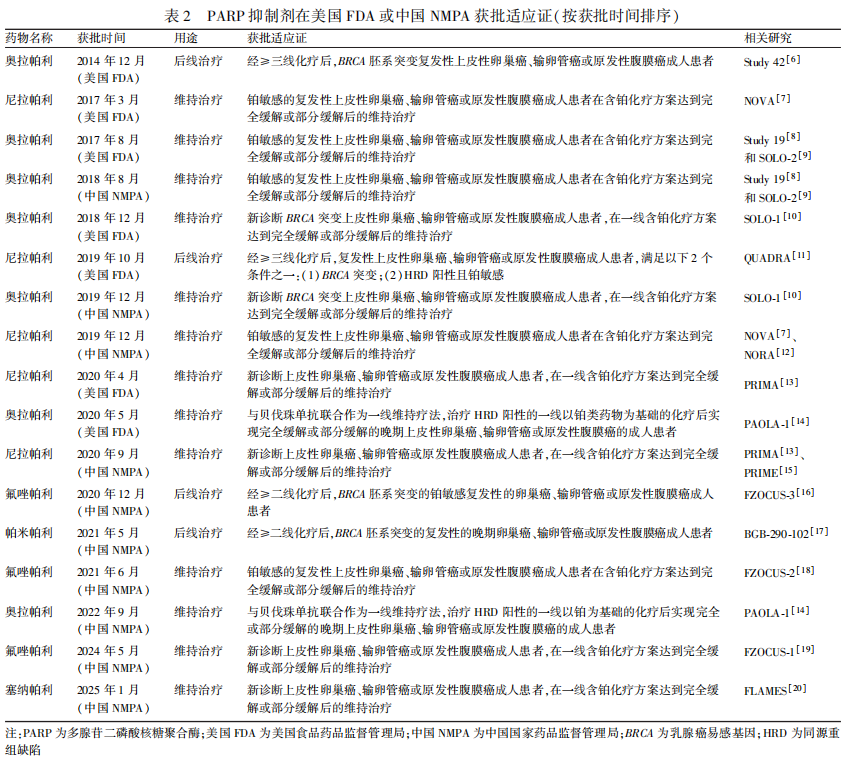
Currently, 4 PARP inhibitors are approved by the U.S. FDA, and 5 are approved by China's NMPA for clinical use. Their approved indications are listed in Table 2.
1.4 Biomarkers for PARP Inhibitor Application
BRCA gene mutation or HRD status are currently commonly used biomarkers for PARP inhibitor application.
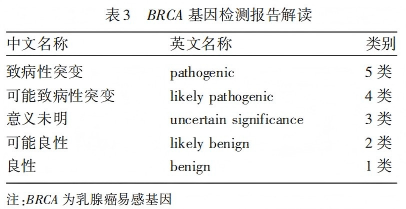
1.4.1 BRCA Gene Testing: BRCA mutation is the preferred biomarker for PARP inhibitor sensitivity. Mutations are mainly categorized as germline BRCA (gBRCA) or somatic BRCA (sBRCA) mutations. BRCA mutations detected from tumor tissue samples are uniformly referred to as tissue BRCA (tBRCA) mutations. Currently, next-generation sequencing (NGS) technology is widely used domestically and internationally for detection, covering common mutation types such as point mutations and small insertions/deletions. Interpretation of BRCA germline variant testing reports should follow the classification standards established by the International Agency for Research on Cancer (IARC) (see Table 3). These Guidelines recommend BRCA gene testing at the time of initial pathological diagnosis of ovarian cancer.
1.4.2 HRD Testing: Besides BRCA1/2 gene mutations, damage or functional loss of other homologous recombination repair (HRR)-related genes (e.g., RAD51, ATM, PALB2, MRE11) can also cause HRD. HRD, as a biomarker for PARP inhibitor sensitivity, is now formally applied in clinical practice. HRD testing can expand the sensitive population from approximately 25% (BRCA-mutated) to about 50% (HRD-positive). HRD determination can be achieved through two main strategies: HRR gene mutation testing and genomic scar testing. The former involves comprehensive NGS-based testing of HRR-related genes at the genetic level but has limitations: (1) Detection rates for HRR genes other than BRCA are generally low; (2) There is no universally accepted standard for the HRR gene panel; (3) Both HRR gene mutation and genomic scar testing cannot effectively identify epigenetic alterations in HR pathway genes (e.g., BRCA1 promoter methylation), leading to false negatives; (4) The impact of different gene mutations on HR pathway function varies, lacking unified quantitative assessment criteria; (5) Cost-effectiveness must be considered and fully disclosed to patients.
Currently, in PARP inhibitor-related clinical trials, HRD testing often uses the genomic scar method, which can determine BRCA mutation status and comprehensively analyze genomic instability patterns. Two internationally mature HRD testing platforms are Myriad myChoice® CDx and FoundationFocus™ CDx BRCA LOH. The latter determines HRD positivity if tBRCA mutation is detected (regardless of LOH) or if tBRCA is wild-type with LOH ≥16%. The former assesses three genomic instability indicators: LOH, telomeric allelic imbalance (TAI), and large-scale transitions (LST). A score ≥42 or detection of a BRCA1/2 mutation defines HRD positivity. It should be noted that these platforms lack validation in large prospective clinical studies based on the Chinese population. HRD testing strategies need to fully consider the molecular genetic characteristics of the Chinese population. While domestic HRD testing products are not yet officially approved, research teams are developing HRD algorithms based on Chinese genetic polymorphism data, with some platforms used in clinical studies. Among them, an HRD detection kit based on the ADx-GSS algorithm has been included in the NMPA's Innovative Medical Device Special Review Program.
PART 02: First-Line Maintenance Therapy for Ovarian Cancer
First-line maintenance therapy for ovarian cancer refers to subsequent maintenance treatment given to newly diagnosed ovarian cancer patients who achieve complete response (CR) or partial response (PR) after initial platinum-based chemotherapy. Its core purpose is to delay tumor recurrence and improve patient survival outcomes. The clinical benefit of chemotherapy drugs for maintenance is unclear and is no longer recommended. The anti-angiogenic drug bevacizumab, when used for maintenance, requires concurrent use during initial chemotherapy. Apart from high-risk recurrence populations, its progression-free survival (PFS) benefit for average patients is limited (3-4 months). In recent years, PARP inhibitors have completed several phase III randomized controlled trials in first-line maintenance, demonstrating significant efficacy, and have become the standard for specific ovarian cancer patient populations.
2.1 Olaparib-Related Studies
2.1.1 SOLO-1 Study: A phase III RCT in advanced EOC patients with BRCA1/2 mutations comparing olaparib vs. placebo maintenance after effective initial treatment. With 41 months median follow-up, olaparib reduced the risk of recurrence/death by 70% vs. placebo; 3-year PFS rates were 60% vs. 27% (HR=0.30, 95% CI:0.23-0.41, P<0.001), delaying median recurrence by over 3 years. Benefit was seen regardless of surgical timing, chemotherapy response, or residual disease. 5-year data: median PFS 56.0 vs. 13.8 months (HR=0.33, 95% CI:0.25-0.43); 5-year PFS 48% vs. 21%. 7-year data: median OS not reached (NR) vs. 75.2 months (HR=0.55, 95% CI:0.40-0.76, P=0.0004); 7-year OS 67% vs. 46.5%. Chinese data (HR=0.39, 95% CI:0.17-0.86, P=0.0168) were consistent.
2.1.2 PAOLA-1 Study: A phase III RCT in advanced EOC patients responsive to first-line platinum chemo + bevacizumab, comparing bevacizumab + olaparib vs. bevacizumab + placebo maintenance. At 22.9 months median follow-up: In BRCA-mutated, median PFS 37.2 vs. 21.7 months (HR=0.31, 95%CI:0.20-0.47); in BRCAwt/HRD+, 28.1 vs. 16.6 months (HR=0.43, 95%CI:0.28-0.66); in BRCAwt/HRD- or unknown, 16.9 vs. 16.0 months (HR=0.92, 95%CI:0.72-1.17). 5-year data confirmed benefit for BRCA-mutated and BRCAwt/HRD+ patients, but not for BRCAwt/HRD-.
2.1.3 A Domestic Multicenter Real-World Study: For newly diagnosed BRCAwt/HRD+ patients, olaparib monotherapy maintenance achieved a median PFS of 21 months and 1-year PFS rate of 75.2%, offering a new option for Chinese patients.
2.1.4 DUO-O Study: A phase III RCT in BRCAwt newly diagnosed advanced ovarian cancer with three arms. Results showed bevacizumab + durvalumab + olaparib maintenance (Arm 3) significantly improved PFS vs. bevacizumab alone (Arm 1) in the ITT population (median PFS 25.1 vs. 19.3 months, HR=0.61, 95%CI:0.51-0.73), with notable benefit in HRD+ subgroup.
2.2 Niraparib-Related Studies
2.2.1 PRIMA Study: In BRCAwt/HRD+ patients, median PFS 19.6 vs. 8.2 months (HR=0.50, 95%CI:0.31-0.83, P=0.006); in BRCAwt/HRD- (HRP), 8.1 vs. 5.4 months (HR=0.68, 95%CI:0.49-0.94, P=0.020). Benefit was lower in HRP vs. BRCA-mutated/HRD+. PFS improvement was seen regardless of age, surgical timing, or residual disease. 6-year data: In HRD+, 5-year PFS 35% vs. 16%; median OS 71.9 vs. 69.8 months (HR=0.95). In HRP, median OS 36.6 vs. 32.2 months (HR=0.93). No significant OS difference in ITT.
2.2.2 PRIME Study: A phase III RCT of niraparib in Chinese newly diagnosed advanced ovarian cancer. Unique for including patients regardless of residual disease and using individualized starting doses. Median PFS: Overall 24.8 vs. 8.3 months (HR=0.45, 95%CI:0.34-0.60, P<0.001); gBRCA-mutated NR vs. 10.8 months (HR=0.40, 95%CI:0.23-0.68, P<0.001); non-gBRCA/HRD+ 24.8 vs. 11.1 months (HR=0.58, 95%CI:0.36-0.93, P=0.022); HRD- 16.6 vs. 5.5 months (HR=0.41, 95%CI:0.22-0.75). Benefit seen regardless of CR/PR after chemo.
2.2.3 RENI-1 Study: A prospective Chinese multicenter real-world study showed niraparib first-line maintenance provided PFS benefit in all patients, especially BRCA-mutated and HRD+.
2.2.4 OVARIO Study: A phase II single-arm trial evaluating niraparib + bevacizumab first-line maintenance. 18-month PFS rate overall 62%; HRD+ 76%, HRD- 47%, HRD unknown 56%. Median PFS overall 19.6 months; BRCA-mutated NR, BRCAwt/HRD+ 28.3 months, HRD- 14.2 months, HRD unknown 12.1 months. Shows benefit.
2.3 Fluzoparib-Related Study
FZOCUS-1 Study: A phase III RCT of fluzoparib ± apatinib first-line maintenance. Fluzoparib monotherapy vs. placebo: Median PFS overall NR vs. 11.1 months (HR=0.49, 95%CI:0.37-0.67, P<0.0001); gBRCA-mutated NR vs. 14.9 months (HR=0.40, 95%CI:0.22-0.73, P=0.0009); non-gBRCA 25.5 vs. 8.4 months (HR=0.53, 95%CI:0.37-0.75, P=0.0001). Confirms benefit for all populations.
2.4 Senaparib-Related Study
FLAMES Study: A phase III RCT. Senaparib vs. placebo: Median PFS overall NR vs. 13.6 months (HR=0.43, 95%CI:0.32-0.58, P<0.001); BRCA-mutated NR vs. 15.6 months (HR=0.43, 95%CI:0.24-0.76, P<0.001); BRCAwt NR vs. 12.9 months (HR=0.43, 95%CI:0.30-0.61, P<0.001). Post-hoc: BRCAwt/HRD+ NR vs. 12.9 months (HR=0.30, 95%CI:0.15-0.60); BRCAwt/HRD- 27.1 vs. 19.5 months (HR=0.74, 95%CI:0.36-1.54). Confirms significant PFS benefit for BRCA-mutated and BRCAwt/HRD+.
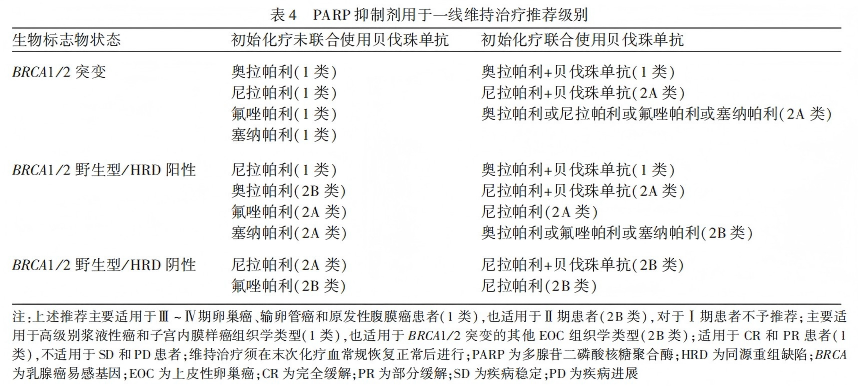
Based on the above evidence, the corresponding PARP inhibitors are recommended for first-line maintenance therapy (see Table 4).
PART 03: Maintenance Therapy for Recurrent Ovarian Cancer
Ovarian cancer recurrence is categorized as platinum-sensitive (recurrence ≥6 months after last platinum) or platinum-resistant (recurrence <6 months). Treatment for platinum-sensitive recurrence continues with platinum-based combination chemo; platinum-resistant recurrence generally does not prioritize platinum-based chemo, opting for non-platinum agents. After response to treatment for recurrence, maintenance therapy can be considered to delay further recurrence. Options were limited; bevacizumab maintenance had short duration. PARP inhibitors have shown major breakthroughs in platinum-sensitive recurrent ovarian cancer maintenance and are now standard.
3.1 Olaparib-Related Studies
3.1.1 Study 19: A phase II study in platinum-sensitive recurrent ovarian cancer. Median PFS: olaparib 8.4 vs. placebo 4.8 months (HR=0.35, 95%CI:0.25-0.49, P<0.001). Subgroup: BRCA-mutated 11.2 vs. 4.3 months (HR=0.18, 95%CI:0.10-0.31, P<0.0001); BRCAwt 7.4 vs. 5.5 months (HR=0.54, 95%CI:0.34-0.85, P=0.0075). Median OS: 29.8 vs. 27.8 months (HR=0.73, 95%CI:0.55-0.95, P=0.02138, not meeting prespecified threshold). Exploratory restricted mean OS: 41.6 vs. 35.3 months. Preliminary benefit shown.
3.1.2 SOLO-2 Study: A phase III study in gBRCA-mutated platinum-sensitive recurrent ovarian cancer. Median PFS: 19.1 vs. 5.5 months (HR=0.30, 95%CI:0.22-0.41, P<0.0001); by blinded independent review 30.2 vs. 5.5 months (HR=0.25, 95%CI:0.18-0.35, P<0.0001). Median OS: 51.7 vs. 38.8 months (HR=0.74, 95%CI:0.54-1.00, P=0.054). Adjusted for crossover (38% placebo received subsequent PARPi), median OS 51.7 vs. 35.4 months (HR=0.56, 95%CI:0.35-0.97). First to show OS benefit.
3.1.3 OPINION Study: A phase IIIb study in non-gBRCA platinum-sensitive recurrent ovarian cancer. Median PFS overall 9.2 months. Subgroups: sBRCA-mutated 16.4 months; HRD+ (including sBRCA) 11.1 months; HRD+ (excluding sBRCA) 9.7 months; HRD- 7.3 months. Confirms efficacy in non-gBRCA population.
3.1.4 L-MOCA Study: A phase III single-arm study in Asian platinum-sensitive recurrent ovarian cancer (91.5% Chinese). Median PFS overall 16.1 months; 6- and 12-month PFS rates 76.0% and 57.1%. Subgroups: BRCA-mutated 21.2 months; gBRCA-mutated 21.4 months; BRCAwt 11.0 months. In patients with prior second-line therapy, median PFS 18.0 months; BRCA-mutated 24.9 months; BRCAwt 14.1 months. Interim OS at 40 months median follow-up: ITT median OS 54.4 months, 42-month OS rate 59.7%; BRCA-mutated subgroup NR (51.9-NE); BRCAwt/HRD+ 54.6 months; HRD- 37.2 months. Confirms benefit regardless of BRCA status for Asian patients.
Note: The U.S. FDA, based on data from other PARPi in non-BRCA platinum-sensitive recurrent maintenance showing potential increased mortality risk, restricted olaparib's indication to BRCA-mutated populations. The indication in China has not been adjusted.
3.2 Niraparib-Related Studies
3.2.1 NOVA Study: In platinum-sensitive recurrent ovarian cancer with fixed 300mg/d starting dose. Median PFS: gBRCA-mutated: 21.0 vs. 5.5 months (HR=0.27, 95%CI:0.17-0.41, P<0.001); gBRCAwt/HRD+: 12.9 vs. 3.8 months (HR=0.38, 95%CI:0.24-0.59, P<0.001); BRCAwt/HRD+: 9.3 vs. 3.7 months (HR=0.38, 95%CI:0.23-0.63, P<0.001); BRCAwt/HRD-: 6.9 vs. 3.8 months (HR=0.58, 95%CI:0.36-0.92, P=0.02). Benefit across BRCA/HRD statuses. Median OS: gBRCA-mutated: 40.9 vs. 48.1 months (HR=0.85, 95%CI:0.61-1.20, 39.2% crossover in placebo); non-gBRCA: 31.0 vs. 34.8 months (HR=1.06, 95%CI:0.81-1.37). Based on the OS HR of 1.06 in non-gBRCA, the U.S. FDA restricted niraparib's indication for platinum-sensitive recurrent maintenance to gBRCA-mutated patients.
3.2.2 NORA Study: A phase III RCT in Chinese platinum-sensitive recurrent ovarian cancer using individualized starting doses. Median PFS overall: 18.3 vs. 5.4 months (HR=0.32, 95%CI:0.23-0.45, P<0.0001). Subgroups: gBRCA-mutated: NR vs. 5.5 months (HR=0.22, 95%CI:0.12-0.39, P<0.0001); non-gBRCA: 11.1 vs. 3.9 months (HR=0.40, 95%CI:0.26-0.61, P<0.0001). PFS benefit regardless of chemo response, time to progression, or secondary cytoreduction. Final OS: overall median OS 51.5 vs. 47.6 months (HR=0.86, 95%CI:0.60-1.23, 46.6% crossover); gBRCA-mutated: 56.0 vs. 47.6 months (HR=0.86, 95%CI:0.46-1.58, 57.1% crossover); non-gBRCA: 46.5 vs. 46.9 months (HR=0.87, 95%CI:0.56-1.35, 39.6% crossover). Per-protocol analysis for non-gBRCA: median OS 50.6 vs. 46.9 months (HR=0.84, 95%CI:0.54-1.32). Suggests OS benefit trend. The indication in China has not been adjusted.
3.3 Fluzoparib-Related Study
FZOCUS-2 Study: A phase III study in platinum-sensitive recurrent ovarian cancer maintenance. Updated results: Median PFS: 15.7 vs. 5.5 months (HR=0.31, 95%CI:0.22-0.44, P<0.0001). Subgroups: gBRCA-mutated: 18.4 vs. 5.2 months (HR=0.18, 95%CI:0.10-0.31, P<0.0001); non-gBRCA: 13.6 vs. 5.5 months (HR=0.57, 95%CI:0.38-0.86). Confirms significant PFS benefit regardless of BRCA status.
3.4 Re-Maintenance with PARP Inhibitors After Prior PARPi Maintenance
OReO Study: A phase IIIb RCT evaluating re-maintenance with olaparib in recurrent ovarian cancer patients with prior PARPi maintenance and CR/PR to last platinum chemo. Median PFS: BRCA-mutated: 4.3 vs. 2.8 months (HR=0.57, 95%CI:0.37-0.87, P=0.022); non-BRCA: 5.3 vs. 2.8 months (HR=0.43, 95%CI:0.26-0.71, P=0.0023). Subgroups: BRCAwt/HRD+: 5.3 vs. 2.8 months (HR=0.52, 95%CI:0.26-1.10); BRCAwt/HRD-: 5.4 vs. 2.8 months (HR=0.49, 95%CI:0.21-1.23). Shows PFS benefit across BRCA/HRD status; non-BRCA group had slightly better benefit, possibly due to higher proportion of sequential different PARPi use.
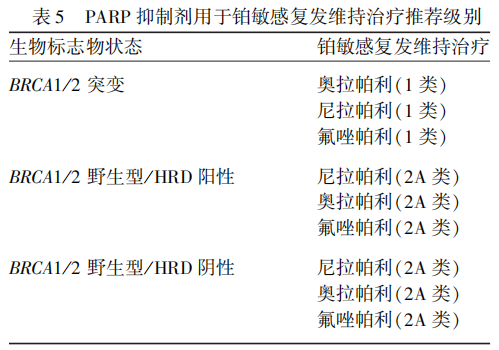
Based on the above evidence, corresponding PARP inhibitors are recommended for platinum-sensitive recurrent ovarian cancer maintenance (see Table 5). For platinum-sensitive recurrent BRCA-mutated patients without progression on prior PARPi maintenance, re-maintenance with a PARP inhibitor is recommended (Category 2A).
PART 04: Later-Line Therapy for Recurrent Ovarian Cancer
Treatment for patients who have received two or more prior lines of therapy is defined as later-line therapy. These patients often have poor performance status, lower sensitivity, and limited effective options. Compared to cytotoxic chemotherapy, PARP inhibitors have lower toxicity, offering a unique advantage. Several PARP inhibitors are approved by the U.S. FDA or China NMPA for later-line treatment of multiply recurrent ovarian cancer, providing a "chemotherapy-free" option.
4.1 Treatment for Platinum-Sensitive Recurrent Ovarian Cancer
Platinum-based chemotherapy is the preferred choice. However, for patients intolerant, allergic, or refusing platinum, alternative options are needed.
4.1.1 Olaparib-Related Studies:
• SOLO-3: Phase III RCT of olaparib monotherapy vs. physician's choice non-platinum chemotherapy in gBRCA-mutated platinum-sensitive recurrent ovarian cancer with ≥2 prior lines. Objective response rate (ORR) 72.2% vs. 51.4% (OR=2.53, 95%CI:1.40-4.58, P=0.002). Blinded independent review median PFS: 13.4 vs. 9.2 months (HR=0.62, 95%CI:0.43-0.91, P=0.013). Final OS: 34.9 vs. 32.9 months (HR=1.07, 95%CI:0.76-1.49, P=0.714), possibly influenced by 25% dropout in chemo arm. Subgroup analysis of ≥3 lines showed OS 29.9 vs. 39.4 months (HR=1.33, 95%CI:0.84-2.18).
• CLIO: In BRCAwt platinum-sensitive recurrent EOC, olaparib monotherapy vs. standard chemo showed no significant difference in ORR, disease control rate, median PFS, or OS.
• LIGHT: Based on BRCA/HRD status. ORR: gBRCA-mutated 69%, sBRCA-mutated 64%, BRCAwt/HRD+ 29%, BRCAwt/HRD- 10%. Median PFS: 11.0, 10.8, 7.2, 5.4 months. 18-month OS rates: 88.0%, 86.4%, 78.6%, 59.6%.
4.1.2 Niraparib-Related Studies:
• QUADRA: Niraparib monotherapy in platinum-sensitive recurrent ovarian cancer with ≥3 prior lines. ORR: BRCA-mutated 39%, HRD+ 26%.
• AVANOVA2: Phase II RCT of niraparib + bevacizumab vs. niraparib monotherapy in platinum-sensitive recurrent EOC regardless of prior lines. Median PFS: 11.9 vs. 5.5 months (HR=0.35, 95%CI:0.21-0.57, P<0.0001). ORR: 60% vs. 27% (OR=4.23, P=0.001). Subgroups: BRCA-mutated: 14.4 vs. 9.0 months (HR=0.49, 95%CI:0.21-1.15); BRCAwt/HRD+: 11.9 vs. 4.1 months (HR=0.19, 95%CI:0.06-0.59); BRCAwt/HRD-: 11.3 vs. 4.2 months (HR=0.40, 95%CI:0.19-0.85). Median OS: 29.4 vs. 27.8 months (HR=0.75, 95%CI:0.44-1.28, P=0.30).
4.1.3 Fluzoparib-Related Study:
• FZOCUS-3: Fluzoparib in gBRCA-mutated platinum-sensitive recurrent EOC with 2-4 prior lines of platinum chemo. ORR by IRC/investigator: 69.9%/70.8%. Median PFS: 12.0/10.3 months. Median OS NR; 12- and 18-month OS rates 93.7% and 89.2%.
4.1.4 Pamiparib-Related Study:
• BGB-290-102: Pamiparib in gBRCA-mutated platinum-sensitive recurrent EOC with ≥2 prior lines. ORR by IRC/investigator: 64.6%/62.2%. IRC median PFS: 15.2 months. Median OS NR; 6- and 12-month OS rates 93.2% and 83.5%.
4.1.5 Senaparib-Related Study:
• SABRINA: Senaparib in BRCA-mutated platinum-sensitive recurrent EOC with ≥2 prior lines. ORR by IRC/investigator: 66.3%/58.7%. IRC median PFS: 11.1 months. Median OS NR.
4.2 Treatment for Platinum-Resistant Recurrent Ovarian Cancer
Platinum-resistant patients are generally insensitive to platinum-based chemo. Non-platinum chemotherapy is recommended but response rates are limited (~20%). Once platinum-resistant, cure is difficult; palliative care must balance quality of life. PARP inhibitors, with lower toxicity, offer a "chemotherapy-free" option for BRCA-mutated patients.
4.2.1 Olaparib-Related Studies:
• Study 42: Olaparib in BRCA-mutated platinum-resistant recurrent ovarian cancer with ≥3 prior lines. ORR 31.1%. First PARPi showing clinical efficacy in recurrent ovarian cancer.
• CLIO: In platinum-resistant recurrent ovarian cancer, olaparib monotherapy vs. chemo had higher ORR (18% vs. 6%) but not statistically significant. Subgroup suggested greater benefit in BRCA-mutated.
4.2.2 Niraparib-Related Studies:
• QUADRA: Niraparib monotherapy in platinum-resistant recurrence. ORR: BRCA-mutated 27%, HRD+ 10%, HRD-/unknown 3%. Suggests some efficacy in BRCA-mutated platinum-resistant disease.
• TOPACIO: Niraparib + pembrolizumab in platinum-resistant/refractory ovarian cancer. ORR 18%, disease control rate 65%, regardless of BRCA status.
• ANNIE: Niraparib + anlotinib in platinum-resistant recurrent ovarian cancer. ORR 50.0%, median PFS 9.2 months, final median OS 18.2 months. Preliminary new option.
4.2.3 Pamiparib-Related Study:
• BGB-290-102: Pamiparib in gBRCA-mutated platinum-resistant recurrent EOC with ≥2 prior lines. ORR by IRC/investigator: 31.6%/26.3%. IRC median PFS 6.2 months, median OS 13.6 months, 6- and 12-month OS rates 73.4% and 50.5%. Based on this, pamiparib was approved in China for platinum-resistant recurrent ovarian cancer later-line therapy.
Due to lack of OS benefit in SOLO-3, the U.S. FDA withdrew olaparib's later-line indication. QUADRA was single-arm lacking OS data, leading to withdrawal of niraparib's later-line indication. China NMPA never approved olaparib or niraparib for ovarian cancer later-line therapy; currently only fluzoparib and pamiparib are approved in China for recurrent ovarian cancer later-line treatment.
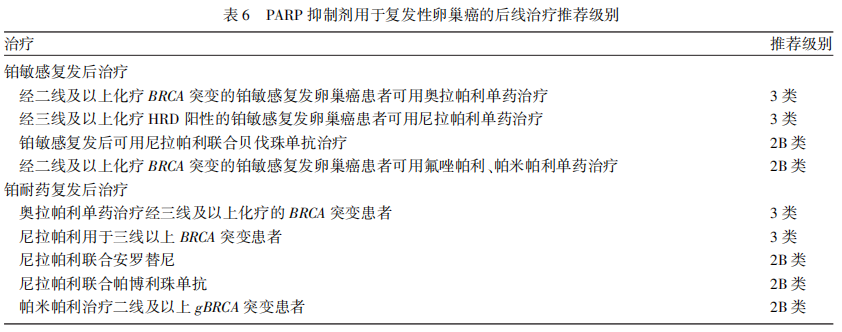
Based on the above evidence, corresponding PARP inhibitors are recommended for later-line treatment of recurrent ovarian cancer (see Table 6).
PART 05: Exploratory Studies of PARP Inhibitors in Neoadjuvant Therapy
• NANT Study: Phase II single-arm, multicenter study of niraparib monotherapy as neoadjuvant therapy in HRD+ advanced ovarian cancer. 67 patients enrolled, 48 evaluable. ORR 62.5%, DCR 87.5%. In BRCA-mutated subgroup (n=22): ORR 77.3%, DCR 100.0%. 40 patients underwent IDS, 80.0% achieved R0; BRCA-mutated subgroup (n=21): R0 85.7%.
• NOW Study: Aimed to determine feasibility of olaparib monotherapy as neoadjuvant in gBRCA1/2, RAD51C/D, PALB2 mutated ovarian cancer. 15 enrolled, 13 evaluable. PR rate 53.8%, 12-month PFS rate 81.0%. 14 had IDS, 85.7% R0.
• NEO Study: Phase II RCT of olaparib as neoadjuvant in platinum-sensitive recurrent high-grade serous ovarian cancer. 41 had secondary cytoreduction after short-course olaparib, then randomized to olaparib alone or chemo followed by olaparib maintenance. Suggested comparable efficacy and lower toxicity for olaparib alone vs. chemo + olaparib in completely resected patients.
• A study explored olaparib + pembrolizumab as neoadjuvant in HRD+ newly diagnosed advanced ovarian cancer. 20 patients, overall ORR 70%, BRCA-mutated 84.6%.
• A phase II study of pamiparib + surufatinib as neoadjuvant in newly diagnosed advanced ovarian cancer showed ORR 100% (all PR), R0 rate 90% (18/20), 2 R1. Of 18 R0, 11 BRCA-mutated, 6 BRCAwt/HRD+, 1 HRD-; 1 BRCA-mutated achieved pathological CR.
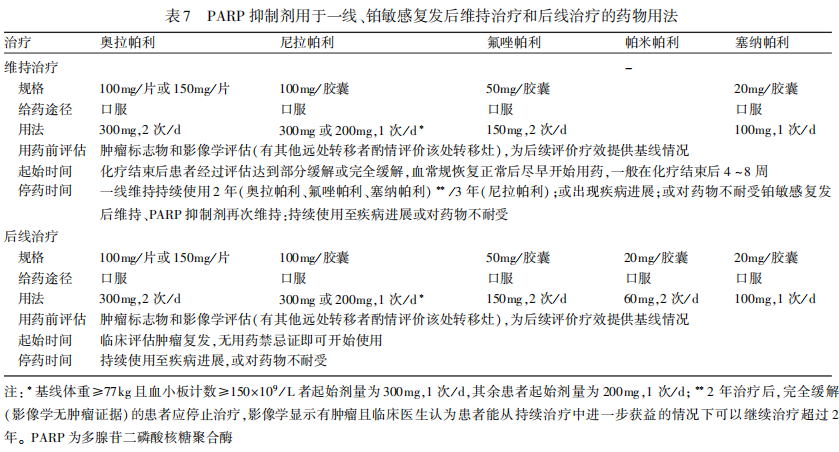
These are small, non-randomized studies, preliminarily suggesting PARPi monotherapy or combination may replace traditional neoadjuvant chemo. However, this approach requires further confirmation of OS benefit. Current evidence is insufficient to recommend PARPi ± combination for neoadjuvant therapy in newly diagnosed or platinum-sensitive recurrent ovarian cancer. Dosing for first-line, second-line maintenance, and later-line therapy is in Table 7.
PART 06: Safety Management of PARP Inhibitor Use
6.1 Common Adverse Events and Management
Most patients experience AEs, characterized by: (1) Mostly mild/moderate (CTCAE grade 1-2), better tolerated than chemo. (2) Most occur early (first 3 months), intensity diminishes over time. (3) Dose-related; most manageable by dose reduction/symptomatic treatment. (4) Hematological, gastrointestinal, and fatigue most common. Most grade 3-4 AEs are hematological, main reason for dose adjustment/interruption/discontinuation. 0.9%-27.6% discontinue due to AEs; most can continue long-term. (5) Toxicity profiles vary by drug structure, pharmacokinetics, metabolism; need tailored monitoring. (6) Olaparib + bevacizumab toxicity not significantly additive vs. monotherapy. Common AEs: fatigue, nausea, anemia, thrombocytopenia, hypertension. Grade ≥3 AEs 48.5%-77.1%, mainly anemia, thrombocytopenia, hypertension. Monitor/manage hypertension with niraparib, PARPi + bevacizumab.
Clinicians must manage toxicity: inform patients, monitor appropriately, improve compliance, reduce interruptions, improve quality of life and efficacy.
6.1.1 Hematological AEs: Monitor CBC regularly, especially initially.
• Olaparib: Baseline then monthly for first 12 months.
• Niraparib: Weekly for first month, then monthly for next 11 months.
• Fluzoparib: Baseline then every 2 weeks for first 3 months.
• Pamiparib: Weekly for first 3 months.
• Senaparib: Baseline then every 2 weeks for first 3 months.
Thereafter, monitor periodically. May need interruption/dose reduction.
6.1.1.1 Anemia: Most common hematological AE. Incidence 21.0%-89.4%, grade 3-4 5.0%-41.6%.
• Hb 80-100 g/L: Continue PARPi, monitor. Supplement iron/folate if deficient. Use erythropoiesis-stimulating agents cautiously.
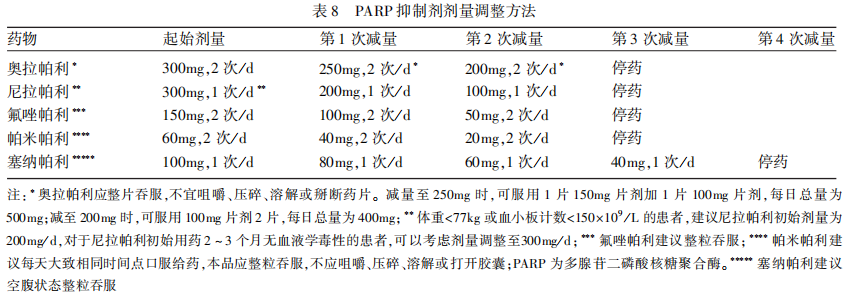
• Hb <80 g/L: Interrupt PARPi. Consider RBC transfusion if symptomatic. Restart at reduced dose (see Table 8 for common reductions) when Hb ≥90 g/L (fluzoparib ≥80 g/L, senaparib ≥100 g/L). Monitor weekly after restart.
• If not recovered within 28d, or recurrence at lowest dose, discontinue.
• Pamiparib specifics: First occurrence Hb <90 g/L: interrupt, treat until ≥90 g/L, restart at lower dose. Recurrence: supportive care/interrupt until ≥90 g/L, restart at 40 mg BID or reduce to 20 mg BID. Life-threatening anemia: interrupt, treat until ≥90 g/L, restart at 20 mg BID. Recurrence at 20 mg BID not due to other causes (e.g., GI bleed): discontinue.
6.1.1.2 Thrombocytopenia: Incidence 14%-70%, grade 3-4 1%-34%.
• Platelets (50-100)×10⁹/L: Continue, monitor.
• Platelets <50×10⁹/L: Interrupt. Restart at reduced dose when ≥75×10⁹/L (fluzoparib ≥50×10⁹/L).
• Treatment: thrombopoietin, IL-11, TPO-RAs. Platelet transfusion if <20×10⁹/L with bleeding risk.
• If not recovered within 28d, or recurrence at lowest dose, discontinue.
• Niraparib specifics: For weight <77 kg or baseline platelets <150×10⁹/L, consider initial dose 200 mg/d. If platelets <100×10⁹/L, interrupt. Upon recovery to ≥100×10⁹/L, restart dose based on nadir: if nadir 75-100×10⁹/L, restart at same dose; if nadir <75×10⁹/L, or recurrent drop <100×10⁹/L, restart at reduced dose. Monitor weekly.
• Senaparib specifics: Platelets <75×10⁹/L: interrupt, restart or reduce dose upon recovery to ≥75×10⁹/L.
6.1.1.3 Neutropenia: Third common hematological AE. Incidence 5.0%-61.1%, grade 3-4 4.0%-33.6%.
• ANC (1.0-2.0)×10⁹/L: Continue, monitor.
• ANC <1.0×10⁹/L: Interrupt. Consider G-CSF. Restart at reduced dose when ANC ≥1.5×10⁹/L. For fluzoparib: restart at same dose if first occurrence without fever; reduce dose if recurrent or with fever, or with platelets <75×10⁹/L. Monitor weekly after restart.
• Treatment: short-acting G-CSF. If not recovered within 28d, or recurrence at lowest dose, discontinue.
6.1.2 Non-Hematological AEs
6.1.2.1 Gastrointestinal AEs: Nausea most common (48.0%-73.6%). Others: constipation, vomiting, diarrhea; mostly grade 1-2.
• Inform patients.
• Symptomatic: antiemetics (prokinetics, 5-HT3 antagonists). Avoid aprepitant (NK-1 inhibitor, CYP3A4 moderate inhibitor) with olaparib/fluzoparib. Taking PARPi at bedtime may reduce nausea.
• Interrupt/reduce dose: For persistent grade ≥2 or grade ≥3, interrupt until resolves to grade 1, consider dose reduction upon restart (especially after second interruption). Discontinue if persistent at lowest dose.
6.1.2.2 Fatigue: Common (29.2%-66.0%), mostly grade 1-2, may last beyond 3 months. Grade ≥3 <10%.
• Inform patients.
• Symptomatic: analgesia, antidepressants.
• Non-pharmacologic: cognitive behavioral therapy, nutritional counseling.
• If persistent grade ≥2 unresponsive, or grade ≥3: interrupt. Restart at same or reduced dose upon improvement. Consider discontinuation if persistent at lowest dose.
6.1.2.3 Hypertension: PARPis, especially with bevacizumab, can cause hypertension. In first-line maintenance with olaparib/niraparib + bevacizumab, 46%-50% had hypertension, 17%-27% grade 3-4. Monitor and manage.
• Ensure pre-existing hypertension controlled before niraparib.
• Monitor BP/heart rate: at least weekly first 2 months, then monthly first year, then periodically.
• Antihypertensives as needed.
• Niraparib adjustment: For grade ≥3 hypertension, interrupt. If controlled within 28d, restart at reduced dose. If uncontrolled >28d or recurrent at lowest dose, discontinue.
6.1.2.4 Other AEs: Headache (5.3%-30.0%), insomnia (5.6%-31.4%), mostly grade 1-2. Less common: dyspnea, nasopharyngitis, cough, tachycardia, palpitations; occasional elevated creatinine/transaminases; arthralgia, back pain.
• Management: Grade 1-2: symptomatic treatment, continue with monitoring. Grade ≥3: interrupt, treat until resolves to grade ≤1, restart with dose reduction considered. Consider discontinuation if persistent at lowest dose for >28d.
6.1.3 Secondary Malignancies
PARPi clinical studies show a small number may develop secondary malignancies, mainly myelodysplastic syndrome (MDS) or acute myeloid leukemia (AML), incidence 0-8% vs. 0-4% placebo. Usually occurs after long-term treatment, serious. Note: all such patients had prior platinum/DNA-damaging agents, some had myelodysplasia/other primary malignancies, so not entirely attributable to PARPi. If persistent cytopenias during treatment, exclude other causes (nutrition, infection) and refer to hematology for bone marrow biopsy. If MDS/AML diagnosed, discontinue PARPi immediately.
6.2 Drug-Drug Interactions with PARP Inhibitors
Metabolic pathways differ: Niraparib mainly via carboxylesterase. Olaparib, fluzoparib, senaparib via CYP450, primarily CYP3A. Pamiparib via CYP2C8 and CYP3A.
• Strong CYP3A inhibitors (e.g., itraconazole, clarithromycin): Not recommended with olaparib, fluzoparib, senaparib.
• Moderate CYP3A inhibitors (e.g., aprepitant, ciprofloxacin): Not recommended with olaparib, fluzoparib. Use with caution with senaparib; dose reduction may be needed.
• Strong CYP3A inducers (e.g., phenytoin, rifampin): Avoid with olaparib, etc., as may reduce concentration. Advise patients to avoid grapefruit/grapefruit juice (CYP3A inhibitors).
• Pamiparib with CYP3A inhibitors: No dose adjustment needed. Data with CYP2C8 inhibitors/inducers limited; use cautiously.
• Niraparib: Primarily metabolized by carboxylesterase, not a major target for common drugs; lower interaction risk, but safety data still limited.
PART 07: Conclusion
PARP inhibitors are a class of targeted drugs that act via the "synthetic lethality" mechanism based on HRD. Their advent has fundamentally changed the treatment paradigm for ovarian cancer, establishing maintenance therapy as a core component of holistic management, representing a milestone. Multiple high-level RCTs confirm that newly diagnosed advanced high-grade serous/endometrioid ovarian cancer patients achieving CR/PR after initial chemotherapy benefit significantly from PARPi first-line maintenance; especially BRCA-mutated and/or HRD+ patients show more prominent benefit, significantly prolonging PFS, with some achieving OS benefit. Platinum-sensitive recurrent ovarian cancer patients achieving CR/PR after chemotherapy also benefit from PARPi maintenance, though this application currently mainly targets BRCA-mutated patients. PARP inhibitors are not routinely recommended for later-line treatment of recurrent ovarian cancer; only as a "chemotherapy-free" option for carefully selected BRCA-mutated and/or HRD+ patients. The role of PARP inhibitors in neoadjuvant therapy remains exploratory, not yet standard. Overall toxicity of PARP inhibitors is significantly lower than cytotoxic chemo, but hematological and non-hematological toxicities must be strictly managed. Besides timely intervention for common AEs (anemia, thrombocytopenia, fatigue), vigilance for rare serious AEs like MDS/AML is crucial. Clinical practice must strictly adhere to indications. BRCA testing is recommended before use; HRD testing if possible to guide precision therapy and prognosis. Clinicians must understand pharmacokinetics, contraindications, toxicities, resistance mechanisms, and emphasize medication adherence to strengthen long-term standardized treatment of ovarian cancer.
Image and text source: Modern Advances in Obstetrics and Gynecology, Vol. 34, No. 2, February 2025.
Editor: Lily