





















Globally, cesarean section rates continue to rise. Today, 1 in 5 women give birth by cesarean section, compared to 1 in 3 in the UK, USA and Australia. Of these, about a quarter of cesarean sections are performed during labor. When a cesarean section is performed during labor, especially when the uterine opening is fully opened, the procedure can become extremely challenging, especially when encountering the complication of "deep embedding of the fetal head". Deep embedding of the fetal head is when the fetal head is located low and wedged into the mother's pelvis, making it difficult for the surgeon to insert his finger under the fetal head to hold it up and deliver it. This situation not only makes surgery difficult, but also significantly increases the risk of maternal and neonatal complications.
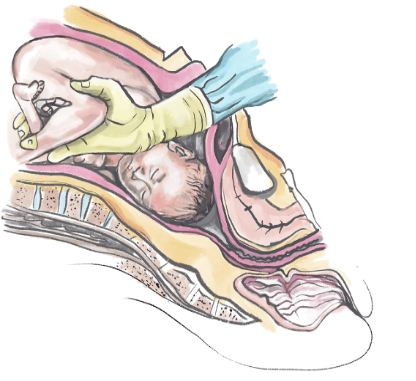
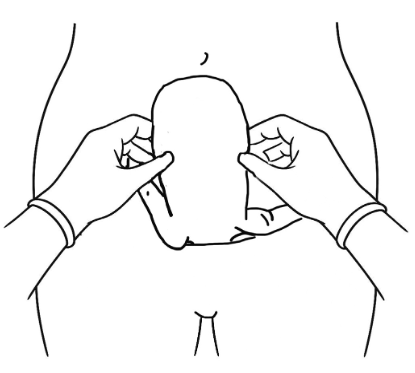
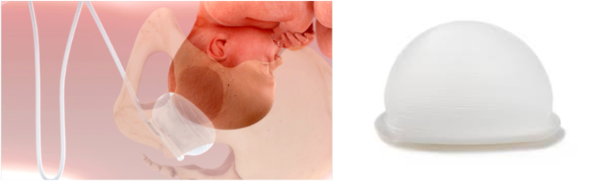
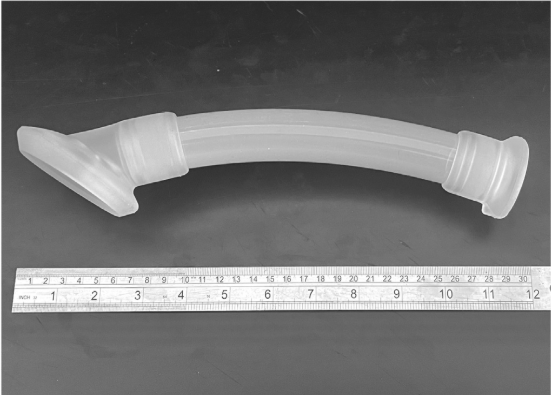
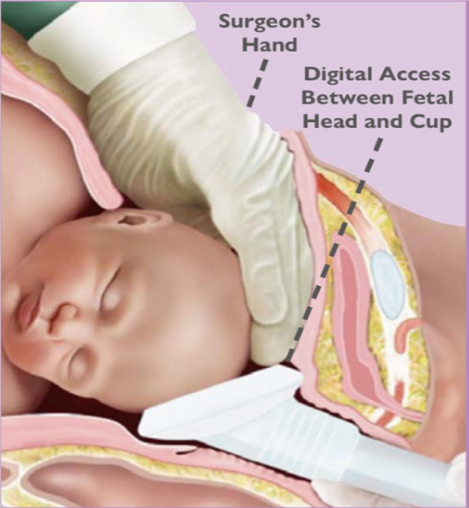
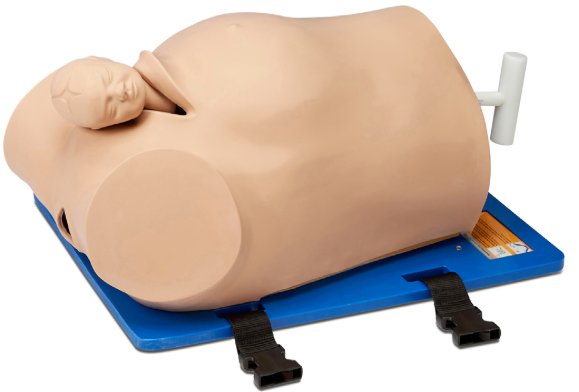
Studies have shown that the incidence of deep fetal head incarnation accounts for about 11% of all emergency cesarean sections, 16% of total cesarean sections, and 1.5% of all deliveries. However, the actual incidence may be higher due to the lack of a uniform definition. Data from the UK Obstetric Surveillance System (UKOSS) reveals the serious consequences of this complication. In a study of 557 total cesarean sections, the incidence of uterine horn extension was 22.0%, postpartum hemorrhage (bleeding volume >1000 ml) was 26.0%, sepsis was 4.8%, and admission to the intensive care unit (ICU) was 6.1%. Neonatal complications are equally severe, with 12.0% of newborns requiring admission to the neonatal intensive care unit (NICU), 0.5% developing hypoxic-ischemic encephalopathy, 0.9% developing skull fractures, 0.4% stillbirths, and 0.4% neonatal deaths. Since deep fetal head incarceration is directly related to serious complications, the medical consequences and burden it brings are also extremely heavy. An early warning program by the UK's National Health Service (NHS) found that deep fetal head incarceration was a contributing factor in 9% of severe brain injury cases and nearly 10% of obstetric claims between 2018 and 2019, with claims amounting to £5.4 billion; In 2022-2023, this figure grew to £5.9 billion. This prompts an urgent need for a deeper understanding of this issue and optimization of its approach. Currently, there are various techniques for dealing with deep embedding of fetal heads, but there is a general lack of high-quality evidence to support it. Initial simple techniques include keeping the arm straight or switching to a non-dominant hand, adjusting the height of the operating table, using a low head and feet, and relaxing the uterine muscles with a tocolytic (such as nitroglycerin) to improve the operating space. If necessary, the uterine incision may need to be extended in a "T" or "J" shape. When the initial technique is ineffective, additional more complex operations are required. It is mainly divided into the "push" method and the "pull" method. "Push" method (vaginal liberation method): The assistant inserts the hand through the vagina and pushes the fetal head upwards to free it from the pelvis. However, if the tire head is incarcerated too deeply, the assistant can often only touch it with his fingertips, and the contact area is only 2 square centimeters. Figure: Schematic diagram of the "push" method "Pulling" method (breech inversion): The surgeon first grabs the fetal feet through the uterine incision and then delivers the fetus in a breech position. Figure: Schematic diagram of the "pull" method Another modified "Patwardhan technique" is to deliver the fetal arms first to increase space. Figure: Patwardhan technical schematic A 2024 meta-analysis showed that the use of the "pull" method (breech inversion) reduced the occurrence of uterine angle extension compared to the "push" method, but the analysis also noted that the quality of evidence from the included studies was low and that there was no difference between the two techniques in terms of neonatal trauma. In fact, both methods have risks: the "pull" method may increase the risk of limb injury in newborns, while the "push" method is thought to increase the risk of skull fractures and intracranial hemorrhage. A national survey in the UK showed that obstetricians were more inclined to use the "push" method, with 25% of highly trained doctors and consultants expressing a lack of confidence in performing breech inversion. In order to solve the above dilemma, some medical devices have emerged, and there are currently two mainstream ones on the market: Fetal Pillow and Tydeman Tube. The Fetal Pillow is a soft silicone balloon device that is placed vaginally under the fetal head and in the posterior fornix before cesarean section and lifts the fetal head upwards by injecting up to 180 ml of water. 图:Fetal Pillow装置示意图 The device has been widely used in the UK since 2011. However, there is limited evidence for its effectiveness. One randomised controlled trial and several observational studies on its use were withdrawn due to inconsistent data. A 2024 meta-analysis found no difference in uterine extension or neonatal birth injury compared to no use of the device, and the quality of the evidence was too low to draw any conclusions. More worryingly, there have been three reported cases of uterine rupture during cesarean section and immediately after inflating the Fetal Pillow. Based on this, the National Institute for Health and Care Excellence (NICE) no longer recommends the routine use of Fetal Pillow in clinical practice. The Tydeman Tube is a new type of relief and vacuum release device consisting of a semi-rigid wide-diameter silicone tube and a flexible silicone cup. Picture: Tydeman Tube physical image The device is designed to mimic the most commonly used manual release (i.e., "push" technique) in clinical practice, but optimized for safety and efficacy. It can be used pre-cesarean section or intraoperatively, at any stage of labor (starting at 7 cm of the uterine opening), both in anticipation of the possibility of deep incarceration of the fetal head and in the event of an unexpected encounter during surgery. The Tydeman Tube has an angled rim that fits the head of the fetus, allowing both upward and forward (towards the symphysis) to help with relief. Its short, wide hollow tube design allows air to enter from below, even in the presence of blood or amniotic fluid, potentially relieving the "vacuum effect" that forms when the fetal head descends. Figure: Schematic diagram of the Tydeman Tube structure, showing that its bevel design helps the surgeon's hand pass between the device and the fetal head The cup mouth design also allows the surgeon's hand to easily pass between the cup mouth and the fetal head when the fetal head is delivered. The marker line on the device helps the assistant know the direction of the cup mouth in the vagina at all times. Studies on simulators provide strong preliminary evidence. In a study using a fully dilated cesarean section simulator, the use of the Tydeman Tube resulted in a higher head lift height (9.1 mm higher on average) compared to manual release. Although the total force applied is larger, the average pressure actually acting on the fetal head is lower because the pressure is distributed over a larger contact area (6.97 cm² vs. 2.00 cm² for manual release), reducing the risk of local injury. Figure: Image of the Debra enhanced fetal head incarceration delivery simulator In another comparative study, the Tydeman Tube achieved significantly better than manual release on the simulator in both experienced and untrained operators. On medium and high difficulty, the Tydeman Tube has a lift height of 30 mm and 25 mm, respectively, while the manual release is only 12.5 mm and 10 mm. In contrast, the performance of Fetal Pillow on the simulator is not significantly different from that of manual liberation. In clinical preliminary applications, the first 10 cases using the Tydeman Tube were evaluated. All cesarean sections were performed when the uterine opening was 9-10 cm, and all neonates had a 1-minute Apgar score greater than 8. Only one case had more than 1000 milliliter of bleeding and had failed to try Kieland forceps prior to the use of the Tydeman Tube. The newborn had only facial bruising and was thought to be related to forceps rather than the device itself. Users rated the average ease of use with the device 7.1 out of 10. An audit of the first seven uses after receiving regulatory approval in the UK showed that the equipment received a high usability rating (4.8/5.0) in all six real-world uses. Users have reported that inserting the device before the procedure begins with greater confidence, as even the short time it takes to open and insert the device is crucial for the surgeon. At present, there is still a lack of high-quality evidence to support various techniques for dealing with deep embedding of the fetal head. A larger audit of a comparative approach, Fetal Pillow and Tydeman Tube is underway in the UK, and a clinical study with a planned inclusion of 90 cases is also on the horizon. However, given the low incidence of serious complications, a larger multicenter randomized controlled trial is needed to establish the safety of any new device. At the same time, strengthening the training of clinicians is also receiving increasing attention. Currently, training in the handling of deep embedding of the fetal head is reported as "inconsistent and inadequate" in the UK. Simulator-based hands-on training, combined with a set of standardized management processes, is considered an effective way to enhance clinician skills, increase confidence, and improve team communication. In the face of this increasingly severe obstetric challenge, Tydeman Tube offers a new clinical option with its characteristics of simulating traditional methods, easy operation, and better design, but its ultimate value still needs to be verified in future high-quality studies. 内容来源:van der Krogt L, Briley A, Shennan A ... The impacted fetal head at cesarean delivery, incidence, complications and management options, including a new device American Journal of Obstetrics & Gynecology, 233, S280-S288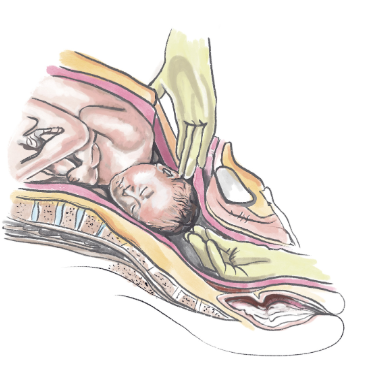
Editor-in-charge:lucy