





















Doctor, I’m 12 weeks pregnant. Why am I still bleeding even though I’m taking progesterone injections?
This is one of the most heart-wrenching questions in outpatient clinics. When progesterone—a routine miscarriage prevention drug—fails to work, it brings immense anxiety and helplessness: "If progesterone doesn’t work, can the baby still be saved?" "What should I do next? What other drugs can I use?"
As a patient or family member, the desire to protect the pregnancy is understandable, but there is truly no "panacea" for miscarriage prevention. As doctors, when one drug is ineffective, the key is to identify the underlying real cause and adjust treatment with precise, individualized medication accordingly.
Progesterone (progestogen) is a natural progestogen secreted by the ovarian corpus luteum and placenta. As a critical hormone for maintaining pregnancy, progesterone acts by promoting endometrial transformation, inhibiting uterine contractions, and regulating maternal-fetal immunity. Vaginal bleeding in early pregnancy is a common gynecological problem and the main clinical manifestation of threatened abortion, with luteal phase deficiency being one of the common causes. Exogenous progesterone supplementation mainly targets bleeding or threatened abortion caused by insufficient progesterone secretion (i.e., luteal phase deficiency). When it is ineffective, it may be related to drug formulation selection, individual differences, and other concurrent pathological factors (such as hypercoagulable state or immune abnormalities).
At this point, blindly increasing the progesterone dose is usually futile and may even delay the diagnosis of the true cause.
The Foundation of Adjusting Medication: Finding the "Real Cause" of Bleeding
Before considering medication adjustment, a thorough "detective-style" investigation must be conducted, which is the fundamental basis for all subsequent treatment. The primary and most crucial examination is ultrasound. It is necessary to confirm:
Whether the embryo is viable;
Whether the fetal heart rate is normal;
Whether there is a subchorionic hematoma (intrauterine bleeding area);
Whether the embryo’s developmental size is consistent with gestational age.
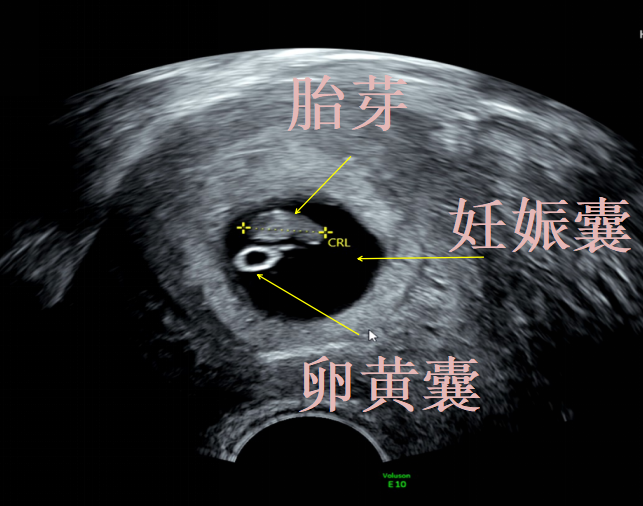
➱ If the embryo has stopped developing (embryo arrest), no miscarriage prevention drugs will work, and pregnancy termination must be performed promptly.
➱ If the embryo is developing normally, or there is a subchorionic hematoma, or other common causes of bleeding exist, the treatment strategies will differ.
Coagulation Function and Prethrombotic State
This is a focus of modern miscarriage management. Some pregnant women have a "hypercoagulable state," which leads to the formation of microthrombi in the uterine-placental unit, resulting in insufficient blood supply, bleeding, and even embryo arrest. Tests include D-dimer, protein S, protein C, antithrombin III, and platelet aggregation rate.
Immune System Abnormalities
The maternal immune system may be mistakenly activated, triggering thrombosis and inflammation (e.g., antiphospholipid syndrome, systemic lupus erythematosus). Tests include anticardiolipin antibodies, anti-β2-glycoprotein I antibodies, and lupus anticoagulant.
Endocrine Factors
Thyroid dysfunction: Hypothyroidism or positive thyroid peroxidase antibodies (TPOAb) are well-established risk factors for miscarriage.
Blood glucose/insulin resistance: Uncontrolled hyperglycemia or insulin resistance impairs vascular endothelial function.
Uterine Structural Issues
Conditions such as uterine fibroids (especially submucous fibroids), adenomyosis, and cervical polyps can also cause bleeding.
Infectious Factors
Certain reproductive tract infections may lead to bleeding, though this is relatively rare.
From Single Progesterone Supplementation to Multidimensional Combined Management
Based on the above investigations, the doctor’s treatment approach will shift from single progesterone supplementation to multidimensional combined management.
If the embryo is viable with a normal fetal heart rate, medication adjustment can be considered. Approximately 30% of patients with luteal phase deficiency have a poor response to standard progesterone treatment, which may be related to drug formulation, individual differences, and concurrent pathological factors (e.g., hypercoagulable state or immune abnormalities).
Progestogens are classified into natural progestogens and synthetic progestogens. Synthetic progestogens are mostly progesterone or testosterone derivatives.
Commonly Used Progestogens:
① Intramuscular progesterone: Including oil-based progesterone and 17α-hydroxyprogesterone caproate (the latter is a synthetic progestogen and not yet available in China);② Vaginal progesterone: Including progesterone sustained-release gel and micronized progesterone capsules;③ Oral progesterone: Including micronized progesterone capsules and dydrogesterone (a retroprogesterone).
01 Selection of Alternative Progestogen Drugs
Dydrogesterone, a structural analog of natural progesterone, is the preferred alternative after progesterone failure due to its unique molecular structure (no androgenic/estrogenic activity) and immunomodulatory effects. Studies have shown that dydrogesterone combined with progesterone significantly improves miscarriage success rates compared to progesterone alone.
02 Adjustment of Administration Route and Dose
For threatened abortion, medication is continued until clinical symptoms resolve and ultrasound confirms viable embryo, then discontinued after 1–2 weeks of continued use. Recommended methods and doses of progesterone for threatened abortion:
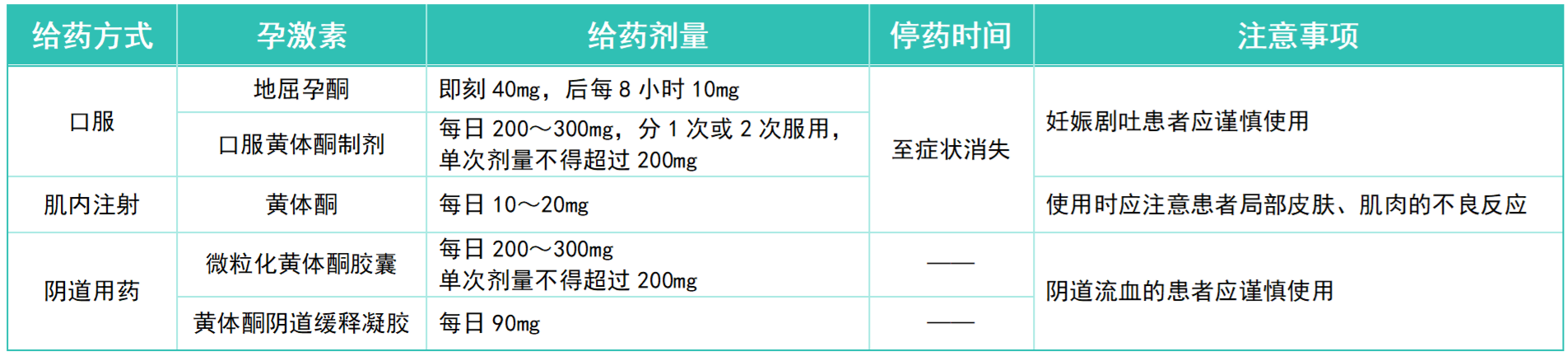
03 Optimization of Combined Treatment Strategies
For patients with poor response to progesterone monotherapy, combined medication can synergistically improve pregnancy outcomes:
❖ Combined with low-molecular-weight heparin: In patients with recurrent miscarriage, progesterone plus low-molecular-weight heparin significantly increases the full-term delivery rate and rapidly relieves bleeding and abdominal pain. The mechanism may be related to correcting hypercoagulable state and improving placental microcirculation.
❖ Combined with traditional Chinese medicine preparations: Combined use of traditional Chinese medicine and progesterone can regulate immune function (e.g., reduce anticardiolipin antibodies, increase progesterone-induced blocking factor) and shorten bleeding time.
When progesterone is ineffective, you should understand that this "ineffectiveness" is an important "alert"—it indicates the need for deeper and more comprehensive etiological screening, not panic. Through accurate diagnosis and medication adjustment, no single plan suits everyone. "Miscarriage prevention" is a systematic project; modern treatment has long gone beyond simple progesterone supplementation and involves multidisciplinary collaboration in reproductive immunology, coagulation, endocrinology, and more. Through full communication between doctors and patients, understanding the purpose of each examination and medication, a dynamically adjusted individualized plan can be formulated together. When the door of progesterone seems to close, scientific diagnosis and treatment will open more windows for you, seeking new possibilities for your baby’s growth.
References
[1] Professional Committee of Reproductive Medicine, Chinese Medical Doctor Association. Clinical Practice Guidelines for Progesterone in Maintaining Pregnancy and Luteal Phase Support[J]. Chinese Journal of Reproduction and Contraception, 2021, 41(02): 95-105. DOI:10.3760/cma.j.cn101441-20200930-00543
[2] Sun Y, Liu P, Ye H, et al. Consensus on Luteal Phase Support and Progesterone Supplementation. Reproduction and Contraception, 2015, 35(01): 1-8. DOI:10.7669/j.issn.0253-357X.2015.01.0001
[3] Obstetrics Group, Chinese Society of Obstetrics and Gynecology; Writing Group of Expert Consensus on Diagnosis and Treatment of Recurrent Miscarriage. Expert Consensus on Diagnosis and Treatment of Recurrent Miscarriage (2022)[J]. Chinese Journal of Obstetrics and Gynecology, 2022, 57(09): 653-667. DOI:10.3760/cma.j.cn112141-20220421-00259
Chart Source: Dr. Jin Ying
Author Profile

Editor: Lily