





















Overweight and obesity are global issues. The 2025 World Obesity Atlas indicates that 41% of adults in China will have a high BMI (≥25 kg/m²), and 9% will have obesity (BMI ≥30 kg/m²) by 2025 [1]. The situation of excessive gestational weight gain among Chinese pregnant women is even more severe. Authoritative surveys show that 73% of pregnant women in China exceed the World Health Organization standards for gestational weight gain. Excessive gestational weight gain and obesity increase the risk of gestational diabetes mellitus (GDM), hypertensive disorders of pregnancy, and postpartum depression. Moreover, as body mass index (BMI) increases, the rates of preterm birth and cesarean delivery also rise [2, 3]. More importantly, obesity combined with pregnancy significantly increases thrombotic risk. Is obesity combined with pregnancy a significant or independent risk factor for venous thromboembolism (VTE)? Are there differences in the pharmacokinetics of medications compared to normal-weight pregnant women? For preventive anticoagulation with heparin, should the dosage differ from that for normal-weight pregnant women?
1. Opinions of International Organizations on the Relationship Between Obesity in Pregnancy and VTE, and Obesity Criteria
The increased risk of thrombotic diseases during pregnancy due to obesity is well-established in the global medical community. A retrospective analysis by Sultan et al. [4] of 376,154 pregnant women in the UK found that pre-pregnancy obesity increased the risk of antepartum thrombotic disease by 50%. A larger prospective study in Denmark involving 1,297,307 pregnancies with 748 cases of VTE showed that, after adjusting for related factors, the risk for overweight women before pregnancy was 1.4 times (95% CI: 1.0-2.0) that of women with normal weight.
1.1 Obese Pregnant Women Are a Major High-Risk Factor for VTE
It is widely recognized by major international academic organizations that obese pregnant women constitute a major high-risk factor for VTE:
01 September 2020, FIGO (International Federation of Gynecology and Obstetrics) published the FIGO Guidelines on the Management of Obesity in Pre-conception, Pregnancy, and Postpartum, integrating recommendations from over 30 clinical practice guidelines [5].
Image Source: International Journal of Gynecology and Obstetrics
The guideline points out: Nearly one-quarter (23.9%) of the risk for pregnancy complications is attributable to maternal overweight or obesity. Risks of obesity during pregnancy for the mother include cardiometabolic diseases (gestational diabetes, hypertensive disorders of pregnancy), sepsis, venous thromboembolism, stillbirth, preterm birth, macrosomia, and obstructive sleep apnea; for the fetus, risks include congenital anomalies or adverse birth outcomes. Recommendations 8-11 for women with BMI ≥30: If venous thromboembolism risk factors are present, the risk of antepartum and postpartum VTE should be assessed. Pharmacological thromboprophylaxis postpartum should be chosen based on maternal weight.
02 Queensland Health released guidelines for the prevention of VTE during pregnancy and the puerperium in 2014 (referred to as the old version) and updated them in March 2020 (referred to as the new version) [6].
Image Source: Queensland Health
Notably, the new guidelines provide a more detailed classification for the obese population. The old guidelines considered BMI >30 as a single risk factor. However, research shows that the risk of VTE during pregnancy and the puerperium increases with the degree of obesity. Compared to pregnant/postpartum women with normal BMI (18.5-24.9), the antepartum and postpartum VTE risks for those with BMI 30-34.9 are 1.37 and 1.74 times higher, respectively; for BMI 35-39.9, 1.40 and 2.70 times; and for BMI ≥40, 2.89 and 3.64 times. Therefore, the new guidelines further subdivide the obese population into BMI 30-39 and BMI ≥40, assigning 1 and 2 points, respectively.
03 In April 2021, the Obstetrics Group of the Chinese Society of Obstetrics and Gynecology, Chinese Medical Association, published the Expert Consensus on the Prevention, Diagnosis, and Treatment of Venous Thromboembolism during Pregnancy and the Puerperium [7].
VTE risk factors in obstetrics and others: Family history of VTE, advanced maternal age, parity, obesity, paralysis or prolonged immobility, systemic infection, multiple pregnancy, preeclampsia, cesarean delivery, prolonged labor, stillbirth, severe postpartum hemorrhage, or massive transfusion, etc.
04 The American College of Obstetricians and Gynecologists (ACOG) published the ACOG Practice Bulletin No. 230: Obesity in Pregnancy Management Guidelines for the first time in June 2021 [8].
Image Source: ACOG
Data from the US 2017-2018 shows an obesity prevalence of 39.7% among women aged 20-39. Obesity is a risk factor for VTE. A Danish nested case-control study involving over 71,000 women showed that obesity in early pregnancy was associated with an increased risk of VTE (adjusted odds ratio 5.3; 95% CI 2.1-13.5). This ratio was adjusted for age, parity, clomiphene citrate stimulation, and diabetes. Given the increased VTE risk in obese women, it is recommended to use pneumatic compression devices for all women undergoing cesarean delivery who are not on pharmacological thromboprophylaxis.
Recommendation 10: Mechanical thromboprophylaxis is recommended for all obese pregnant women preoperatively and postoperatively. (Level B evidence).
05 On July 15, 2025, the Pulmonary Embolism and Pulmonary Vascular Disease Group of the Chinese Society of Respiratory Diseases, the Pulmonary Embolism and Pulmonary Vascular Disease Working Committee of the Chinese Association of Chest Physicians, the National Cooperation Group for Prevention and Treatment of Pulmonary Embolism and Pulmonary Vascular Diseases, and other organizations compiled and released the Chinese Guidelines for the Diagnosis, Treatment, Prevention, and Management of Pulmonary Thromboembolism (2025 Edition) [9]. It states: Acute PTE is an important cause of maternal mortality. In addition to pregnancy-specific thrombotic risk factors such as hormonal changes and compression of the inferior vena cava by the enlarged uterus, the use of assisted reproductive technology, obesity, comorbid medical conditions, postpartum hemorrhage, cesarean delivery, and previous VTE history all increase the risk of PTE.
06 On November 4, 2025, the National Health Commission's Million Disability Reduction Project Expert Committee, the Chinese Stroke Society Cerebral Venous Diseases Branch, and the Stroke Prevention and Control Professional Committee of the Chinese Preventive Medicine Association issued the Guidelines for the Management of Cerebral Venous Thrombosis During Pregnancy and the Puerperium (2025 Edition) [10]. It points out: Pregnant and postpartum women are at high risk for cerebral venous thrombosis (CVT). Risk factors include: Personal factors: obesity, prolonged sedentary behavior or bed rest, dehydration, certain medications like oral contraceptives, etc.
Prevention: While ensuring nutritional intake for the mother and fetus/newborn, it is recommended to reasonably control weight gain during pregnancy and the puerperium to reduce and slow the progression of PIH optic neuropathy. (Class I recommendation, Level C evidence).
1.2 Obesity Criteria
International and Chinese obesity criteria are as follows:
1. International Criteria
According to World Health Organization (WHO) standards, a BMI of 25-29.9 is considered overweight, and a BMI ≥30 is considered obesity [11]. Obesity is further classified into three grades based on severity:
• Class I obesity: BMI 30-34.9
• Class II obesity: BMI 35-39.9
• Class III obesity: BMI ≥40
It is worth noting that ethnicity influences BMI cutoff settings. WHO standards may not apply to all populations; national recommended diagnostic criteria should be referenced.
2. Chinese Criteria
According to the 2024 Chinese Society of Endocrinology's Guidelines for Long-Term Weight Management and Pharmacological Clinical Application in Obese Patients (2024 Edition) [12], commonly used diagnostic criteria for obesity in the Chinese adult population based on BMI are:
• BMI <18.5 kg/m²: Underweight
• BMI 18.5-24 kg/m²: Normal weight
• BMI 24-28 kg/m²: Overweight
• BMI ≥28 kg/m²: Obesity
Obesity is further classified into four grades based on severity:
• Class I obesity: BMI 28.0-32.5 kg/m²
• Class II obesity: BMI 32.5-37.5 kg/m²
• Class III obesity (Severe obesity): BMI 37.5-50 kg/m²
• Class IV obesity (Extreme obesity): BMI ≥50 kg/m²
2. Mechanism of Thrombosis in Obese Pregnant Women and the Issue of Low Molecular Weight Heparin Dosage
2.1 Relationship Between Obesity and Thrombosis
The risk of first-time VTE in obese individuals is 2-3 times that of the normal population. For every 10 kg/m² increase in BMI, the risk of VTE recurrence increases by 24%.
Obesity, as a risk factor for VTE, increases the risk of VTE through three aspects: venous stasis, endothelial injury, and hypercoagulability (Virchow's triad).
1. Chronic intra-abdominal pressure elevation and decreased blood flow velocity in the common femoral vein in obese individuals increase the risk of venous return obstruction, thereby increasing VTE risk.
2. Dysfunctional adipocytes can recruit inflammatory cells and promote the secretion of inflammatory factors and adipokines, maintaining a chronic low-grade inflammatory state that damages vascular endothelial cells.
3. Concurrently, the antioxidant response of vascular endothelial cells in obese individuals decreases, leading to further endothelial damage.
4. Studies show that markers of platelet activation are increased in obese populations, reflecting ongoing platelet and endothelial cell activation, placing obese individuals in a hypercoagulable state. Platelet-derived microparticles (pDMPs) are small membrane vesicles (<0.1 μm) released from platelets activated by shear stress or agonists. pDMPs are considered indicators of platelet activation and have been shown to exert pro-inflammatory and pro-thrombotic effects, potentially promoting atherosclerosis and thrombosis.
2.2 Relationship Between Obese Pregnancy and Thrombosis
In obese pregnant women, the physiological hypercoagulable state of pregnancy overlaps with the pathological hypercoagulability caused by obesity. Besides the three risk factors of venous stasis, endothelial injury, and hypercoagulability seen in general obesity, pregnancy increases thrombotic risk due to increased blood volume, elevated estrogen, progesterone, and relaxin levels leading to vasodilation, slower blood flow, and a hypercoagulable state. Additionally, the enlarged uterus in pregnant women causes blood flow stasis, vascular endothelial damage during delivery, the physiological hypercoagulable state, and hypofibrinolytic state of pregnancy. These coagulation changes help reduce bleeding during delivery but simultaneously increase thrombotic risk. Changes in coagulation factors mainly manifest as increases in factors VII, VIII, XII, von Willebrand factor, and fibrinogen, especially factor VII which can increase up to 10-fold, and fibrinogen by 200%. Furthermore, anticoagulant levels decrease, mainly manifested as decreased protein S and acquired activated protein C resistance. There is also decreased fibrinolytic function due to elevated plasminogen activator inhibitor-1 (PAI-1) and PAI-2. The overall hypercoagulable state, combined with increased vascular compliance, venous stasis, mechanical compression of pelvic veins, and endothelial damage during delivery, together constitute Virchow's triad (hypercoagulability, stasis, and vessel wall injury), creating an environment highly prone to thrombosis.
2.3 Impact of Obesity on Pharmacokinetics
In patients with extreme body weight, changes in pharmacokinetic parameters such as volume of distribution, half-life, and clearance cause anticoagulant drug exposure and clearance to differ from normal, affecting their efficacy and safety [13, 14].
Leptin, a hormone secreted by adipose tissue in obese individuals, plays a role not only in appetite regulation but also directly influences thrombosis. Leptin binds to receptors on platelet surfaces, enhancing platelet aggregation and increasing tissue factor (TF) expression in vascular endothelial cells, thereby promoting coagulation. This is a key factor contributing to the increased incidence of acute thrombotic events in obese individuals.
The high body fat percentage and relatively larger internal organs in obese patients compared to normal-weight individuals lead to differences in the apparent volume of distribution (Vd) and clearance of direct oral anticoagulants (DOACs). Increased kidney size in obese patients may increase DOAC clearance, while increased body fat may increase drug Vd. The combined effect may potentially reduce DOAC efficacy, possibly increasing the incidence of recurrent VTE. Whether subcutaneous absorption and metabolism are similarly affected requires further evidence-based medical investigation.
2.4 Dosage of Heparin in Obese Pregnant Women
Depending on the purpose (prevention or treatment) during pregnancy, the relationship between dosage and body weight becomes crucial when the patient's weight is outside the conventional range. For obese pregnant women, especially those with BMI ≥40 or with other thrombotic risk factors, the dosage of pharmacological prophylaxis for VTE may need to be adjusted based on body weight. For example, the dosage of low molecular weight heparin (LMWH) may need to be calculated based on body weight to ensure adequate anticoagulation.
Based on patient weight, LMWH dosages can be categorized as low dose (prophylactic dose), intermediate dose (prophylactic dose adjusted for increasing pregnancy weight), and high dose (treatment dose). Fixed doses may be relatively insufficient in obese patients (typically weight >100 kg or BMI >30), leading to reduced prophylactic efficacy. While no completely unified standard exists, clinical practice and guidelines tend towards increased doses and enhanced monitoring:
01 The American College of Obstetricians and Gynecologists (ACOG) published the ACOG Practice Bulletin No. 230: Obesity in Pregnancy Management Guidelines in June 2021 [8].
The guideline states: A prospective sequential cohort study compared VTE prophylaxis regimens based on body weight versus BMI stratification. The study initiated VTE prophylaxis 12 hours post-cesarean delivery, using either a body weight-based regimen (enoxaparin 0.5 mg/kg every 12 hours) or a BMI-stratified regimen (enoxaparin 40 mg every 12 hours for BMI 40-59.9; 60 mg every 12 hours for BMI ≥60). The primary outcome was whether anti-Xa concentrations were within the target range for adequate thromboprophylaxis (0.2-0.6 IU/mL). Results showed significantly higher anti-Xa concentrations in the body weight-based group. Based on this, a body weight-based VTE prophylaxis dosing regimen may be more appropriate than a BMI-stratified dosing strategy for women with class III obesity after cesarean delivery [15].
Recommendation 11: For pregnant women with class III obesity after cesarean delivery, the heparin dose for VTE prophylaxis is recommended to be determined based on body weight. (Level B evidence).
02 The European Journal of Anaesthesiology published the 1st edition of the European Guidelines on Perioperative Venous Thromboembolism (VTE) Prophylaxis upon its first update in 2024.
Image Source: EJA
Among its points, number 10 states: It is suggested to use higher prophylactic doses of LMWH, UFH, or fondaparinux, especially in patients with BMI >40 or weight >150 kg. (Grade 2B). It is suggested to routinely monitor anti-Xa levels in patients receiving LMWH, UFH, or fondaparinux. (Grade 2C)
03 In September 2025, the National Perioperative Medication Working Committee of the Chinese Pharmacists Association released the Expert Consensus on Prevention and Treatment Strategies and Pharmaceutical Care for Perioperative Venous Thromboembolism 2025 [16].
It points out: The incidence of perioperative VTE in obstetrics is 4-5 times that of other non-pregnant women. PE is the most common direct cause of death, with a case-fatality rate as high as 2.4%-6.6%. It is one of the main causes of maternal mortality, accounting for 13.8% of all maternal deaths.
Recommendation: LMWH is the first choice for perioperative VTE prophylaxis in patients with extreme body weight, and the dose can be adjusted by monitoring anti-Xa levels. (Strength of recommendation: Strong; Quality of evidence: B)
04 In March 2020, Queensland Health (QLD) released the guideline for the prevention of venous thromboembolism (VTE) in pregnancy and the postnatal period [6].
VTE risk assessment for pregnant/postpartum women needs to be conducted throughout pregnancy and the postnatal period, with a prevention plan formulated. Dynamic monitoring and risk reassessment are required throughout pregnancy. Postpartum or upon planned discharge, continued observation and individualized plans should be provided based on the situation.
(1) LMWH Prophylaxis Reference Doses Based on Different Body Weights:
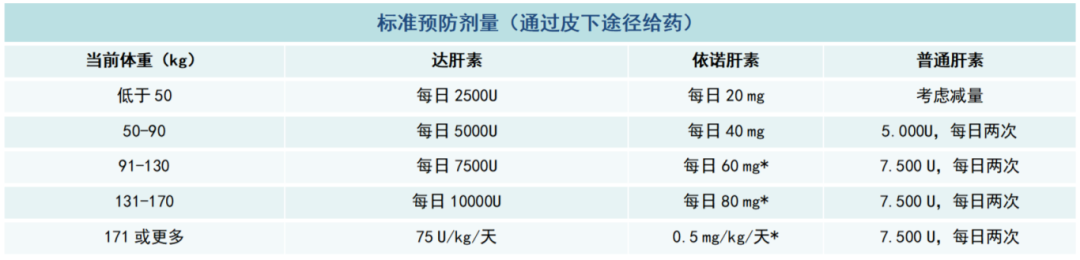
Table Source: Queensland Health
(2) High Prophylactic Dose (Administered Subcutaneously): Consider for women with multiple significant risk factors (e.g., previous DVT, antiphospholipid syndrome/and those with increased arterial thrombotic risk, e.g., hyperhomocysteinemia).

Table Source: Queensland Health
Suggested regimens are not evidence-based. Seek expert advice if weight is below 50 kg or above 130 kg.
(3) Treatment Dose
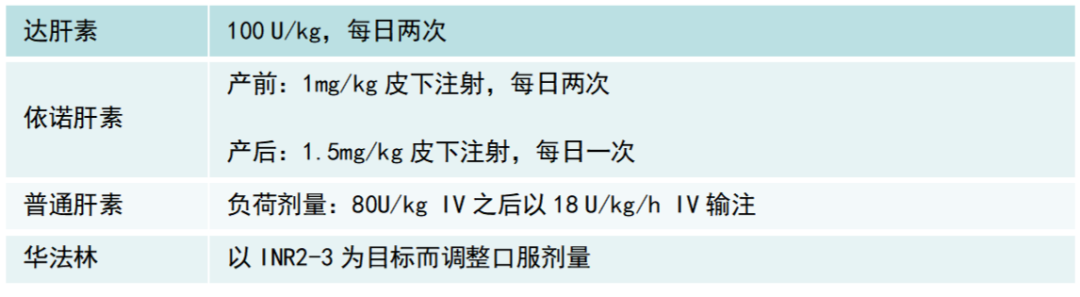
Table Source: Queensland Health
05 2020 Edition of the Standardized Textbook for the Beijing Obstetric Critical Illness Team Response Drill Course (Summary Version) by the Beijing Obstetric Quality Control Center [17].
It summarizes and proposes standard prophylactic and high prophylactic doses of LMWH: Enoxaparin prophylactic dose calculation (most commonly used doses are highlighted in yellow in the original table).
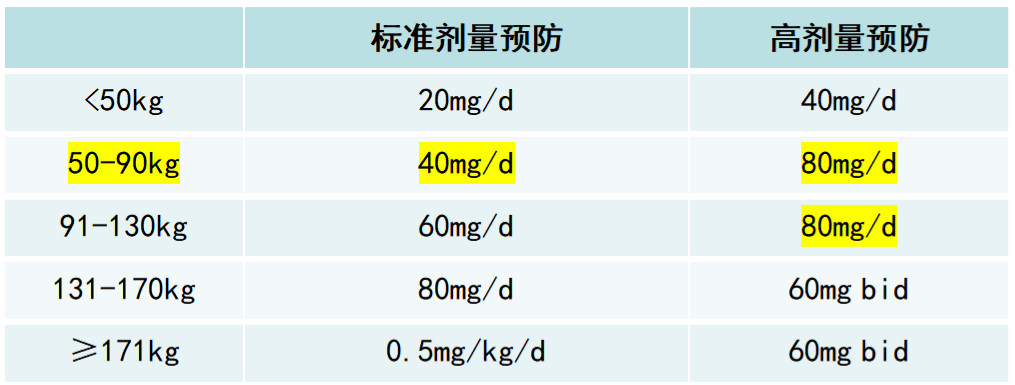
Table Source: Standardized Textbook for the Beijing Obstetric Critical Illness Team Response Drill Course
Note: 0.01 ml of enoxaparin sodium is 1 mg; one prefilled syringe of 4000 IU is 0.4 ml, which is 40 mg.
06 In 2020, the Shanghai Maternal and Infant Safety Expert Committee, the Perinatology Branch of the Shanghai Medical Association, and the Obstetrics Group of the Obstetrics and Gynecology Branch of the Shanghai Medical Association issued the Shanghai Expert Consensus on the Prevention of Venous Thromboembolism in Obstetrics (2020) [18].
The expert consensus states: In the absence of clear contraindications, high-risk populations should receive standard prophylactic doses of LMWH. For pregnant/postpartum women with excessively low or high body weight, drug doses can be appropriately adjusted based on their weight. Details as follows:
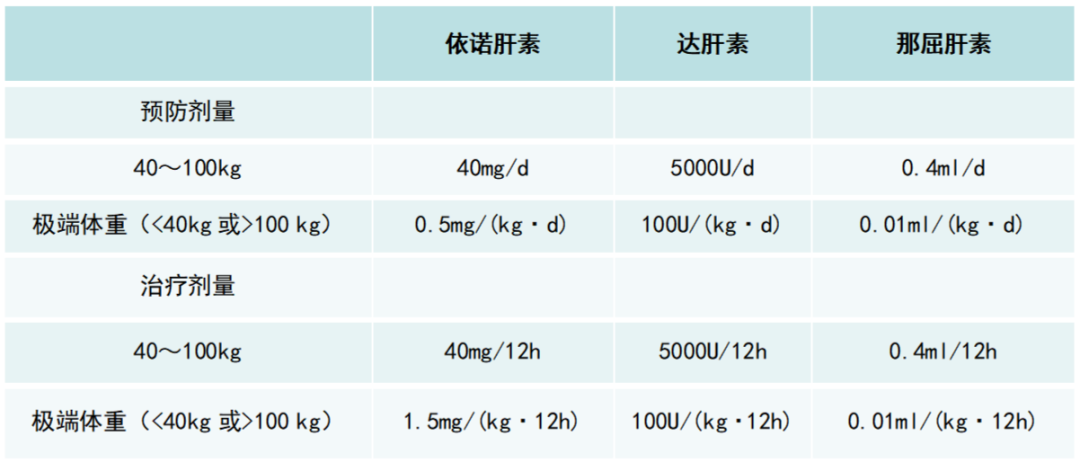
Table Source: Shanghai Expert Consensus on the Prevention of Venous Thromboembolism in Obstetrics
Conclusion
One of the three major breakthroughs in clinical obstetric research for 2025 is: Preeclampsia prevention, with high-dose aspirin demonstrating superior efficacy. For the obese population during the special period of pregnancy, especially severely obese pregnant women, how should the dose of LMWH for VTE prevention be applied? Guidelines suggest different doses than for normal-weight pregnant women, but this requires more evidence and high-quality research. This provides direction for designing and implementing high-quality clinical studies in the future. Simultaneously, medication selection and dosage adjustment strategies for special populations are also future research directions.
References:
[1].World Obesity Federation. (2025). World Obesity Atlas 2025. London: World Obesity Federation.
[2]Niebrzydowska-Tatus M, Pełech A, Rekowska AK, et al. Recent Insights and Recommendations for Preventing Excessive Gestational Weight Gain. J. Clin. Med. 2024, 13(5):1461.
[3]Champion ML, Harper LM. Gestational Weight Gain: Update on Outcomes and Interventions[J]. Curr. Diab. Rep. 2020, 20(3):11.
[4]Sultan AA, Tata LJ, West J, et al. Risk factors for first venous thromboembolism around pregnancy: a population-based cohort study from the United Kingdom[J]. Blood, 2013, 121(19):3953-3961.
[5]McAuliffe FM, Killeen SL, Jacob CM, et al. Management of prepregnancy, pregnancy, and postpartum obesity from the FIGO Pregnancy and Non-Communicable Diseases Committee: A FIGO (International Federation of Gynecology and Obstetrics) guideline[J]. Int J Gynaecol Obstet. 2020;151 Suppl 1:16-36.
[6]Queensland Clinical Guidelines. Venous thromboembolism (VTE) in pregnancy and the puerperium[M]. Guideline MN20.9-V7-R25, Queensland Health, 2020: 1-24.
[7]中华医学会妇产科学分会产科学组.妊娠期及产褥期静脉血栓栓塞症预防和诊治专家共识[J].中华妇产科杂志,2021,56(04):236-243.
[8].Obesity in Pregnancy: ACOG Practice Bulletin, Number 230[J]. Obstet Gynecol. 2021.137(6):e128-e144.
[9]中华医学会呼吸病学分会肺栓塞与肺血管病学组,中国医师协会呼吸医师分会肺栓塞与肺血管病工作委员会,全国肺栓塞与肺血管病防治协作组. 中国肺血栓栓塞症诊治、预防和管理指南(2025版)[J]. 中华医学杂志,2025,105(26):2162-2194.
[10]国家卫生健康委百万减残工程专家委员会, 中国卒中学会脑静脉病变分会, 中华预防医学会卒中预防与控制专业委员会 . 妊娠期和产褥期脑静脉血栓形成管理指南(2025 版)[J]. 中华医学杂志,2025, 105(39): 3518-3540.
[11].WHO Expert Consultation. Appropriate body‐mass index for Asian populations and its implications for policy and intervention strategies. Lancet. 2004;363:157–163.
[12]中华医学会内分泌学分会. 肥胖患者的长期体重管理及药物临床应用(2024版)[J].中华内分泌代谢杂志,2024,40(07):545-561.[13] 武雪, 魏萌, 王李腾, 周国华. 直接口服抗凝药在极端体重患者中应用的研究进展 [J]. 药学与临床研究,2023,31(1):66~70.
[14] Tomasz J. Guzik, Chinthanie Ramasundarahettige, et al. Rivaroxaban Plus Aspirin in Obese and Overweight Patients With Vascular Disease in the COMPASS Trial. J Am Coll Cardiol. 2021 Feb, 77 (5) 511–525.
[15]. Overcash RT,Somers AT,LaCoursiere DY. 重度肥胖女性剖宫产后依诺肝素的给药方案. 妇产科学2015;125:1371–6.
[16].王宝彦,周琳,陈艳,等.围手术期静脉血栓栓塞症防治策略与药学监护专家共识[J/OL].医药导报,1-41[2025-09-23].
[17].北京市产科质量控制中心2020版《北京市产科危重症团队处置演练课程标准化教材》
[18]上海市母婴安全专家委员会,上海市医学会围产医学专科分会,上海市医学会妇产科专科分会产科学组,等. 上海市产科静脉血栓栓塞症的综合管理共识[J]. 上海医学, 2020, 43(12): 709-714.
About the Author
Editor: Lily