Obstetrics and gynecology, as a key field to protect women's health and the birth of new life, has ushered in a series of breakthroughs between 2025 and 2026. From innovative drugs for hypertension in pregnancy, to new treatment strategies for endometriosis, to major breakthroughs in gynecological tumor immunotherapy and the deep integration of artificial intelligence (AI) in clinical applications, these cutting-edge studies not only bring new solutions to clinical practice, but also point out the direction for future medical development. This article will systematically review the recent key research results in the field of obstetrics and gynecology and explore their clinical significance and future prospects.
A new breakthrough in the prevention and treatment of hypertensive diseases during pregnancy
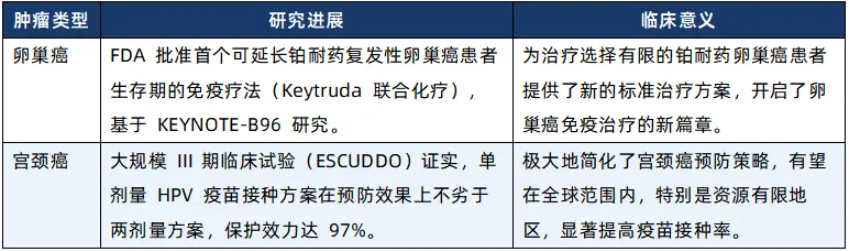
Gestational hypertensive disorders, particularly preeclampsia, remain one of the leading causes of maternal and perinatal morbidity and mortality worldwide. Recently, encouraging progress has been made in prevention and control research in this area. 1. Innovative drugs bring new hope for the treatment of preeclampsia Preliminary results from a high-profile clinical trial show that an investigational drug called DM199 has shown great potential in the treatment of severe preeclampsia [1]. The drug was developed by DiaMedica Therapeutics and was originally used to treat stroke. The researchers found that its mechanism of action may be equally applicable to preeclampsia, i.e. by stabilizing vascular endothelial function, thereby reducing abnormal hypertension in pregnant women. In an early clinical trial conducted in South Africa, patients with severe preeclampsia treated with DM199 rapidly stabilized their blood pressure, creating conditions for prolonging gestational age and improving maternal and infant outcomes. What's more, preliminary studies have shown that the drug does not appear to cross the placenta or enter breast milk, meaning its direct effects on the fetus and newborn may be very limited. If subsequent larger-scale clinical trials confirm its safety and efficacy, DM199 is expected to become the first drug specifically used to treat preeclampsia, filling a long-term gap in this field. 2. The "universal use of aspirin" strategy prevents severe preeclampsia In addition to treatment, prevention is also crucial. The results of a large study presented at the 2026 Society for Maternal-Fetal Medicine (SMFM) Annual Meeting provide strong evidence for the prevention of severe preeclampsia [2]. The study, conducted at Parkland Hospital in Dallas, Texas, used a "universal aspirin" strategy of providing all pregnant women with 162 mg of aspirin daily at the time of their first prenatal visit (16 weeks ago). The results showed that pregnant women who received aspirin prophylaxis had a 29% lower risk of severe preeclampsia compared to the control group before the intervention. In addition, even if preeclampsia occurs, its onset is relatively later. This strategy is equally effective in high-risk populations (e.g., pregnant women with pre-existing chronic hypertension) without increasing the risk of complications such as postpartum hemorrhage or placental abruption. The success of this study lies in the fact that the barrier to poor patient compliance was effectively overcome by distributing the drug directly in the clinic, providing a viable model for popularizing aspirin prophylaxis among high-risk populations. Endometriosis is a common disease that affects women of childbearing age, not only causing chronic pelvic pain, but also an important cause of infertility. At the same time, advances in assisted reproductive technology (ART), especially the application of artificial intelligence, are bringing new hope to infertility patients. 1. A new mechanism-based combination treatment strategy for endometriosis Traditional endometriosis treatment drugs (such as progestogens and GnRH agonists) have many side effects and are prone to recurrence after stopping the drug. A preclinical study published in Obstetrics and Gynecology International provides a new "mechanism-based" approach to the treatment of endometriosis [3]. The study explored the effects of a combination of dydrogestrel, a progestin, and letrozole (an aromatase inhibitor) in a mouse model. The results showed that the combination was more effective in reducing the size of ectopic lesions, inhibiting cell proliferation, reducing the inflammatory response, and reducing fibrosis compared to monotherapy or existing standard therapies such as dinoestrel. The rationale behind this strategy is that dydrogesterone antagonizes estrogen-driven intimal proliferation by activating progesterone receptors, while letrozole reduces local estrogen synthesis by inhibiting aromatase enzymes, and the two work synergistically to inhibit disease progression more comprehensively. This study opens up new avenues for developing more effective drug treatment options for endometriosis with fewer side effects, but its safety and efficacy in humans still need to be confirmed by further clinical trials. 2. Applications and challenges of artificial intelligence in vitro fertilization (IVF). Improving the success rate of IVF has always been a goal pursued in the field of reproductive medicine. In recent years, artificial intelligence technology, especially deep learning-based embryo screening models, has been highly anticipated. Theoretically, AI can select embryos with the highest developmental potential more accurately than the naked eye by analyzing embryo morphology and dynamic development videos, thereby improving implantation rates and live birth rates [4]. However, a study published in the February 2026 issue of the journal Fertility and Sterility raises a warning about the clinical application of current AI models [5]. The study found that the current single instance learning AI models on the market show significant instability and inconsistency in embryo screening, and their clinical practicality has been questioned. This shows that despite the promising prospects of AI in the field of IVF, there are still many challenges in the transformation from algorithm development to clinical application, including the need for larger, multi-center prospective studies to verify its effectiveness and the establishment of unified evaluation criteria and regulatory frameworks. Future research directions may include multimodal AI models that integrate more dimensional data (such as genomics and metabolomics) to achieve more accurate individualized embryo assessment. The treatment of gynecological tumors has also made milestones in 2026, especially in the field of ovarian and cervical cancer. 1. The first ovarian cancer immunotherapy was approved by the FDA On February 15, 2026, the U.S. Food and Drug Administration (FDA) approved the first immunotherapy regimen that significantly prolongs the overall survival of ovarian cancer patients in phase III clinical trials [6]. This protocol combines Merck's PD-1 inhibitor Keytruda (pembrolizumab) with chemotherapy (paclitaxel, with or without bevacizumab) for the treatment of patients with platinum-resistant epithelial ovarian, fallopian tube or primary peritoneal cancer whose tumors are PD-L1 positive who have received one or two prior systemic therapies. This approval is based on the positive results of the KEYNOTE-B96 study. For platinum-resistant recurrent ovarian cancer, a disease with a very poor prognosis and limited treatment options, the approval of this therapy is undoubtedly a major good news, marking the official entry of ovarian cancer treatment into the era of immunity. The FDA has also approved companion diagnostic kits to detect PD-L1 expression levels in tumors, thereby accurately screening patients who may benefit from this therapy. 2. Single-dose HPV vaccination regimen is supported by more evidence Cervical cancer prevention is a global public health priority. In recent years, research on simplifying HPV vaccination regimens has been a hot topic. The results of a phase III clinical trial called ESCUDDO, released in January 2026, provide the strongest evidence to date for a single-dose HPV vaccination regimen [7]. The blinded, randomized, non-inferiority trial, conducted in more than 20,000 participants, demonstrated that one dose of HPV vaccine was as effective as two doses in preventing persistent infection with high-risk HPV, with a protective efficacy of up to 97%. This finding validates the World Health Organization (WHO) updated in 2022 that single-dose regimens can be used as an alternative. Simplifying the vaccination process will greatly reduce the cost and difficulty of vaccination, especially for low- and middle-income countries, which will help expand vaccine coverage more quickly and accelerate the global goal of eliminating cervical cancer. Artificial intelligence and digital medical technology are accelerating their penetration into various subspecialties of obstetrics and gynecology, from prenatal diagnosis to clinical teaching, showing great application potential. 1.AI application in the field of obstetric ultrasound Fetal ultrasound is a central part of prenatal diagnosis, but its quality is highly dependent on the operator's experience. Recent studies have demonstrated the value of AI in improving the standardization and intelligence of ultrasound examinations. For example, GE Healthcare's Fetoly real-time AI solution developed in collaboration with Diagnoly aims to assist doctors in performing standardized fetal ultrasound examinations, automatically identifying key sectional surfaces and performing biological measurements, thereby improving diagnostic efficiency and accuracy [8]. Another study developed an AI-based ultrasound screening model that can predict dangerous placenta previa (PAS) at an early stage, with high accuracy and sensitivity, helping clinicians formulate intervention plans in advance and reduce perioperative risks [9]. These studies indicate that AI will become a powerful assistant for sonographers, especially in primary care settings, helping to bridge the gap in diagnostic levels between different regions. AI meets obstetrics and gynecology|We look forward to hearing your clinical voice 2. Digital therapeutics and clinical decision support In addition to imaging, digital technology is also changing the management model of chronic diseases. For polycystic ovary syndrome (PCOS), a common gynecologic endocrine disease, in addition to traditional drug treatment (such as metformin), more and more research has begun to focus on non-pharmacological treatment methods such as lifestyle interventions and digital therapeutics [10]. Providing personalized diet, exercise guidance, and health education through mobile apps can effectively help PCOS patients improve metabolic indicators and restore ovulation. In addition, the latest "Diabetes Diagnosis and Treatment Standards" released by the American Diabetes Association (ADA) in 2026 proposes more refined guidance on the management of gestational diabetes mellitus (GDM) [11]. A decision support system that combines ambulatory glucose monitoring (CGM) and AI algorithms can provide more accurate blood glucose prediction and insulin dose adjustment recommendations for GDM patients, thereby achieving smoother blood sugar control. From 2025 to 2026, the research results in the field of obstetrics and gynecology will be fruitful, and precision and intelligence will become the two core driving forces driving the development of this field. In obstetrics, drug development and optimization of prevention strategies for preeclampsia have brought new hope for reducing maternal mortality. In gynecology, the mechanism-based treatment exploration of endometriosis and the success of ovarian cancer immunotherapy mark a deeper understanding and intervention of complex diseases. The simplification of cervical cancer prevention strategies paves the way for achieving global health goals. At the same time, artificial intelligence technology is moving from concept to clinic, showing great potential to reshape future medical models in medical imaging, disease management, and clinical decision support. Looking ahead, we look forward to seeing more innovative therapies truly benefit women through rigorous clinical validation. At the same time, with the further maturity of big data and artificial intelligence technology, the clinical practice of obstetrics and gynecology will become more accurate, efficient and individualized. The fusion of multi-omics data, from genomics, proteomics to metagenomics, will provide unprecedented opportunities for early disease warning, risk stratification, and therapeutic target discovery. However, while embracing technological advancements, it is essential to pay attention to the ethical, regulatory, and data security challenges they pose, ensuring that the application of new technologies remains patient-centric and serves human health and well-being.
Editor-in-charge:Lucy