The field of endometriosis is undergoing a profound transformation from concept to practice. In 2025, the field of internal dysmorphosis will make systematic progress from pathogenesis to clinical diagnosis and treatment at three major international conferences (WCE, ACE, SEUD). Driven by the consensus of international conferences, its diagnosis and treatment model has fully shifted to patient-centered lifecycle management. Obstetrics and Gynecology Network specially invited Professor Xu Hong from the International Peace Maternal and Child Health Hospital Affiliated to Shanghai Jiao Tong University School of Medicine to conduct in-depth interpretation and outlook on core topics such as the new progress of the annual international conference, the "dual-track strategy" of the management of internal diseases and chronic diseases, and how China can enhance its international discourse.
In 2025, three international conferences, WCE, ACE and SEUD, will gather to jointly draw the latest map of endometriosis (EMs) from micro mechanism to macroscopic diagnosis and treatment. Scholars from all over the world have reached a number of consensuses and progress in in-depth exploration of pathogenesis, breakthroughs in non-invasive diagnosis, and innovation of individualized treatment strategies. The exploration of the pathogenesis of EMs at this year's conference presents a multi-dimensional microscopic deepening: first, the hot issues shared by the scholars of each conference focus on the direction of immunity and microenvironment: the participants of WCE proposed that abnormal immune profile and pathological immune tolerance are the core of lesion implantation and growth, while some scholars further supplemented the mechanism of complement dysregulation-mediated immunosuppression at the SEUD meeting. At the ACE conference, some scholars also proposed the role of the extracellular matrix protein Tenascin in early lesion formation and the core mechanism of macrophage dysregulation promoting fibrosis. In addition, a number of cutting-edge studies focusing on pain mechanisms emerged at both WCE and ACE conferences, revealing the complexity of the "neuro-immune axis". Not only that, the field of genetics and epigenetics has also become the focus of this year's SEUD and ACE conferences, and the research shared by scholars covers epigenetic regulation such as genetic susceptibility and lactation modifications. Other emerging perspectives include the potential role of the microbiome (such as Fusobacterium) in the pathogenesis of EMs, and new supporting evidence for the epithelial-mesenchymal transition (EMT) theory of the endometrial cycle. It is worth noting that the biomodel technology used in EMs research has been iterated significantly, and gene knockout mouse models and international cutting-edge "organoid culture models" are widely used in mutation research and drug screening. This year's conference clearly presents the transformation trend in the field of endodysoma diagnosis from invasive to non-invasive, from morphology to molecular biology. In terms of non-invasive diagnostics, the ACE conference showcased liquid biopsy technology combining AI and next-generation sequencing, sparking heated discussions on early screening; The SEUD conference further explored the clinical potential of saliva microRNA as a marker for early non-invasive diagnosis in adolescents. Imaging and staging systems have also ushered in multi-dimensional innovations: SEUD scholars have proposed the possibility of deep integration of ultrasound and MRI imaging examinations with Enzian classification standards; At the WCE conference, Professor Guo Sunwei put forward a breakthrough idea, advocating the inclusion of "lesion fibrosis degree" into a new generation of staging system to achieve more accurate prognosis stratification and treatment guidance. In addition, global health equality has become an important issue, and scholars have proposed AI-based early risk assessment models for areas with scarce medical resources, which is committed to breaking the dilemma of delayed diagnosis in low- and middle-income countries. This year's conference outlines the trend of treatment strategy transformation towards highly precise, minimally invasive and full-process management. In the new track of drug therapy, WCE reported the potential of primidone to inhibit TRPM3 in the treatment of adenomyosis, while ACE scholars focused on the application of novel GnRH antagonists such as Elagolix and delved into the mechanism of "progesterone resistance" that leads to the failure of LNG-IUS therapy. The surgical concept is accelerating towards "super minimally invasive" and functional preservation: WCE scholars shared the results of ethanol sclerotherapy for intraovarian dysplasia, the application of colonoscopy in DIE staging, and the significant improvement of adenomyosis prognosis in hysteroscopic lesion resection combined with LNG-IUS. ACE scholars further discussed the value of robotic surgery and non-pharmacological therapies such as transcutaneous auricular vagus nerve stimulation. The full life cycle management of EMs has become an international consensus, and scholars at various conferences emphasize patient-centeredness, from early identification and fertility protection in adolescents to shared decision-making based on patient needs. The goal of treatment has moved beyond mere lesion removal to lifelong supervision of patients' long-term quality of life. For patients with fertility needs, the core therapeutic goal is to build a dynamic balance between inhibiting disease progression and protecting reproductive function. Through the deep integration of "minimally invasive surgery" and "drug individualization", the dual-track parallel from lesion removal to functional remodeling is realized: 1. Deepen the concept of function-preserving surgery: The surgical strategy needs to be continuously upgraded from simple anatomical reduction to "functional preservation" and "super minimally invasive". For intraovarian dysmorphic lesions, future clinical exploration should focus on the development of non-destructive or low-damage alternative therapies, aiming to minimize physical and thermal damage to normal ovarian tissue, so as to find the optimal solution between lesion clearance and ovarian reserve function protection. Although some cutting-edge technologies are still in the transformation stage, the optimization of surgical plans with fertility protection as the core is still the inevitable direction of surgical development. 2. Strengthen postoperative microenvironment remodeling and long-term management: Long-term management immediately after surgery is the key to blocking recurrence. Clinically, new drug suppression strategies should be flexibly adopted according to patient characteristics to achieve precise regulation of hormone levels. For complex conditions such as adenomyosis, the focus of treatment should be on multimodal combined intervention to create more favorable physiological conditions for subsequent natural conception or assisted reproduction by improving the local immune microenvironment and endometrial receptivity of the uterine cavity. 3. Move forward the fertility protection threshold: upstream the management perspective, and block the natural course of the disease in a timely manner by establishing an early identification and intervention system for adolescent internal abnormalities, reduce the cumulative damage to fertility from long-term lesions from the source, and realize the protection of fertility throughout the life cycle. For patients without a birth plan, the clinical focus of long-term management should be strategically shifted, from "reproductive function protection" to "improving quality of life" as the core, and committed to "blocking the disease process" from the pathological mechanism. 1. Deepen the application of neuro-immune regulatory mechanisms: For refractory chronic pain, the treatment horizon needs to go beyond the lesion itself and focus on correcting the abnormal communication of the "neuro-immune axis". Clinical strategies should be focused on pain management and non-pharmacological neuromodulation therapies should be actively explored. Through multi-dimensional neuromodulation methods, it directly intervenes in the pain conduction mechanism to achieve a more lasting analgesic effect with fewer side effects than drug inhibition alone. 2. Establish monitoring and targeted blockade of fibrosis progression: In view of the fact that fibrosis is a key pathological feature that leads to organ function damage and irreversible development of the disease, the future diagnosis and treatment system should include the "degree of fibrosis of the lesion" into the prognostic stratification and staging system as an important indicator to guide long-term management. In terms of intervention methods, we should focus on developing new drugs targeting specific ion channels or molecular targets, aiming to inhibit the infiltration ability and fibrosis of lesions at the microscopic level, thereby delaying the development of the disease to deep infiltration or complex adhesions. 3. Build a closed loop of comprehensive management of hospital-community integration: The treatment boundary should break the traditional limitations of the hospital and extend to the daily life of patients. By integrating medical resources and developing digital health monitoring technology combined with lifestyle interventions (such as anti-inflammatory diet and sports rehabilitation), a closed-loop model of "hospital diagnosis and treatment, community support, and home management" is established to achieve real-time monitoring and active intervention of symptom fluctuations. Looking forward to the future, in order to enhance the international discourse power in the field of internal diseases (EMs) in China, discipline leaders should be based on the highland of "full-chain innovation" and "full-life cycle management", and lead the change in the following three dimensions by building an efficient interdisciplinary collaboration mechanism, and make a strong voice in China: Discipline leaders should integrate scientific resources from basic medicine, immunology and genetics to deepen the microscopic analysis of pathogenesis. Focus on the study of immune microenvironment and neuro-immune communication, and reveal the underlying mechanisms of pathological immune tolerance and pain-mediated mechanisms. At the same time, we will pay close attention to genetic susceptibility and epigenetic regulation (such as lactation modifications) to explore the molecular roots of diseases. In addition, in terms of scientific research tools, we encourage the standardized application of organoid culture models, EMs intervention models and gene editing technology, and provide a high-fidelity platform for mutation research and drug screening, so as to shift from "following" to "leading" on the international academic height of "pathogenesis". In order to break down the barriers to diagnosis and treatment, discipline leaders should take the lead in establishing a comprehensive diagnostic system integrating imaging, molecular biology and artificial intelligence. On the one hand, promote the clinical transformation of non-invasive diagnostic technology, combined with AI digital technology and specific biomarkers to achieve early and accurate screening; On the other hand, we should actively participate in or even lead the innovation of the international staging system, advocate the inclusion of "degree of fibrosis of lesions" in the staging criteria, so as to more accurately guide prognosis stratification and treatment decisions, and export the "Chinese standard" with clinical guidance to the international community. The development of disciplines needs to break the limitations of a single discipline and build an MDT collaboration network covering obstetrics and gynecology, imaging, pain and community healthcare. The clinical focus should shift from simple surgery to full life cycle management, with special attention to early identification and fertility protection of adolescents. At the same time, with the help of digital medical technology, AI risk assessment models are used to integrate existing medical resources and realize a closed loop of symptom monitoring from hospitals to communities. By demonstrating this highly integrated management model of "preventing recurrence, promoting fertility, and ensuring quality", it sets a benchmark for the management of internal diseases and chronic diseases on the international stage. In the face of the promotion of the management model of endogenous chronic diseases, a dual-track strategy of "preventing recurrence" and "promoting fertility" is constructed, aiming to emphasize the implementation of differentiated long-term management for patients with different needs. Looking forward to the future, leading interdisciplinary collaboration and promoting systematic innovation in mechanism research, diagnostic stratification and whole-process management is the key, so as to raise more Chinese voices on the international stage and enhance China's academic influence and voice in this field. Expert profile Professor Xu Hong Vice President of the International Peace Maternal and Child Health Hospital Affiliated to Shanghai Jiao Tong University School of Medicine Professors, chief physicians, doctoral supervisors ❖ Vice Chairman of the Reproductive Medicine Committee of the Chinese Society of Integrative Traditional Chinese and Western Medicine ❖ Member of the Internal Ophthalmopathy Committee of the Obstetricians and Gynecologists Branch of the Chinese Medical Doctor Association ❖ National menopausal health care specialty construction discipline leader ❖ Vice President of the Obstetrics and Gynecology Branch of Shanghai Medical Doctor Association ❖ Deputy leader of the Heteropathology Group of the Obstetrics and Gynecology Branch of the Shanghai Medical Association ❖Chairman of the Women's Health Committee of Shanghai Association of Rehabilitation Medicine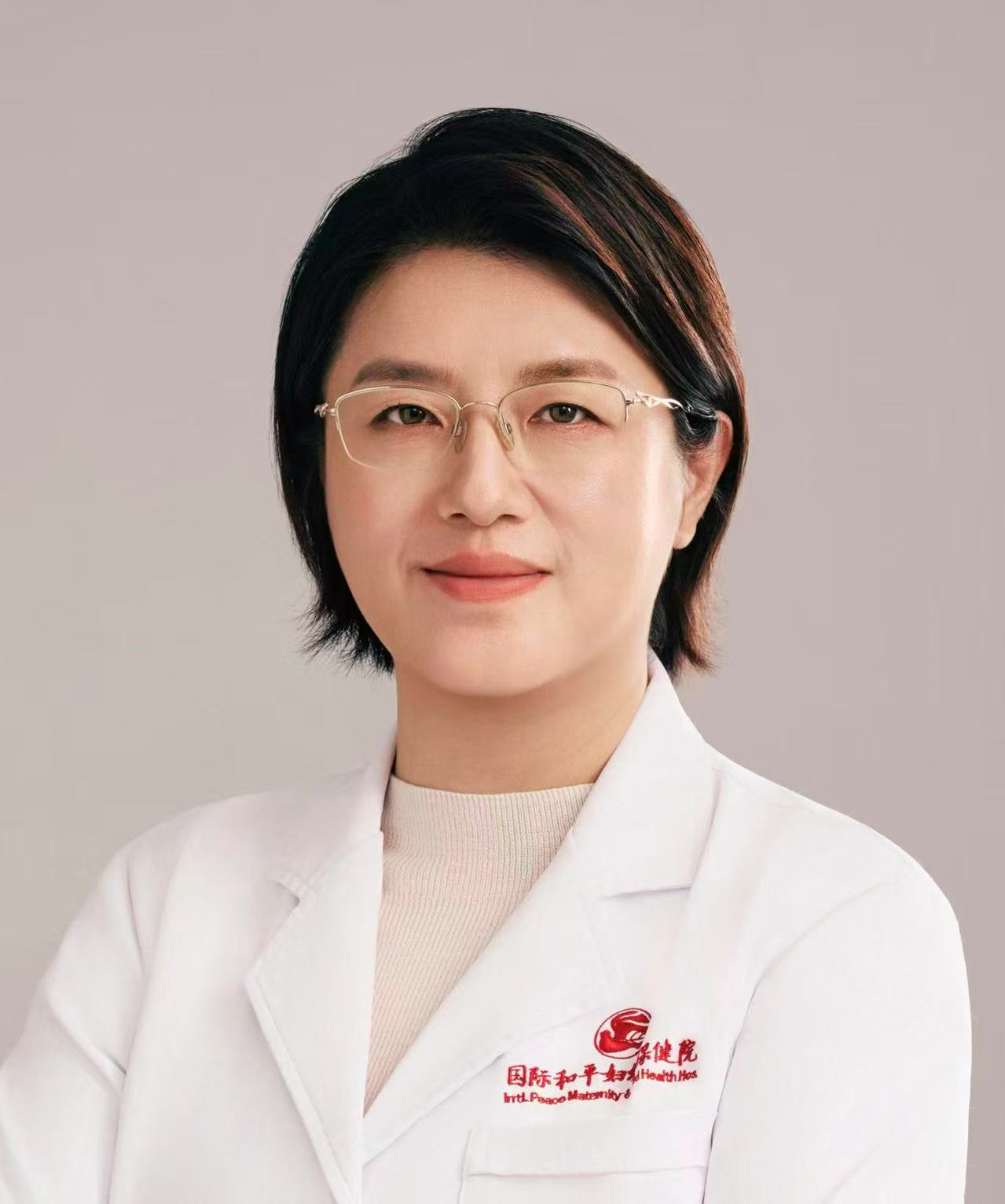
Editor-in-charge: Lucy