
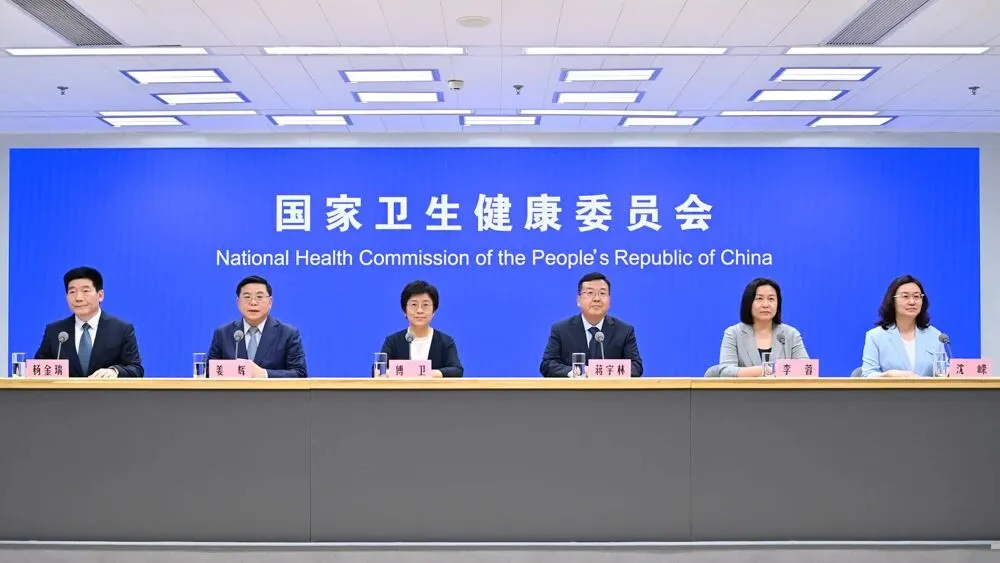
Can I still get pregnant if fibroids or ovarian cysts are detected during pre-pregnancy planning? What are the risks associated with having a second or third child at an advanced maternal age? Is painless childbirth safe? What should men do to prepare for conception? Recently, the National Health Commission of China (NHCC) held a press conference themed "Promoting Reproductive Health." Several top medical experts were invited to provide professional answers to common public concerns regarding fertility, pregnancy, childbirth, and the postpartum period, while also sharing the latest progress in national reproductive health services across China.
Addressing Fibroids and Cysts: No Need for Panic
Many women of childbearing age experience anxiety upon discovering uterine fibroids or ovarian cysts during physical examinations, fearing they may affect their chances of conceiving. Professor Li Rong of Peking University Third Hospital offered reassurance: these are common benign conditions among women of reproductive age. Approximately 80% of uterine fibroids do not interfere with conception or pregnancy. Blindly opting for surgery may instead lead to uterine scarring, increasing the risk of uterine rupture during pregnancy. Surgical intervention before pregnancy is only necessary if the fibroid protrudes into the uterine cavity, exceeds 5 cm in diameter, or causes complications such as anemia. Many ovarian cysts are physiological, resolving spontaneously with the menstrual cycle and requiring no treatment. If a cyst persists or shows signs of abnormality, surgery should prioritize the preservation of ovarian function. The public should avoid excessive panic; specific treatment plans must be comprehensively assessed by physicians at qualified hospitals, taking individual fertility goals into account.
Advanced Maternal Age: Managing Risks for Second and Third Pregnancies
With the rise in multi-child families, the population of older expectant mothers is growing, making risk prevention a focal point of public attention. Professor Jiang Yulin of Peking Union Medical College Hospital (CAMS) explained that women aged 35 or older at the expected date of delivery are classified as advanced maternal age (AMA). This group faces higher risks of pregnancy complications and fetal chromosomal abnormalities. He recommends that women who had a vaginal delivery wait approximately 18 months before attempting another pregnancy, while those who underwent a cesarean section should wait at least 24 months to allow adequate uterine healing. Couples of advanced age should undergo comprehensive preconception check-ups 3–6 months in advance to optimize their health and manage underlying conditions. During pregnancy, AMA women should not rely on past experience to skip prenatal visits; instead, they must adhere strictly to specialized screenings, including prenatal diagnosis and fetal ultrasounds. Furthermore, recovery is slower for older mothers; thus, the 42-day postpartum check-up and pelvic floor rehabilitation are crucial. Families are encouraged to share childcare responsibilities and monitor the mother's emotional well-being.
Painless Childbirth: Safe and Effective
During the delivery stage, painless childbirth (epidural analgesia) is a popular choice, yet many worry about potential side effects on the mother and baby. Professor Shen Rong of Nanjing Maternity and Child Health Care Hospital clarified that labor analgesia is a mature and safe technology. The dosage used is merely one-tenth of that used in standard surgical anesthesia. The amount transferred to the fetus via the placenta is negligible and metabolized quickly, posing no risk to the infant's neurological development or intelligence. Additionally, it does not prolong labor. By significantly reducing pain and anxiety, it can also help lower the risk of postpartum depression.
Male Fertility: It Takes Two
Dispelling the myth that preconception care is solely a woman's responsibility, Professor Jiang Hui of Peking University First Hospital emphasized that reproduction is a joint effort; sperm quality directly impacts conception rates and fetal health. Since spermatogenesis takes approximately 90 days, men should begin preparing at least three months prior to conception. Those with chronic irregular sleep patterns or tobacco/alcohol dependencies should extend this period to six months. Men should avoid high-temperature environments (such as saunas and hot tubs), prolonged sitting, and tight clothing. Obesity can impair spermatogenesis, necessitating scientific weight management. If a couple fails to conceive after one year of regular unprotected intercourse, or if the male partner has reproductive system disorders, they should seek prompt medical attention at a qualified hospital rather than relying on unproven "sperm-boosting" supplements. At the conference, Professor Jiang also outlined common causes of male infertility and introduced mainstream treatments, including medication, surgery, and assisted reproductive technologies (ART).
Prenatal Screening: Essential but Not Infallible
Prenatal screening is a critical safeguard for fetal health. Addressing the question of whether screening can detect all fetal malformations, Professor Jiang Yulin provided a scientific explanation: prenatal screening effectively identifies chromosomal disorders like Down syndrome and the vast majority of severe, lethal structural anomalies. However, due to limitations in equipment resolution, fetal positioning, and maternal conditions, current medical technology cannot detect every minor anomaly or rare inherited metabolic disorder. Therefore, even with normal screening results, adherence to standardized prenatal care throughout the entire pregnancy is mandatory.
Scientific Contraception: Preventing Unintended Pregnancies
The risk of unintended pregnancy and miscarriage makes scientific contraception essential. Professor Li Rong reminded the public that induced abortion can damage the endometrium, potentially leading to infertility. She advocated for the routine use of condoms or combined short-acting oral contraceptives (COCs); condoms also effectively prevent sexually transmitted infections. Long-acting contraceptives are suitable for those with no immediate pregnancy plans but require medical supervision. Emergency contraceptive pills should only be used as a backup after contraceptive failure; their high hormone dosage can disrupt menstrual cycles if used frequently. Use should be limited to no more than twice per year and never as a routine method. Furthermore, methods like the rhythm method (safe period) and withdrawal (coitus interruptus) have high failure rates and are not recommended.
New Progress: Early Pregnancy Care Clinics
The conference highlighted new advancements in public health services: the NHCC has listed the establishment of "Early Pregnancy Care Clinics" at 10,000 medical institutions nationwide as a key 2024 initiative. To date, 12,226 such clinics have been established, covering all districts and counties. Tailored for women within the first 14 weeks of pregnancy, these clinics offer one-stop services, including registration, examinations, and consultations. They coordinate multidisciplinary teams to address specific concerns: providing emotional support and physical conditioning for healthy pregnancies; assessing risks for those worried about medication exposure or imaging tests; and offering etiological investigations and psychological counseling for families experiencing embryonic arrest or miscarriage—ensuring comprehensive protection for women in early pregnancy.
Robust National Service System
According to Ms. Fu Wei, Director of the Department of Maternal and Child Health of the NHCC, China's full-chain reproductive health service system is increasingly sophisticated. Regarding assisted reproduction, 645 ART institutions currently operate nationwide, boasting internationally aligned technical standards. In terms of birth defect prevention, preconception check-up rates and prenatal screening rates remain stable above 90%, while newborn disease screening rates exceed 99%. The maternal and infant safety network continues to strengthen, with hospital delivery rates consistently above 99%. Consequently, the World Health Organization (WHO) has recognized China as a high-performing country in maternal and child health.
Looking Ahead: The 15th Five-Year Plan
Moving forward into the 15th Five-Year Plan period, China will continue to advance the Early Pregnancy Care Initiative and enhance capabilities for managing birth defects. The nation aims to optimize fertility-friendly services continuously, safeguarding the reproductive health of millions of families with increasingly professional and compassionate medical care.
Source: National Health Commission of China
Editor: Lily