





















In 2026, the American Thyroid Association (ATA) released guidelines for thyroid disorders in preconception, pregnancy and postpartum periods. Compared with the 2017 edition, the new guidelines place greater emphasis on trimester-specific reference ranges for thyroid function during pregnancy, repeat testing for mild abnormalities, optimal timing of treatment, and shared clinical decision-making. For obstetric practice, the most pivotal updates are not merely revised TSH cut-off values, but a shift away from diagnosing disease or immediately initiating medication based on a single abnormal laboratory result. Combining the 2022 domestic Chinese guidelines, this paper sorts out common clinical scenarios encountered in obstetric outpatient care [1,2].
I. Three Common Thyroid Function Test Cases to Illustrate Core Principles
1.Gestational week 8, TSH 4.8 mU/L, normal FT4, negative TPOAb: Is immediate levothyroxine (LT4) therapy indicated?
2.Euthyroid women attempting conception with isolated positive TPOAb: Can routine LT4 administration reduce miscarriage risk?
3.Gestational week 10 complicated by hyperemesis gravidarum, suppressed TSH and mild elevated FT4: Distinguish transient gestational thyrotoxicosis (GTT) versus Graves’ disease?
A shared feature of these clinical dilemmas is that isolated laboratory markers are insufficient to establish a definitive diagnosis. Interpretation must integrate multiple factors: gestational age, trimester-specific laboratory reference ranges, FT4 levels, thyroid autoantibodies, clinical manifestations, and serial dynamic changes. The 2026 ATA guidelines further highlight that mild thyroid function abnormalities often resolve spontaneously within several weeks; repeat testing mitigates overdiagnosis and overtreatment [1].
II. Four Major Clinical Revisions Introduced by the 2026 ATA Guidelines
1. TSH 2.5 mU/L Is No Longer a Universal Threshold for Initiating Medication
Trimester-specific reference ranges established by local laboratories should be prioritized for pregnant populations. Where such trimester-specific ranges are unavailable, the ATA recommends an approximate first-trimester TSH reference interval of 0.1–4.0 mU/L, or a moderate downward adjustment based on the upper limit of non-pregnant reference ranges. The 2.5 mU/L TSH threshold primarily serves as a preconception or therapeutic target for patients already receiving LT4, rather than a diagnostic cut-off applicable to all pregnant women [1].
2. Repeat Testing to Confirm Persistence of Mild Abnormalities
For mild subclinical hypothyroidism with TSH above the trimester-specific upper limit yet below 6 mU/L, repeat TSH and FT4 testing may be performed within a short interval prior to treatment initiation if clinically appropriate. Cited studies demonstrate that a substantial proportion of such mild abnormalities resolve spontaneously within weeks. Repeat testing does not negate the underlying clinical risks, but verifies persistent biochemical dysfunction. Immediate treatment without delayed repeat testing is recommended for patients with TSH ≥6 mU/L consistent with overt hypothyroidism, markedly deranged thyroid function, or high clinical risk profiles [1].
3. Decision-Making for Subclinical Hypothyroidism Centered on Timing of Detection and Biochemical Persistence
The updated guidelines state that clinical benefits from LT4 therapy are strongly correlated with gestational age at treatment initiation. Intervention may be discussed for abnormalities detected in early pregnancy that persist on repeat testing. For mild subclinical hypothyroidism identified in late gestation, current evidence fails to demonstrate that LT4 improves fetal neurocognitive outcomes or major obstetric endpoints. While TPOAb status aids etiologic differentiation, prediction of disease progression, and stratification of postpartum thyroiditis risk, antibody positivity alone no longer dictates LT4 initiation [1].
4. Scope of Clinical Management Extended to Postpartum and Lactational Periods
Delivery does not mark the conclusion of thyroid surveillance. Postpartum immune rebound may trigger Graves’ disease relapse or new-onset postpartum thyroiditis. Structured postpartum follow-up protocols are mandated for patients receiving LT4 or antithyroid drugs during gestation, TPOAb-positive individuals, and those with a prior history of postpartum thyroiditis [1].
III. Alignment Between International Screening Guidelines and Domestic Clinical Pathways
The 2026 ATA maintains that current evidence does not support universal thyroid function screening for all women planning conception, pregnant women, and postpartum individuals. Targeted screening is recommended for patients with a history of thyroid disease, autoimmune disorders, thyroid surgery or radioactive iodine ablation, relevant family history, iodine deficiency risk, recurrent miscarriage, or infertility. China’s 2022 guidelines advocate shifting screening to the preconception stage. In routine clinical practice, domestic guidelines, institutional admission screening protocols, and laboratory-specific reference ranges form the foundational framework, supplemented by the ATA principle of avoiding clinical decisions based on single isolated laboratory values [1,2].
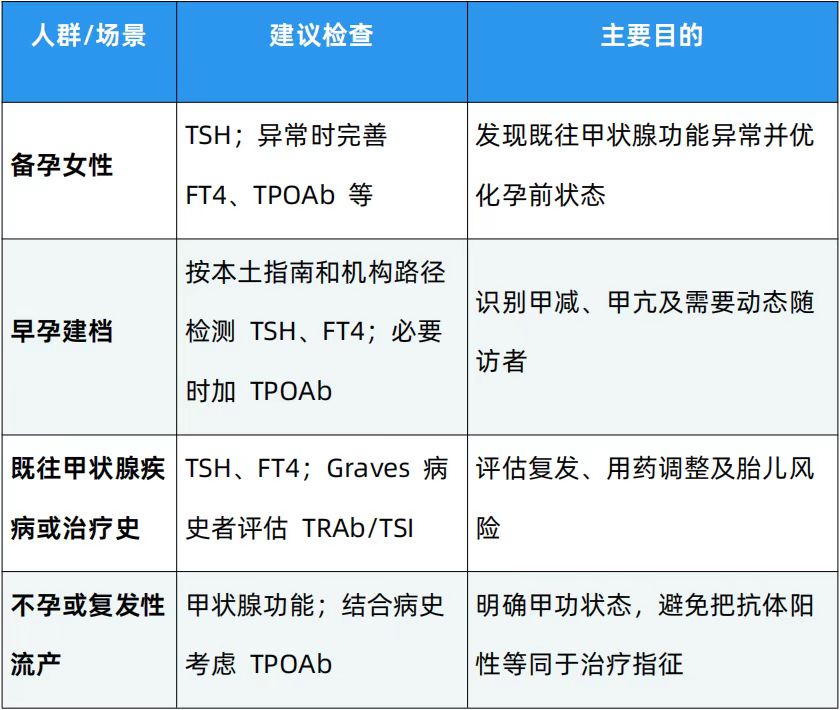
IV. Stratified Management of Hypothyroidism: From Diagnosis to Pharmacotherapy
1. Pre-existing Hypothyroidism Prior to Conception
Women planning pregnancy should achieve TSH levels within reference ranges pre-conception, with a target of 0.5–2.5 mU/L widely accepted as appropriate. Following confirmed pregnancy, thyroid function should be reassessed promptly, with individualized LT4 dose escalation guided by pre-conception TSH levels, baseline medication dosage, and underlying etiology. A pragmatic empirical regimen involves an approximate 20%–30% total dose increase, though uniform fixed-dose augmentation is not mandatory for all patients. Thyroid function monitoring is recommended every 4 weeks during the first and second trimesters and after dosage adjustments; monitoring intervals may be lengthened once biochemical stability is achieved. Postpartum LT4 doses are generally reduced to pre-conception levels, with TSH testing scheduled approximately 6 weeks after delivery [1].
2. Newly Diagnosed Overt Hypothyroidism During Pregnancy
Definite overt hypothyroidism requires LT4 treatment. A full replacement dosage of 1.5–1.7 μg/(kg·d) serves as a baseline for newly diagnosed patients, adjusted according to gestational thyroid hormone demand, baseline TSH, body weight, and disease etiology. The new guidelines endorse immediate LT4 therapy for overt hypothyroidism with TSH ≥6 mU/L. For mild biochemical derangements with TSH <6 mU/L, short-interval repeat testing may be performed prior to treatment if clinical conditions permit [1].
3. Subclinical Hypothyroidism During Pregnancy
Subclinical hypothyroidism is defined as TSH elevation above trimester-specific reference limits with normal FT4 concentrations. Clinical management should not rely solely on TPOAb status, nor should TSH >2.5 mU/L be universally adopted as a treatment threshold. For TSH <6 mU/L, repeat testing is advised within several weeks. Persistent abnormalities, particularly identified pre-conception or in early gestation, warrant shared clinical discussion regarding low-dose LT4 therapy, with typical initial dosages ranging from 25 to 75 μg/d, titrated based on serial TSH measurements and body weight. The therapeutic target is maintenance of TSH within trimester-specific reference intervals; for patients already receiving LT4, a target TSH within reference ranges and below 2.5 mU/L may be pursued to mitigate risks of undertreatment [1].
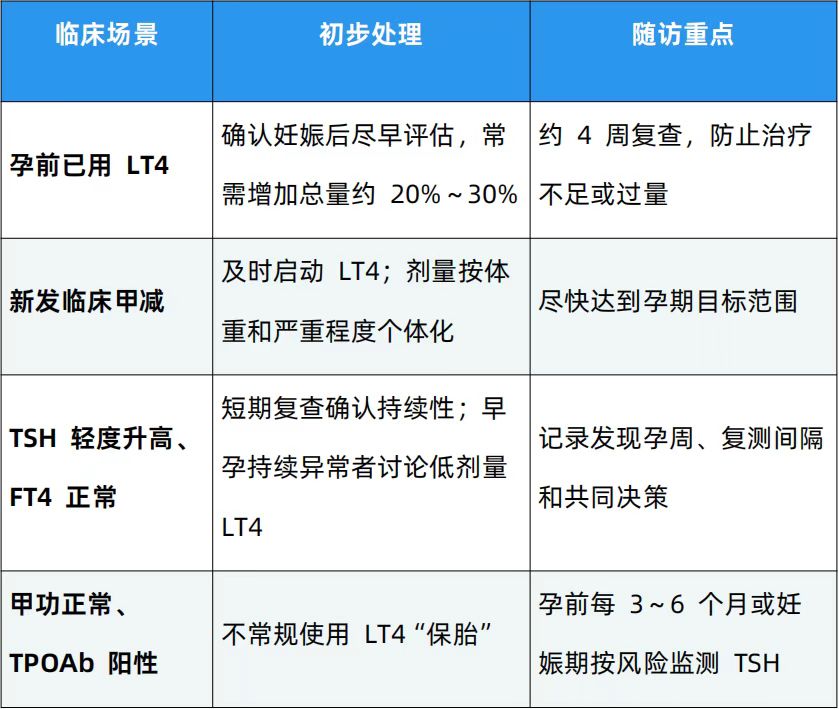
V. Isolated TPOAb Positivity with Normal Thyroid Function Does Not Justify Empiric “Miscarriage Prevention” Medication
Positive TPOAb indicates predisposition to thyroid autoimmunity, associated with elevated long-term risks of hypothyroidism, select adverse obstetric outcomes, and postpartum thyroiditis. However, statistical correlation does not confirm therapeutic efficacy of LT4 intervention. The T4LIFE randomized controlled trial demonstrated that LT4 administration failed to improve live birth rates in euthyroid TPOAb-positive women with recurrent pregnancy loss. Accordingly, the 2026 ATA discourages routine LT4 prescription solely for TPOAb positivity in populations with infertility, patients undergoing assisted reproductive technology, or those with recurrent miscarriage [1,5].
Optimal clinical practice involves counseling patients regarding associated risks, intensified serial TSH surveillance, and abandoning the clinical goal of seroconverting thyroid autoantibodies. Routine use of glucocorticoids, intravenous immunoglobulin, or selenium supplementation for antibody reduction is not recommended at present [1].
VI. Suppressed First-Trimester TSH: Differentiate Transient Gestational Thyrotoxicosis from Graves’ Disease
hCG-mediated TSH suppression is common in early gestation, with more pronounced biochemical changes observed in multiple pregnancies and patients with hyperemesis gravidarum. Suppressed TSH alone does not equate to Graves’ disease. In cases of elevated FT4, differentiation relies on TRAb/TSI titers, presence of thyroid eye disease, thyroid gland enlargement, pre-conception disease history, and persistence of biochemical abnormalities on serial testing [1].
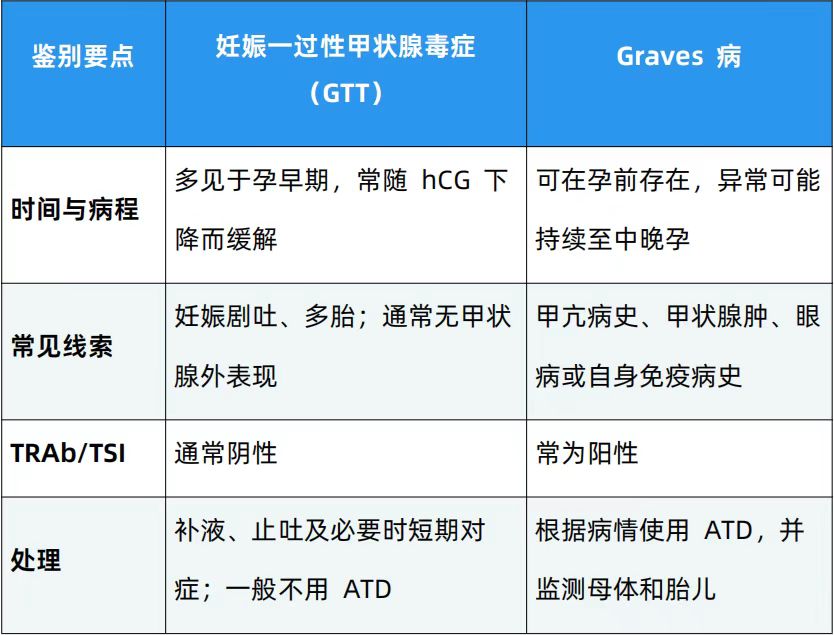
For confirmed transient gestational thyrotoxicosis, supportive management including fluid resuscitation, electrolyte correction, antiemetic therapy, and nutritional support constitutes primary treatment. Lowest effective doses of beta-blockers may be administered short-term for severe symptomatic disease. Propylthiouracil (PTU) and methimazole (MMI) are generally avoided, as the thyrotoxicosis arises from hCG stimulation rather than autonomous overproduction of thyroid hormone [1].
VII. Graves’ Disease: Preconception, Intrapartum, and Fetal Surveillance
1. Preconception Management
Thyroid function should be stabilized prior to planned conception. The guidelines recommend two consecutive normal thyroid function tests separated by a minimum 6-week interval before attempting pregnancy. Contraception is mandatory for at least 6 months following radioactive iodine ablation. Pharmacotherapy regimens should be adjusted in advance based on disease activity, relapse risk, and reproductive plans [1].
2. Intrapartum Management
When antithyroid drug therapy is required, PTU is generally preferred during the first trimester. Subsequent switching to MMI is individualized based on hepatotoxicity risk, prior adverse drug reactions, and adequacy of disease control. The core principle is utilization of the minimum effective dosage to avoid maternal overtreatment and subsequent fetal hypothyroidism. Thyroid function testing is scheduled every 2–4 weeks during treatment initiation or dosage titration [1,3,4].
3. Fetal-Related Risks
TRAb/TSI antibodies cross the placental circulation. Multidisciplinary collaborative care involving obstetricians, endocrinologists, fetal medicine specialists, and neonatologists is indicated for patients with markedly elevated antibody titers, prior radioactive iodine or surgical thyroid ablation, or persistent antithyroid drug requirements during gestation, to stratify fetal hyperthyroidism or hypothyroidism risk. Surveillance modalities include fetal heart rate monitoring, fetal growth assessment, amniotic fluid volume measurement, and fetal thyroid gland evaluation [1].
VIII. Iodine Nutrition: Balance Between Iodine Deficiency Prevention and Avoidance of Excess Iodine Exposure
The ATA recommends a total daily iodine intake of approximately 250 μg for preconception, pregnant, and lactating women, with prenatal supplements typically providing 150 μg/d; this represents a recommended supplementary dose, not an upper intake limit. The necessity of additional iodine supplementation is determined by regional population iodine status, iodized salt consumption, and dietary patterns. Hashimoto’s thyroiditis, hypothyroidism, or thyroid nodules do not constitute absolute indications for complete iodine restriction, though concentrated iodine products such as kelp and nori, or overlapping multiple iodine-containing supplements, should be avoided to prevent excessive iodine load. Single spot urine iodine measurements exhibit substantial variability; this testing modality is suitable for population-level iodine nutrition assessment and cannot reliably reflect long-term individual iodine status [1,2].
IX. Postpartum Thyroiditis: Distinguish Clinical Phases to Prevent Inappropriate Medication
Postpartum thyroiditis manifests within 12 months of delivery, and may also occur following pregnancy loss. The classic clinical trajectory consists of an initial destructive thyrotoxic phase followed by a hypothyroid phase, with a subset of patients achieving full biochemical recovery; not all patients progress through all three disease stages [1].
Thyrotoxic Phase
Lowest effective doses of beta-blockers may be administered short-term for severe symptomatic disease; propranolol and metoprolol are compatible with breastfeeding. Antithyroid drugs are ineffective in this setting, as elevated thyroid hormone concentrations derive from follicular destruction and hormone release, and are therefore contraindicated [1].
Hypothyroid Phase
LT4 initiation is guided by clinical symptoms, magnitude of TSH elevation, lactational status, and near-term reproductive plans. Dosage titration is performed based on serial thyroid function testing for patients requiring treatment [1].
Long-Term Follow-Up
Patients with a history of postpartum thyroiditis face elevated recurrence risk in subsequent pregnancies, and a proportion develop permanent hypothyroidism, necessitating lifelong serial thyroid function surveillance [1].
X. Common Clinical Misconceptions in Obstetric Outpatient Care
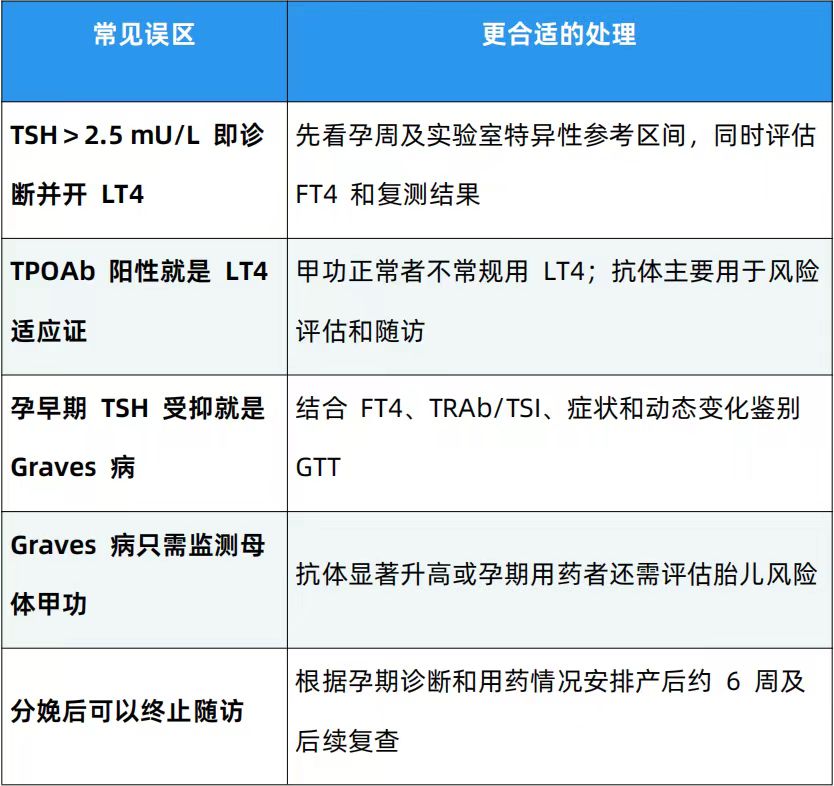
Conclusion
The core tenet of the 2026 ATA guidelines is not arbitrary tightening or loosening of isolated TSH cut-off values, but contextualized interpretation of mild thyroid biochemical abnormalities incorporating the following dimensions: utilization of trimester-specific reference ranges, persistence of biochemical derangements, gestational age at detection, verifiable clinical benefits of intervention, and patient-centered shared risk-benefit discussion. For obstetric clinicians, standardized repeat testing, definitive etiologic diagnosis, avoidance of overtreatment, and extended postpartum surveillance carry greater clinical significance than rigid adherence to single numerical laboratory thresholds [1].
References
[1] Korevaar TIM, Leung AM, Alexander EK, et al. American Thyroid Association 2026 Guidelines for Thyroid Disease in Preconception, Pregnancy, and Postpartum. Thyroid. 2026;36(5):481-544. doi:10.1177/10507256261445624.
[2] Editorial Board of Guidelines for Prevention, Treatment and Management of Thyroid Diseases During Pregnancy and Postpartum. Guidelines for Prevention, Treatment and Management of Thyroid Diseases During Pregnancy and Postpartum[J]. Chinese Journal of Women and Children Health, 2022.
[3] Royal College of Obstetricians and Gynaecologists. Thyroid Disorders in Pregnancy (Green-top Guideline No. 76). London: RCOG; 2025.
[4] American College of Obstetricians and Gynecologists. Thyroid Disease in Pregnancy: ACOG Practice Bulletin, Number 223. Obstet Gynecol. 2020;135(6):e261-e274.
[5] van Dijk MM, Vissenberg R, Fliers E, et al. Levothyroxine in euthyroid thyroid peroxidase antibody-positive women with recurrent pregnancy loss (T4LIFE trial). Lancet Diabetes Endocrinol. 2022;10(5):322-329.
Author Biography
Editorial Responsibility:
Qinghuan
Reviewer:
Maye