
Endometriosis, a common disease affecting women's reproductive health and quality of life, has postoperative recurrence remaining a core challenge in clinical diagnosis and treatment. Studies have shown that the postoperative recurrence rate of patients with ovarian endometriotic cysts without standardized medication management can soar from 4% to 27% in the short term. However, the side effects of existing first-line drugs often lead to insufficient patient compliance, further exacerbating the recurrence risk. In response, Obstetrics and Gynecology Network invited Professor Li Li from Guangdong Women and Children's Hospital for an interview. She shared insights on key topics including the prospective cohort study on "the efficacy and safety of dydrogesterone in the postoperative management of ovarian endometriotic cysts," postoperative medication selection, and global trends in diagnosis and treatment. This interview aims to provide reference for clinical practice and promote the standardized and precise development of the field.
Obstetrics and Gynecology Network:
At the ACE 2025 Congress, you shared the prospective cohort study conducted by you and your team on "the efficacy and safety of dydrogesterone in the postoperative management of ovarian endometriotic cysts." What clinical observations or pain points initially prompted this research? What are the main challenges of postoperative recurrence of endometriosis in current clinical practice?
Professor Li Li:
The core motivation for launching this prospective cohort study is the key pain point of high postoperative recurrence risk of ovarian endometriotic cysts in clinical practice. Clinical observations have found that without effective and standardized medication management after surgery for ovarian endometriotic cysts, the patient's recurrence risk increases sharply. Studies have shown that the recurrence rate is 4% at 3 months after surgery and rises to 27% by 4 months postoperatively. This significant recurrence trend poses great challenges to patient prognosis.
Meanwhile, although evidence-based medicine has confirmed that postoperative hormonal therapy can effectively control recurrence, the currently available drugs in clinical practice still have obvious limitations. The main drugs commonly used for postoperative treatment of ovarian endometriotic cysts include progestogens, gonadotropin-releasing hormone agonists (GnRH-a), combined oral contraceptives (COCs), etc. Some of these drugs often cause various side effects, such as severe hypoestrogenic symptoms (e.g., hot flashes, night sweats), irregular bleeding, and mood disorders. These adverse reactions result in many patients being unable to adhere to long-term medication, ultimately facing the risk of recurrence. Therefore, there is an urgent clinical need for a therapeutic drug that is well-tolerated by patients for long-term use, with both efficacy and safety—this is the core driving force for initiating this study.
Based on the above clinical status, the main challenges of postoperative recurrence of endometriosis currently focus on two aspects: first, the inherent nature of the disease—when lacking standardized postoperative medication intervention, the recurrence risk rises rapidly with a high rate; second, the limitations of existing therapeutic drugs—side effects of some drugs affect patient compliance, leading to failure to complete long-term standardized treatment in some patients, thereby increasing the recurrence probability. This is also a key issue urgently needing resolution in clinical practice.
Obstetrics and Gynecology Network:
Why did this study select "dydrogesterone" as the postoperative management drug? What are its unique advantages or differentiating features compared with other commonly used drugs?
Professor Li Li:
We chose dydrogesterone as the research object based on comprehensive considerations including clinical guideline recommendations, drug characteristics, and clinical needs. Firstly, both domestic and international guidelines clearly recommend progestogens as first-line drugs for the postoperative management of ovarian endometriotic cysts, and dydrogesterone is one of the first-line progestogens recommended by guidelines, with solid evidence for clinical application.
Compared with other commonly used progestogens (such as dienogest, which is widely used in clinical practice), the unique advantages and differentiating features of dydrogesterone are mainly reflected in the following aspects:
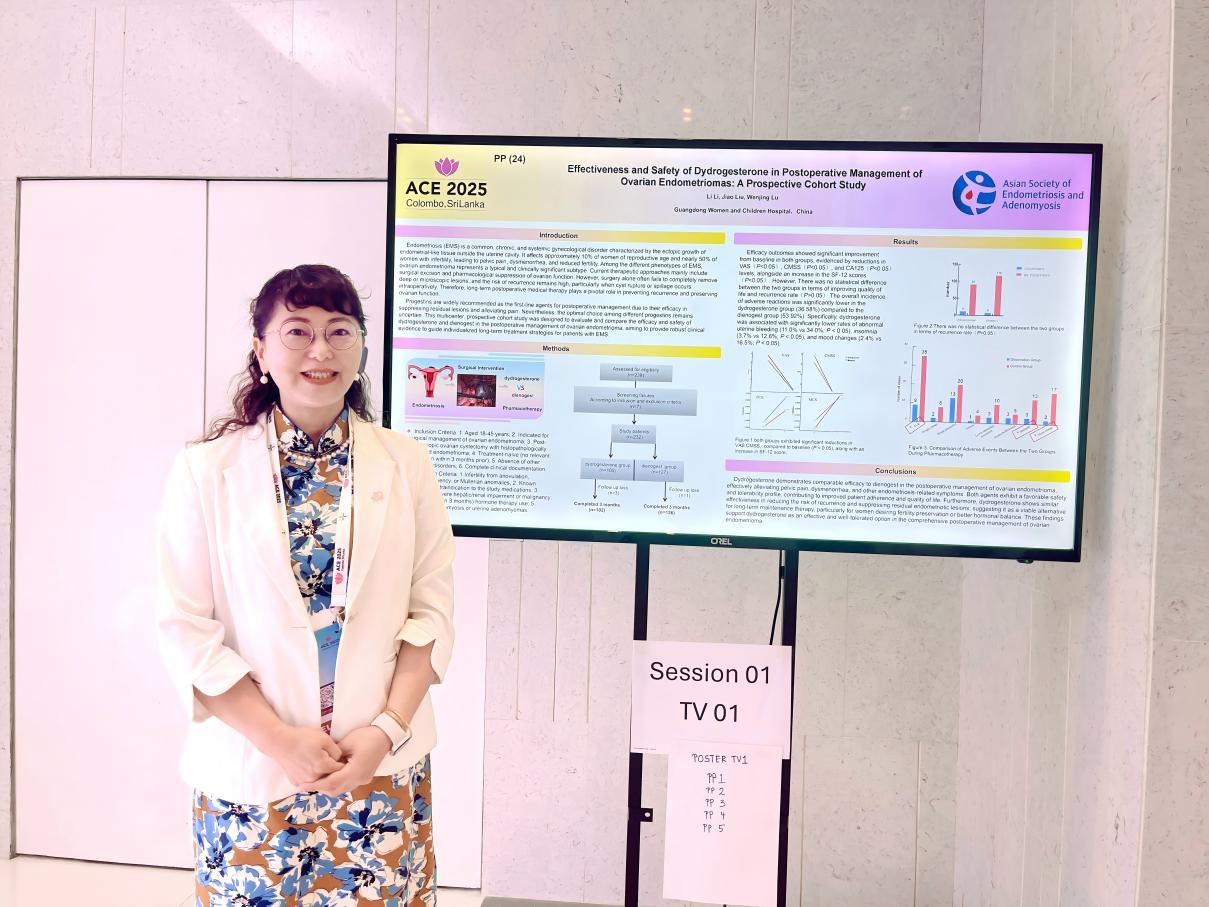
Professor Li Li's presentation at ACE 2025 Congress
Based on the above core advantages, we ultimately selected dydrogesterone for the postoperative treatment of ovarian endometriotic cysts and conducted this prospective cohort study, aiming to provide a more patient-centered treatment reference for clinical postoperative management.
Obstetrics and Gynecology Network:
Through exchanges with domestic and international peers, what do you perceive as the core trends in the global field of endometriosis diagnosis and treatment?
Professor Li Li:
Through in-depth exchanges with domestic and international peers during the ACE 2025 Congress, I perceive that the core trends in the global field of endometriosis diagnosis and treatment mainly focus on the following three key aspects:
Summary
Starting from clinical pain points, Professor Li Li clearly elaborated on the core value of dydrogesterone in the postoperative management of endometriosis. Its significant advantages in safety, efficacy, compliance, and fertility friendliness provide patients with a more demand-oriented treatment option, echoing the current global "patient-centered" lifelong management concept. Meanwhile, global trends in the field, such as multi-omics exploration of pathogenesis, early intervention in adolescents, and multidisciplinary collaboration, point out the future development direction. It is believed that with the in-depth advancement of relevant research and the continuous upgrading of diagnosis and treatment concepts, more endometriosis patients will benefit from personalized and high-quality medical services, achieving a better balance between disease management and quality of life.
Expert Profile
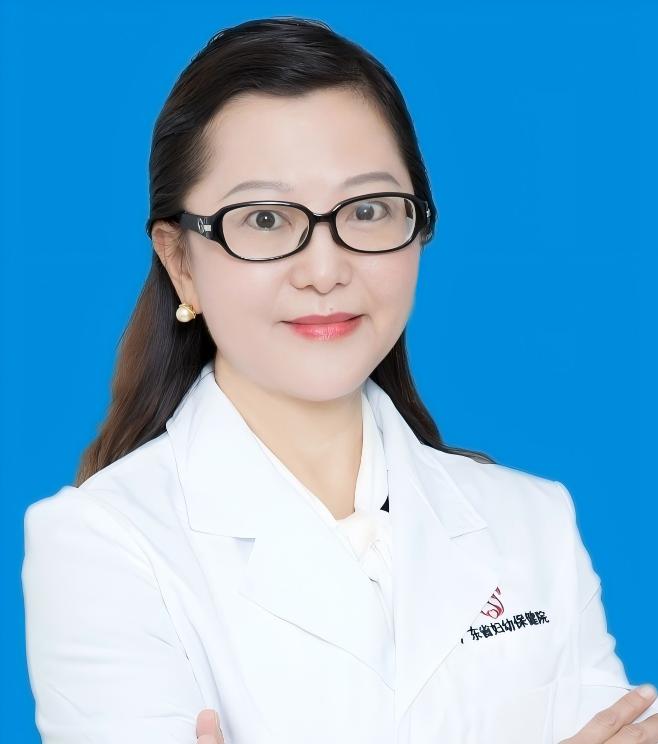
Professor Li LiProfessor, Chief Physician, Medical Doctor (M.D.), Doctoral Supervisor, Postdoctoral SupervisorGuangdong Women and Children's Hospital
Editor-in-Charge: Lily