
Editor's Note
At the 2026 European Congress of Endocrinology (ECE 2026), a new official name for Polycystic Ovary Syndrome (PCOS) was announced: Poly-Metabolic Endocrine Ovary Syndrome (PMOS). This renaming decision affects more than 170 million women worldwide, with relevant findings simultaneously published in The Lancet. The international academic community has set a three-year transition period, aiming to fully adopt the new nomenclature globally by 2028. The announcement has sparked heated discussions among clinicians and patient groups. To address this trending topic, Obstetrics and Gynecology Network specially invited Professor Yu Qi from Peking Union Medical College Hospital to conduct an in-depth interpretation combining industry realities and clinical guidelines, covering the rationale for renaming, long-term disease management logic, disciplinary collaboration, and corresponding shifts in clinical practice.
Part 1 Renaming PCOS to PMOS: Rationale, Practical Controversies and Disciplinary Affiliation
Professor Yu stated that the core purpose of this renaming is to eliminate misconceptions rooted in the old name and reflect the true nature of the disorder. The term "Polycystic Ovary Syndrome" easily misleads the general public and even some primary care practitioners, who regard polycystic ovarian morphology as the core diagnostic criterion and prioritize restoring ovarian morphology as the primary therapeutic goal — a view fundamentally inconsistent with the actual pathological mechanism of the disease. For years, gynecological endocrinologists have devoted extensive efforts to public science communication to correct such one-sided perceptions among the public.
Professor Yu emphasized that the disorder’s core pathology lies not in abnormal ovarian follicle counts, but in systemic endocrine and metabolic dysregulation. Patients may present with metabolic disturbances, hyperandrogenic manifestations (acne, hirsutism), menstrual irregularities, infertility, and frequently concurrent psychological and emotional disorders. The rebranding from PCOS to PMOS retains the original abbreviated letters: P for poly-, O for ovary, and S for syndrome. The middle component describing ovarian morphology is replaced with M standing for metabolic-endocrine, directly highlighting the disease’s intrinsic nature via nomenclature and greatly simplifying health education work.
At present, the traditional name "Polycystic Ovary Syndrome" remains widely used in routine clinical practice. The revised title is only proposed as an alternative standard term in academic discussions. In Professor Yu’s opinion, comprehensive global adoption of the new name will require an extended period of clinical practice and adaptation.
Regarding the online rumor that "the disorder will be transferred to endocrinology departments and no longer treated by obstetrics and gynecology units after renaming", Professor Yu offered a clear refutation: collaborative care between obstetrics-gynecology and endocrinology departments has long been the standard clinical model, and the name change will not alter the existing framework of disciplinary division of labor.
Objective obstacles hinder the popularization of the new nomenclature. For one thing, the term PCOS is highly prevalent; patients are fully familiar with the symptoms associated with this traditional label and most are reluctant to switch to an unfamiliar name. For another, numerous clinicians are accustomed to the old abbreviation PCOS and hold reserved attitudes toward the renaming initiative. In addition, the full Chinese translation of PMOS sounds cumbersome, and the industry is still discussing more concise, accessible alternatives.
Considering the continuous updates to diagnostic criteria, repeated adjustments to cut-off values for ovarian follicle counts, and the rising role of anti-Müllerian hormone (AMH) as a key evaluation marker, Professor Yu put forward a forward-looking personal viewpoint that the term "Reproductive Endocrine-Metabolic Syndrome" might better fit the clinical characteristics of the condition. He stressed, however, that this remains merely his personal opinion.
Part 2 Disease Diagnosis and Long-Term Management: Unchanged Core Clinical Principles
Professor Yu pointed out that specialists in gynecological endocrinology have long moved past the pitfall of overfocusing on ovarian polycystic morphology, so the renaming will not substantially alter clinical reasoning among professional practitioners.
For diagnosis, integrating the International Evidence-Based Guideline for the Assessment and Management of Polycystic Ovary Syndrome (2023 Edition) and current domestic diagnostic standards, Professor Yu summarized a streamlined three-step diagnostic workflow:
- If a patient presents with menstrual dysfunction accompanied by hyperandrogenic clinical signs such as hirsutism and acne, a preliminary diagnosis can be made.
- Rule out other etiologies responsible for menstrual abnormalities and hyperandrogenism one by one. For patients without obvious hyperandrogenic physical signs, serum androgen testing is mandatory.
- Supplement auxiliary assessment via ovarian morphology examination and AMH measurement.
Professor Yu noted that due to limitations in current medical research, the exact etiology and pathogenic mechanisms of the disorder have not been fully elucidated, and permanent cure is not yet achievable. Therefore, standardized lifelong management is required for all patients regardless of nomenclature revisions. Clinical treatment consistently follows a problem-oriented approach:
- Regulate menstruation for menstrual disorders;
- Administer anti-androgen therapy for hirsutism and acne;
- Prioritize weight loss and metabolic correction for obese patients;
- Provide ovulation induction for patients with fertility demands;
- Deliver psychological counseling for those suffering from anxiety, depression and other mental health issues.
Summary
The renaming of PCOS to PMOS is essentially a nomenclature optimization intended to rectify one-sided public perceptions. No substantive adjustments have been made to the diagnostic framework or clinical treatment regimens. Clinical care continues to center on five core complications: metabolic dysfunction, hyperandrogenic symptoms, menstrual irregularities, infertility, and psychological distress, with targeted diagnosis and lifelong management provided accordingly.
Expert Profile
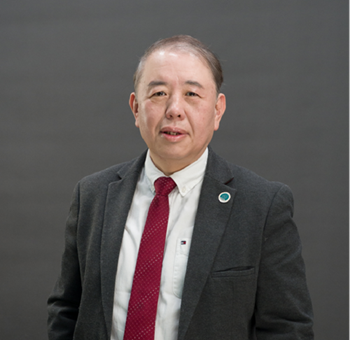
Professor Yu QiMD, Professor, Chief Physician, Doctoral SupervisorDirector and Academic Leader of the Department of Gynecological Endocrinology and Reproductive Medicine, Peking Union Medical College HospitalPresident-Elect of the Asia Pacific Menopause FederationAssociate Editor of Climacteric, official journal of the International Menopause SocietyGroup Leader of the Menopause Group, Society of Obstetrics and Gynecology, Chinese Medical AssociationVice President of China Medical Education AssociationChairman of the Reproductive Endocrinology Committee, China Medical Education AssociationChairman of the Gynecological Endocrinology and Menopause Branch, Chinese Society of Geriatric HealthDeputy Director of the Reproductive Endocrinology Special Committee, China Maternal and Child Health Research AssociationStanding Committee Member of the Reproductive Medicine Branch, Beijing Medical AssociationEditorial Board Member of Chinese Journal of Obstetrics and Gynecology, Chinese Journal of Osteoporosis and Bone Mineral Research, Practical Journal of Obstetrics and Gynecology, Chinese Journal of Practical Gynecology and Obstetrics, and Journal of Reproductive Medicine
Professor Yu has specialized in gynecological endocrinology for 30 years, covering clinical practice and research in infertility, assisted reproduction, menstrual disorders, menopause management, and disorders of sexual development. He has presided over multiple national research projects including the National Natural Science Foundation and key national science and technology research programs spanning the 10th to 14th Five-Year Plans, and has published more than 200 academic papers.
Editor in Charge: Qing Huan
Reviewer: Ma Ye