
In recent years, gynecological endoscopy technology in China has developed rapidly, with clinical prevalence continuously increasing. In particular, it has accumulated rich experience and extensive case data in the minimally invasive and non-invasive treatment of endometrious diseases such as adenomyosis. Meanwhile, European consensus on diagnosis and treatment, imaging standards, and long-term follow-up data in this field have also formed a systematic reference system. To promote in-depth exchanges between China and Europe in the field of minimally invasive gynecological diagnosis and treatment, Obstetrics and Gynecology Network specially invited Professor Ertan Saridogan, current president of the European Society of Gynecologic Endoscopy (ESGE) and a gynecologic surgeon at University College London, for an exclusive interview.
Professor Ertan Saridogan Professor of Gynecologic Surgery at University College London Current president of the European Society of Gynecologic Endoscopy Consultant He has served as President of the British Society of Gynecologic Endoscopy Former editor-in-chief of "Facts, Perspectives, and Perspectives: Journal of the European Society of Gynecologic Endoscopy." He was a member of the European Society for Human Reproduction and Embryology (ESHRE) endometriosis guideline development team, and participated in the drafting of guidelines in 2005, 2013, and 2022 Co-authored over 180 peer-reviewed papers, served as chief editor for 3 monographs, and wrote more than 30 monograph chapters Obstetrics and Gynecology Network: As the president of the European Society of Gynecologic Endoscopy (ESGE), from the perspective of European clinical practice and industry development, how do you view the development and popularization of gynecological endoscopy technology in China in recent years? What directions are worth learning from in China-Europe Diagnostic and Treatment Philosophy? Professor Ertan Saridogan, University College London and ESGE Chair: First, I would like to thank the Obstetrics and Gynecology Network for the invitation, which gave me the opportunity to communicate with everyone from a European perspective. As President of the European Society of Gynecologic Endoscopy, the first point I want to make is that, although our society is nominally a regional society for Europe, in reality it has a global character—our members come from 85 countries across all continents. Therefore, we hope to represent a global perspective, not just a European one. The second point is mainly based on my personal experience. About 15 years ago, when I came to Asia for clinical practice, I found that the field of minimally invasive gynecology in Asia, especially China, has developed very rapidly, with many talented peers emerging whose skills in laparoscopic surgery and pathological examination may even exceed the average I have seen in Europe. However, the problem at that time was that this technology was only applied in a few regions and had not yet spread to wider regions, so patients' medical options were limited to a few central regions. But in the past 15 years, the situation has changed significantly: minimally invasive surgery has begun to become more widely popular in China. The vast amount of clinical data accumulated by Chinese peers has made an important contribution to the global academic literature, as China's population is much larger than in other regions. For example, conditions like scar pregnancy from cesarean section or endometriosis have very few cases in Europe or North America, usually only 10 to 20 cases; Meanwhile, cases reported by Chinese counterparts can reach several hundred. This larger data volume clearly enhances statistical effectiveness. Therefore, data from China is extremely important, very helpful for clinical practice, and provides us with a more comprehensive global perspective. On the other hand, in some cases, China's clinical practice has already taken the lead in Europe and even the Western world. The treatment of adenomyosis is a typical example, whether surgical or non-surgical. Adenomyomectomy, which is the removal of adenomyoma lesions, is not widely practiced in Western countries and is performed by a small number of practitioners; In some Asian countries, including China, this has become a routine treatment. In non-surgical treatments, such as using high-frequency ultrasound to treat adenomyosis, clinical experience in Western countries is very limited, but it is quite common in China. A large number of patients receive high-frequency ultrasound treatment, creating favorable conditions for the development of adenomyosis treatment. From these examples, it is clear that in some areas, Europe or Western countries are doing better, but in many areas, Chinese counterparts have already taken the lead, are more experienced, and have more patient data. Therefore, much of our clinical experience is worth learning from each other. These examples also provide strong arguments for us to cooperate and build partnerships. Obstetrics and Gynecology Network: Endometriosis and other endometrioid-related diseases are also frequently prevalent in European clinical practice. Based on European consensus in diagnosis and treatment, what do you think is the biggest challenge in current clinical diagnosis and treatment? Professor Ertan Saridogan, University College London and ESGE Chair: Before the advent of high-quality imaging techniques, the diagnosis of adenomyosis was often delayed and usually required medical history to confirm the diagnosis. But now things are different. With the development of ultrasound imaging and MRI technology, adenomyosis can now be diagnosed before surgery. Nowadays, ultrasound diagnosis is widely used in diagnosing adenomyosis. But I believe we still need to accumulate more experience in identifying their homological features. Currently, the characteristics of adenomyosis are clearly described in European clinical guidelines, and other regions also have documents covering related content, such as the MUSA standard. Ultrasound imaging, as a simple and widely applicable technique, can help us detect adenomyosis early. Therefore, this is an important advancement. If doctors worldwide could become familiar with the standards for using ultrasound imaging in diagnosing adenomyosis, ultrasound diagnosis would become relatively easier, and this disease would not easily be overlooked. The second aspect is obviously magnetic resonance imaging (MRI). MRI is also a reliable imaging technique for diagnosing adenomyosis. In Western countries, although MRI is already available and becoming increasingly popular, its use in large populations is still somewhat limited. I'm not quite sure how widespread MRI is in China, but if MRI scans are conveniently available, it would not only help improve the diagnosis of adenomyosis but also facilitate subsequent treatment and management. As mentioned earlier, in both surgical and non-surgical treatments for adenomyosis, some Asian countries, including China, are ahead of us. We are also actively learning from the experiences of our Asian peers, striving to improve clinical outcomes for adenomyosis patients. Currently, there is still debate over whether patients with adenomyosis should undergo surgical or conservative treatment. Surgeries that preserve the uterus and remove lesions are usually aimed at preserving fertility, but these procedures carry significant risks. However, current conclusions are mainly based on a few case studies (involving only a few hundred patients), so we need more data to support this to determine whether this is the most appropriate treatment option for patients. I believe non-surgical treatment is the future direction for adenomyosis diagnosis and treatment. We will provide treatment to more patients through non-surgical therapies, such as using high-frequency ultrasound to control symptoms and preserve the uterus, helping patients realize their future wishes for fertility. Obstetrics and Gynecology Network: LNG-IUS is widely used for endometrial-related diseases. Based on long-term clinical data from Europe, how do you evaluate its core value in symptom control, endometrial protection, and improving patients' long-term prognosis and quality of life? Professor Ertan Saridogan, University College London and ESGE Chair: In my view, LNG-IUS is a magical tool. Since I received my specialist training, it has accompanied me for decades of clinical work and has completely transformed the diagnosis and treatment model in gynecology. In earlier years, treatment options for patients with heavy menstruation were very limited. In the early days of my career, many patients ultimately had to undergo hysterectomy. Now, with the widespread use of LNG-IUS, many unnecessary hysterectomys have been avoided, and the number of such surgeries has significantly decreased. LNG-IUS is highly effective in treating heavy menstruation. Even if the patient's uterus is basically normal and there is no concurrent adenomyosis or fibroids, it can still be effective. Current data confirm that LNG-IUS is highly effective for patients with adenomyosis, and it is also suitable even for patients with uterine fibroids. Therefore, LNG-IUS is a highly valuable treatment tool in our clinical work. We also use LNG-IUS to protect the endometrium for patients undergoing hormone replacement therapy. For example, for women in perimenopause who suffer from menstrual abnormalities such as heavy menstruation and dysmenorrhea, LNG-IUS is an ideal choice. We can first use it to relieve menstrual discomfort; If the patient later decides to undergo hormone replacement therapy, LNG-IUS can continue to be used to protect the endometrium. Currently, this has become a commonly adopted clinical protocol in Western countries. In addition, when hormone replacement therapy causes irregular bleeding that is difficult to control, LNG-IUS can also be effective. Oral progestogens and transdermal progestogens are generally less effective than intrauterine levonorgestrel and often cannot solve bleeding problems, whereas LNG-IUS can mostly effectively improve these issues. In addition, there is a special group of women at risk of developing endometrial hyperplasia or even endometrial cancer. Even if we do not use LNG-IUS for hormone replacement therapy, this highly effective progesterone preparation plays a key role in reducing the risk of endometrial hyperplasia and endometrial cancer. High-risk groups include patients with polycystic ovary syndrome and obese women with elevated endogenous estrogen levels, who are at higher risk of developing endometrial hyperplasia and cancer. For these patients, LNG-IUS is also an effective treatment option. In this exclusive interview, Professor Ertan Saridogan pointed out from a global perspective that China is already at the forefront of the world in adenomyosis treatment and patient big data accumulation. At the same time, he emphasized the crucial role of high-quality imaging examinations in the early diagnosis of adenomyosis. In the interview, Professor Saridogan clearly stated that non-surgical treatment will be an important development in managing adenomyosis. China and Europe should build closer cooperation and partnerships based on their respective strengths and experiences to jointly improve reproductive health outcomes for women worldwide.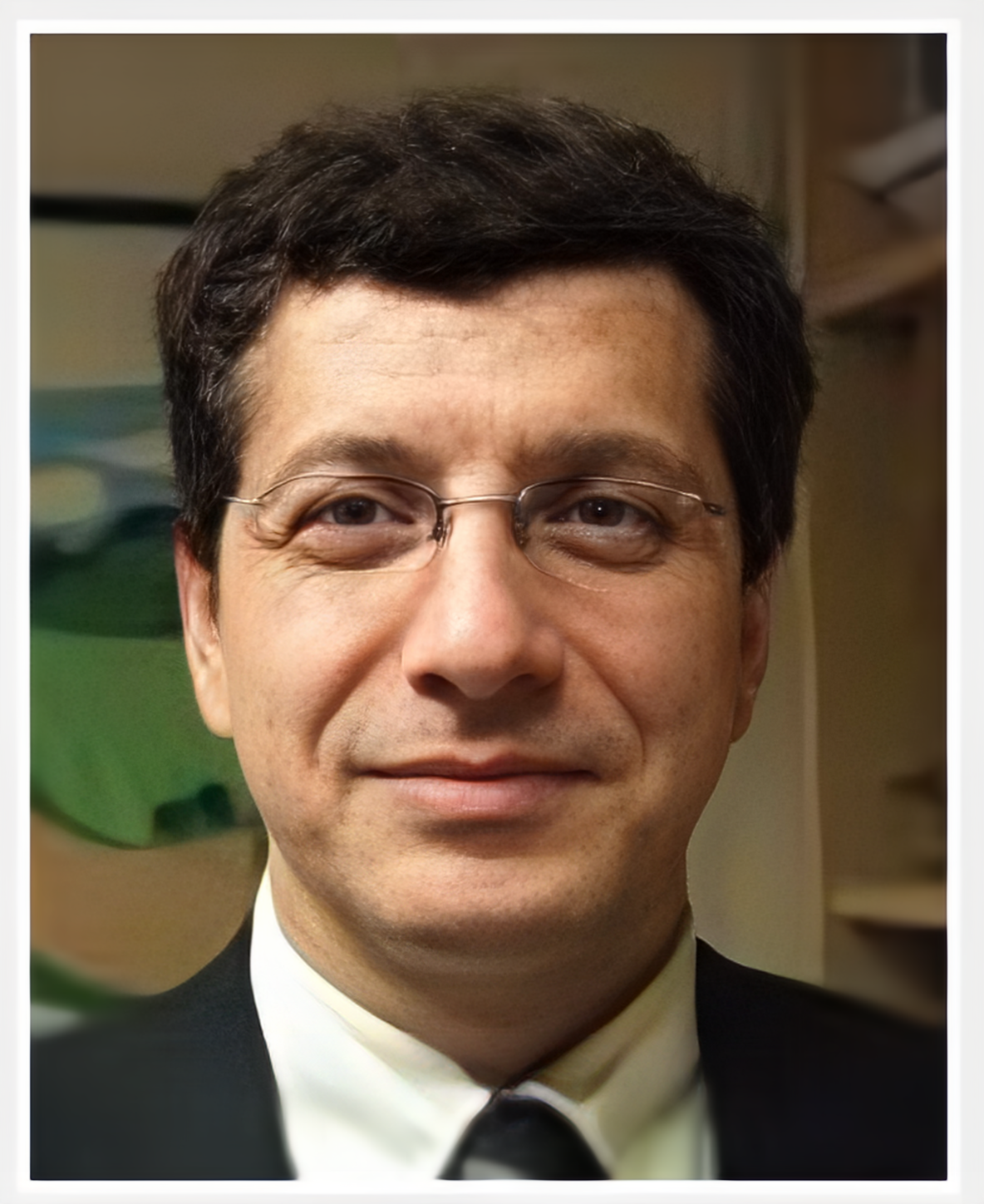
in reproductive medicine and minimally invasive surgery at University College London Hospital
Editor:lucy