
Surgical treatment of uterine diseases is gradually shifting from "lesion removal" to a new stage that emphasizes both "functional reconstruction and long-term management." Whether it is the reconstruction of uterine cavity morphology for severe intrauterine adhesions, the layered application of the intrauterine levonorgestrel release system in postoperative recurrence prevention, or the precise remodeling of complex lesions such as uterine malformations and cesarean scar defects, all these places higher demands on the operator's technical concepts, anatomical knowledge, and comprehensive perioperative management skills.
The Obstetrics and Gynecology Network is honored to invite Professor Ma Ning from Fuxing Hospital Affiliated to Capital Medical University to share insightfully on the above clinical challenges and hot topics.
Expert Profile Professor Ma Ning Capital Medical University Affiliated Fuxing Hospital ❖ Chief Physician, Fuxing Hospital Affiliated to Capital Medical University ❖ The last disciple of Professor Xia Enlan, mother of hysteroscopy ❖ In 2009, visited the University of Sheffield Hospital in the UK as a visiting scholar, followed Professor T.C.Li on research related to recurrent miscarriage, and later obtained Professor Zhang Zhenyu's doctoral degree ❖ Published multiple academic papers in total ❖ Participated in the writing/translation of multiple monographs ❖ Has undertaken provincial, ministerial, and municipal projects as project leaders ❖ To date, he has served as a committee member, expert committee member, vice chairperson, and vice president of 12 academic organizations ❖ Skilled in minimally invasive techniques (hysteroscopy) for the diagnosis and treatment of benign gynecological diseases, including intrauterine adhesions and abnormal uterine bleeding (endometrial hyperplasia, endometrial polyps, uterine scar diverticula, submucosal fibroids); Female reproductive tract malformations such as: mediastinum, unicornuate uterus, T-shaped uterus, etc.; Family planning-related issues include: abnormal site pregnancy, retained fetal material, residual/ectopic IUD, etc.; Reproductive and recurrent miscarriage-related diseases such as endometritis, endometriosis, cervical insufficiency, etc.; Some gynecological tumors include uterine fibroids, ovarian cysts, cervical precancerous lesions, precancerous endometrial lesions, and early endometrial cancer care surgeries. Rich clinical experience and meticulous thinking, providing individualized treatment for difficult or complex cases; Gentle operation and delicate techniques fully protect the endometrium and fertility during treatment ❖ Member of the New Media Communication Committee of the People's Health Channel (CHTV) of the National Health Commission and member of the Health Science Popularization Working Committee of the Beijing Integrative Medicine Association, conducting long-term health science education on multiple new media platforms Obstetrics and Gynecology Network: You have long been dedicated to hysteroscopic uterine cavity morphological reconstruction, and severe intrauterine adhesions are a clinical challenge in treatment. Please discuss the core technical points of current intrauterine reduction surgery from the perspectives of endometrial protection, scar release, and anatomical reduction, and how to reduce postoperative readhesions and preserve fertility potential through standardized procedures. Professor Ma Ning from Fuxing Hospital affiliated with Capital Medical University In the treatment of severe intrauterine adhesions, a current clinical focus is the choice between cold and hot knife techniques. However, we need more powerful weapons. As Professor Xue Xiang pointed out at the academic conference, the rational selection of energy devices, such as low-temperature plasma electrosurgical techniques, can effectively protect the endometrium while achieving precise separation of scar tissue. Therefore, choosing the right equipment is the top priority. Second, mastering the anatomy of the uterine cavity is crucial. Taking Professor Huang Xiaowu's cervical atresia treatment as an example, for adhesions in the lower segment of the uterine cavity or cervical area, the procedure entering the uterine cavity requires good monitoring and guidance. Ultrasound-guided or laparoscopic procedures help maximize the identification of normal uterine planes, thereby ensuring surgical safety. Third, accurately identify bilateral fallopian tube openings. Bilateral fallopian tube openings are important anatomical landmarks and serve as beacons. On this basis, the surgeon can clarify the normal anatomical plane, open up a sufficiently large uterine cavity volume, remove scar tissue, and restore the normal shape of the uterine cavity. After surgery, combined with medications that promote endometrial growth and barrier measures to prevent adhesions, comprehensive treatment will yield positive clinical results for patients with severe intrauterine adhesions. Obstetrics and Gynecology Network: The intrauterine release system of levonorgestrel is widely used in the prevention and control of postoperative recurrence of diseases such as intrauterine adhesions, endometrial hyperplasia, and abnormal uterine bleeding. Leveraging the advantages of precise hysteroscopy diagnosis and treatment, how can we stratify the target population, optimize intraoperative immediate placement strategies, and achieve integrated diagnosis and treatment of surgical intervention and long-acting hormone management? Professor Ma Ning from Fuxing Hospital Affiliated to Capital Medical University: This is actually a very big issue because it involves multiple diseases. The levonorgestrel intrauterine release system is a progesterone sustained release system, essentially a drug reservoir, mainly placed in the uterine cavity to treat endometrial-related diseases such as endometrial hyperplasia, even atypical hyperplasia, and to prevent postoperative recurrence of endometrial polyps. However, in patients with intrauterine adhesions, the application of this system is relatively limited. For patients whose main symptoms are bleeding and pain, placing a levonorgestrel intrauterine release system can provide long-term therapeutic effects and effectively prevent disease recurrence. For patients with heavy bleeding, there is a risk of intrauterine device detachment. Currently, various technical methods such as fixation and suturing are available to address this issue. At last year's related academic conference, five speakers gave talks on the fixation and suturing techniques of intrauterine devices. The core of these methods is to riveted the IUD into the uterine cavity to prevent it from falling off, thereby ensuring its sustained efficacy. It should be noted that suturing fixation technology has a high technical threshold, involving drug pretreatment, instrument preparation, suturing techniques, etc., and requires thorough evaluation before surgery. Suture fixation is not a routine procedure, but a measure used for people at high risk of detachment. These high-risk factors include massive bleeding, a large uterus, adenomyosis, and cervical laxity. During routine outpatient procedures, GnRH-a pretreatment can be performed to reduce the uterus to its normal size and place it normally. If the IUD is moving downward, we use the riveting method to address it. Obstetrics and Gynecology Network: For complex uterine lesions such as uterine malformations and cesarean scar defects, detailed hysteroscopic reconstruction places higher demands on the surgeon and preoperative evaluation. Compared to conventional hysteroscopic surgery, what innovations and advantages does combining refined plastic surgery with long-term postoperative management offer in terms of diagnosis and treatment philosophy and long-term prognosis? Professor Ma Ning from Fuxing Hospital Affiliated to Capital Medical University: In the diagnosis and treatment of uterine malformations, a clear diagnosis is the primary step. Academician Zhu Lan has given a lecture on topics related to uterine malformations at academic conferences. The conference also covered topics related to obstructive reproductive tract malformations and shared recent research progress in the field of uterine mediastinum by Professor TC.Li. Overall, obstructive reproductive tract malformations have clear surgical indications. If the appropriate treatment conditions are not available or the surgeon lacks experience, it is recommended to promptly refer to a higher-level medical institution. An unsuccessful surgery may adversely affect subsequent treatment, such as leading to complications from reproductive tract fistulas. In recent years, new advances have shifted the treatment perspective on the mediastinum uterus. In the past, most doctors did not recommend surgery, but now, with advances in hysteroscopy technology, deeper understanding of deformities, and increased proficiency in the procedure, reproductive outcomes for patients after mediastinal correction have significantly improved. In 2026, a large cohort study on the uterine mediastinum published by the Hysteroscopy Center of Fuxing Hospital affiliated with Capital Medical University also supports this view. For mediastinal patients, it is recommended that experienced doctors provide diagnosis and treatment with a solid foundation in anatomy. For patients with uterine scar diverticulum, a thorough preoperative assessment of the patient's condition should be conducted, including residual muscle layer thickness, presence of effusion, presence of excessive bleeding, and fertility requirements. Based on a comprehensive assessment, select the appropriate surgical method, such as preliminary hysteroscopic evaluation and treatment, combined uterine and abdominal surgery, vaginal surgery, etc. Of course, it also needs to be combined with the practitioner's own technical skills. Choosing the appropriate surgical method requires evaluating both the patient and your own technical level.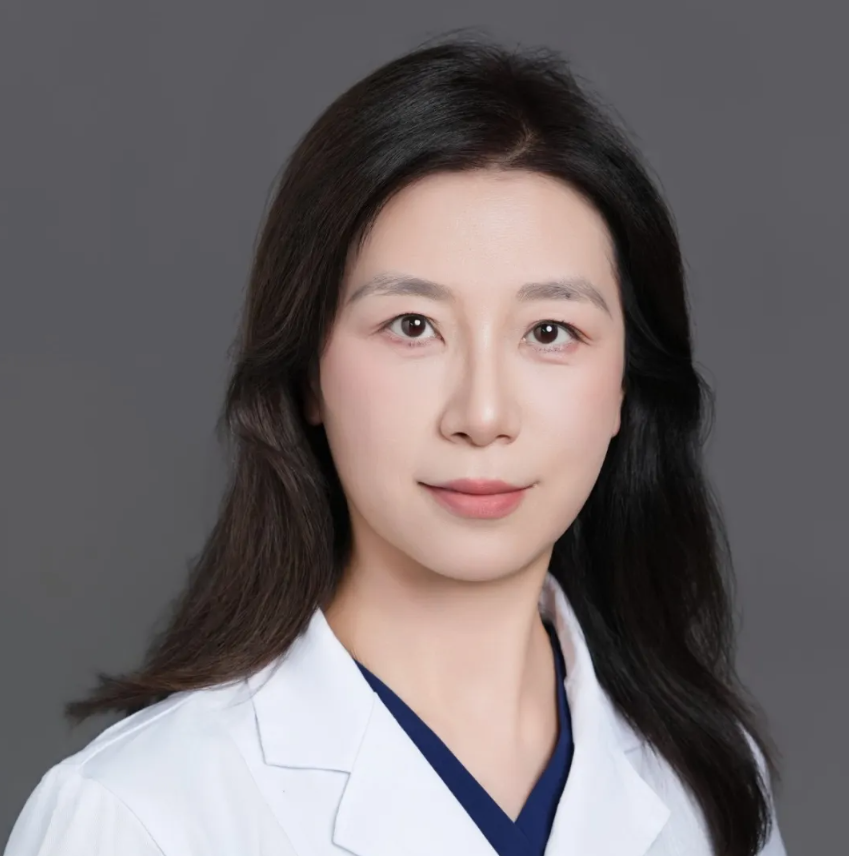
Editor:lucy