
Adenomyosis, severe dysmenorrhea, and abnormal uterine bleeding are common gynecological diseases that have long faced challenges such as limited treatment options and high recurrence rates in clinical practice. Hysteroscopy technology provides a precise placement path for intrauterine drug sustained-release therapy for this type of disease. However, in clinical practice, how to accurately grasp the timing and indications for placement under hysteroscopy to improve the success rate and retention of the device remains a challenge for many gynecologists. Additionally, postoperative dropping and dropping of the device, as well as prolonged spotting bleeding after installation, are major complications affecting efficacy and patient compliance.
In response to these situations, how to leverage the advantages of hysteroscopic procedures to standardize intraoperative and postoperative management and long-term management, minimize complications, and ensure clinical efficacy urgently requires systematic answers. Obstetrics and Gynecology Network is honored to invite Professor Chi Yugang from Chongqing Maternal and Child Health Hospital to share insightfully on topics related to hysteroscopic ring placement and standardized surgical procedures.
Professor Chi Yugang
Chongqing Maternal and Child Health Hospital
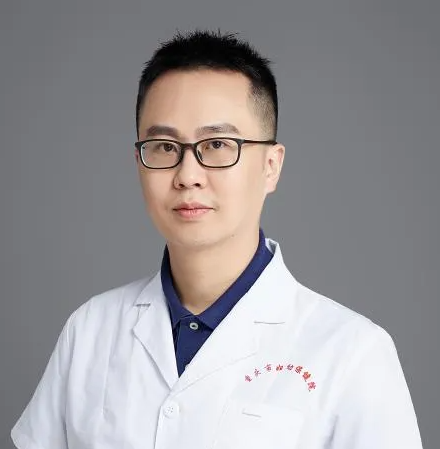
❖ Doctor of Medicine, Chief Physician of Obstetrics and Gynecology, Professor, Master's Supervisor
❖ Director of the Obstetrics and Gynecology Teaching and Research Office at Chongqing Maternal and Child Health Hospital, Director of the First Gynecology Department (General Gynecology).
❖ Main research direction: minimally invasive gynecological treatment (hysteroscopy)
❖ High-level talent in Yuzhong District, Chongqing
❖ Chongqing Young and Middle-aged Medical High-End Talent
❖ Visiting scholar at the Medical School affiliated with the University of Hamburg, Germany; one year of training at the University of Tokyo, Japan
❖ Deputy Director of the Youth Committee of the Obstetrics and Gynecology Branch of the Chongqing Medical Doctor Association
❖ Deputy Director of the Hysteroscopy Technical Standards Training Base of the Chongqing Medical Doctor Association
❖ Deputy Director of the Intrauterine Diseases and Minimally Invasive Reproductive Relations Committee of the Chongqing Medical Doctor Association
❖ Deputy Head of the Reproductive Health Group, Family Planning and Eugenics Branch, Chongqing Medical Association
❖ Deputy Director of the Youth Committee of the Family Planning and Eugenics and Parenting Branch
❖ Deputy Leader of the Ablation Therapy Group, Focus Ultrasound Therapy Branch of Chongqing Medical Association
❖ Member of the Gynecological Day Surgery Expert Committee of the China Day Surgery Alliance
❖ Specializes in gynecological endoscopic surgeries, independently performing approximately 15,000 hysteroscopic procedures of various types
❖ Published 49 papers in domestic and international journals, and led or led research on 14 provincial, ministerial, and bureau-level research projects
❖ Participated in the formulation of 2 Chinese group standards, contributed to 4 Chinese expert consensus articles, obtained 3 national invention patents, and held 1 utility model patent
Obstetrics and Gynecology Network: In clinical practice, hysteroscopic placement of LNG-IUS is widely used. For patients with adenomyosis, severe dysmenorrhea, and abnormal uterine bleeding, how can the optimal timing and indications for inserting a hysteroscopic IUS be determined to improve the success rate?
Professor Chi Yugang from Chongqing Maternal and Child Health Hospital:
This is a very common clinical issue. The levonorgestrel intrauterine sustained-release system was introduced to the Chinese market around 2000.
Abroad, the indications for LNG-IUS include the following four points:
1. Contraception, which is the main function of the product;
2. For increased menstrual flow;
3. Targets menstrual pain;
4. Locally antagonistic to increase estrogen.
When the product entered China, it was only approved for contraception. Therefore, the promotion of LNG-IUS focuses on its 99.99% contraceptive effectiveness.
Years later, China approved another indication: increased menstrual flow. For gynecologists, the most common cause of increased menstrual flow is abnormal uterine bleeding (AUB), which is caused by PALM-COEIN. AUB can be divided into organic and non-organic types. Among organic causes, adenomyosis is the most common, which can lead to dysmenorrhea and increased menstrual flow.
Abroad, LNG-IUS is mainly used for contraception, but in the minds of Chinese gynecologists, it has almost become synonymous with treating dysmenorrhea and controlling increased bleeding. Therefore, in recent years, this product has been widely used in clinical practice in China.
However, there is a contradiction: many patients with adenomyosis have large uteruses themselves, while the currently used LNG-IUS in China has a diameter of 32 millimeters × 32 millimeters. Placing them inside a larger uterine cavity can easily cause dislodgement. Clinical reports show a dropout rate of about 12%.
Regarding the timing and indications for LNG-IUS placement, the following issues need attention in actual clinical application:
First, whether the patient has contraindications to synthetic progestogen use;
Second, the size of the uterus. For patients with adenomyosis who need LNG-IUS placement, it is recommended to keep the uterine cavity depth at around 10 centimeters;
Third, whether the symptoms of dysmenorrhea are severe;
Fourth, whether severe dysmenorrhea combined with heavy menstruation has led to anemia, which may then lead to secondary displacement.
If you place it directly without fully understanding the above conditions, it may increase the risk of falling off.
Clinical studies have also found that for patients with larger uteruses using LNG-IUS, the risk of iatrogenic abnormal uterine bleeding increases. In addition, it is also necessary to pay attention to whether the patient has fertility needs.
Recently, we have been organizing the drafting of an expert consensus on adenomyosis combined with infertility, expected to be published by the end of this year. This will cover many of the latest domestic and international research advances, as well as indications and precautions for LNG-IUS use.
Professor Chi Yugang from Chongqing Maternal and Child Health Hospital:
Regarding the concept of LNG-IUS displacement, China currently defines it as: when the T-type LNG-IUS is more than 2 cm from the uterine serosal surface, or more than 1 cm from the uterine floor of the uterine cavity, it is considered displacement. These are the specific values provided by ultrasound imaging.
As I mentioned earlier, for patients with a larger uterus (over 10 cm), severe dysmenorrhea, and heavy menstrual flow, pre-treatment is needed during the placement of LNG-IUS. This is the first point.
Second, the timing of placement should be arranged as much as possible on the 4~5th day of the patient's menstruation, that is, as close to the end of menstruation as possible. Because the endometrium is thinner at this time, the risk of abnormal uterine bleeding is relatively low.
Third, if bleeding does occur after LNG-IUS placement, bleeding usually occurs within 3 to 6 months after placement. Generally, bleeding decreases significantly three months after surgery. If obvious bleeding persists after 3 months and the patient is anxious, oral short-acting contraceptives, nonsteroidal anti-inflammatory drugs, oral hemostatic drugs, or mifepristone can be used, all of which are feasible.
Moreover, the most important point is that thorough communication with the patient should be conducted before placing the LNG-IUS. LNG-IUS contains levonorgestrel in the sustained-release intrauterine system, with a daily release rate of about 20 micrograms over the first five years. This release mainly acts on the endometrium, with minimal effects on the uterine muscle layer, distant organs, as well as blood lipids, liver function, and kidney function.
In clinical practice, if a patient has three types of breast nodules, can LNG-IUS be placed? The answer is yes, but close follow-up is required.
Editor:lucy