
Maternal and child health is the cornerstone of the health of the entire population. Improving the quality of the birth population and strengthening maternal and infant safety are key to achieving high-quality population development in China's new era. To promote the implementation of the three-tier prevention and control system for birth defects, accelerate the transformation of cutting-edge prenatal technologies, and improve a full-cycle fertility-friendly service model, the Obstetrics and Gynecology Network has invited Professor Yin Chenghong from Beijing Obstetrics and Gynecology Hospital, Capital Medical University, to share insights on comprehensive birth defect prevention and control, high-risk pregnancy management, fertility-friendly healthcare system development, and the high-quality advancement of obstetrics and gynecology disciplines. The aim is to provide authoritative professional guidance for peers in obstetrics and gynecology and contribute to the high-quality development of maternal and child health.
Expert Profile
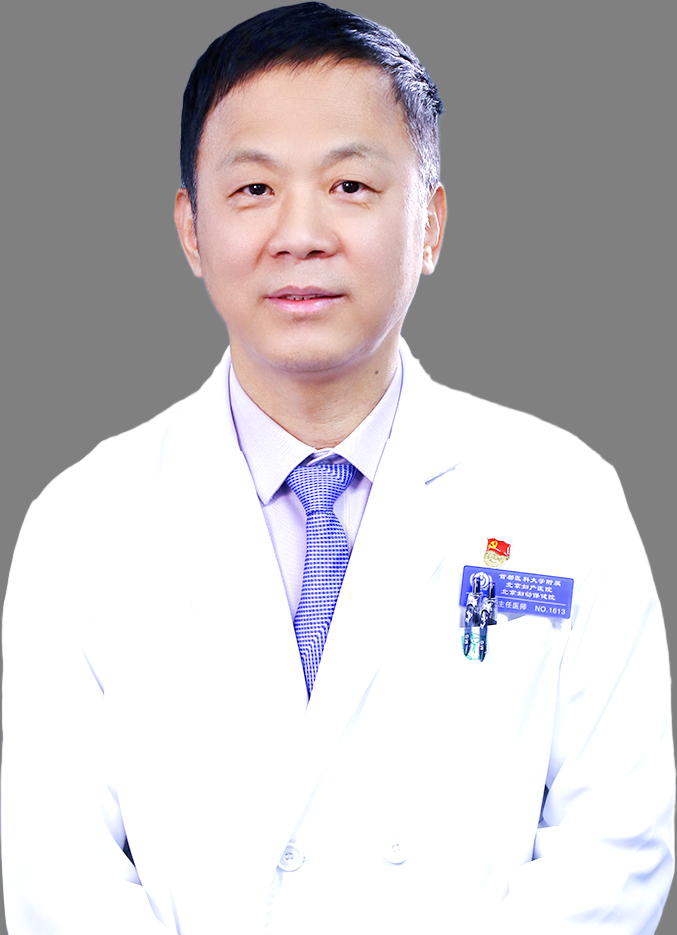
Professor Yin Chenghong
Professor, Chief Physician, Doctoral Supervisor, Beijing Obstetrics and Gynecology Hospital, Capital Medical University
❖ Director, Department of Obstetrics and Gynecology, Capital Medical University
❖ Standing Committee Member, Obstetrics and Gynecology Branch, Chinese Medical Doctor Association
❖ Vice President, China Maternal and Child Health Association
❖ Director, Medical Risk Prevention and Control Professional Committee
❖ Director, Obstetrics and Gynecology Hospital Professional Committee, China Hospital Management Association
❖ Led 36 projects including the 13th and 14th Five-Year National Key R&D Programs and National Natural Science Foundation of China projects
❖ Published 240 SCI-indexed papers
❖ Served as Editor-in-Chief, Deputy Editor-in-Chief, or Deputy Chief Translator for 35 medical monographs
❖ Received over 10 awards, including the Second Prize of Beijing Science and Technology Progress Award
❖ Recognized as a National Young and Middle-aged Expert with Outstanding Contributions to Health and Family Planning, awarded the Capital Labor Medal, Beijing Advanced Worker, selected as a Beijing Scholar, and enjoys the State Council Special
Government Allowance
Obstetrics and Gynecology Network: You led the establishment of Beijing's first one-stop prenatal diagnosis center and directed the construction of related key laboratories. Based on clinical practice, what are the core challenges in China's birth defect prevention and control, and what breakthrough measures has the hospital implemented in technological innovation and full-process prevention and control?
Professor Yin Chenghong: With the implementation of the three-child policy, the proportion of older and high-risk pregnant women in China has increased significantly, raising the risk of birth defects. Strengthening prenatal screening and diagnosis, improving birth defect prevention and control, and enhancing population quality have become imperative. The National Health Commission explicitly requires each city to establish at least one prenatal diagnosis center to optimize healthcare accessibility for the public.
Based on clinical needs, our hospital established Beijing's first one-stop prenatal diagnosis center seven or eight years ago. This center integrates prenatal diagnostic physicians, obstetricians, genetic counseling specialists, ultrasound diagnosticians, and clinical procedures such as amniocentesis and umbilical vein puncture within the same space. This has fundamentally transformed the previous healthcare model, where patients had to visit multiple departments and floors, significantly improving consultation efficiency and patient experience.
Regarding technological innovation, our prenatal diagnosis center conducted the world's first clinical application of non-invasive prenatal screening (NIPT) in 2010, and the technology has since been widely promoted both domestically and internationally. Under the guidance of Academician Huang Hefeng, we further advanced the research on NIPT 2, a new-generation non-invasive prenatal screening technology. Utilizing the Co-ordinate Allele-targeted Enrichment (CATE) technology, it enables the simultaneous screening of chromosomal aneuploidies, chromosomal microdeletions/microduplications, and monogenic diseases from a single blood sample. This has increased prenatal screening efficiency from 10% to 30%, allowing for earlier detection of a wider range of birth defects and providing a basis for clinical medical intervention.
➱ In terms of full-process prevention and control, our hospital has established a comprehensive system covering primary, secondary, and tertiary prevention:
With secondary prevention as the core, technologies such as ultrasound diagnosis, serological screening, and non-invasive prenatal diagnosis are utilized to achieve early screening and diagnosis of fetal abnormalities.
Simultaneously, tertiary prevention is enhanced through the neonatal disease screening center, offering integrated services for screening, diagnosis, treatment, management, and prevention of neonatal birth defects like genetic metabolic disorders. This ensures early intervention and healthy growth for children with birth defects.
Obstetrics and Gynecology Network: Considering the current low fertility rate and fertility-friendly policies, how do you think specialized obstetrics and gynecology hospitals can leverage their strengths, balance clinical practice, research, and industry leadership, and inject new momentum into the development of maternal and child health?
Professor Yin Chenghong: In the face of the low fertility trend, specialized obstetrics and gynecology hospitals and maternal and child health institutions need to focus on fertility-friendly healthcare system development, coordinate clinical practice, research, and industry leadership, and provide comprehensive support for maternal and child health development.
Our hospital has established an Early Pregnancy Care Clinic, integrating multidisciplinary experts in genetic counseling, family planning, obstetrics, ultrasound, and pharmacy. Its core objectives are to reduce unintended pregnancy terminations, assist in embryo retention and successful pregnancies, and provide one-stop services for pre-pregnancy, early pregnancy, and full-cycle prenatal checkups and health management. This aims to help increase the birth population. It is expected that standardized Early Pregnancy Care Clinics will be fully established nationwide in obstetrics, gynecology, and maternal and child health institutions by 2030.
➱ The development of fertility-friendly hospitals requires hospital-wide collaboration and multidisciplinary coordination:
Obstetrics: Standardize medical record establishment, prenatal checkups, prenatal screening, and diagnosis to ensure maternal and infant safety.
Gynecology: Provide pre-pregnancy diagnosis, treatment, and health management for gynecological diseases, helping women achieve "healthy conception."
Reproductive Medicine: Standardize infertility diagnosis and treatment. With coverage by medical insurance policies, costs related to in vitro fertilization (IVF) can be reduced by about two-thirds, improving the accessibility of the technology.
Ultrasound, Laboratory, and Pharmacy Departments: Provide precise auxiliary diagnosis and guidance on medication safety during pregnancy, supporting full-cycle medical services.
Building on clinical practice, it is essential to simultaneously advance scientific research and innovation. Research should focus on key obstetric diseases such as gestational diabetes, gestational thyroid disorders, and gestational hypertensive disorders. This will promote the clinical translation of new concepts and technologies, continuously ensure maternal safety, and drive the high-quality development of fertility-friendly initiatives and maternal and child health through the dual engines of clinical practice and research.
Obstetrics and Gynecology Network: In the context of the current high-quality development of the medical industry, what core strategies do you believe hospitals should adopt for discipline echelon construction and talent cultivation? How can teams with professional competence, innovative spirit, and compassionate medical ethics be built?
Professor Yin Chenghong: Talent is the core driving force for the high-quality development of hospitals, and discipline and talent echelon construction are key supports for hospital development.
➱ The core strategies for talent cultivation in our hospital are as follows:
Hierarchical Construction of Discipline Leaders: Refine the talent hierarchy in each department, select excellent discipline leaders, and provide them with specialized support. Encourage them to participate in exchange programs at top domestic and international institutions to enhance their leadership capabilities in their respective fields.
Systematic Training of Young Physicians: Strengthen the foundational clinical skills of young physicians. Encourage outstanding young professionals to conduct visiting research abroad for one year or more, absorb international cutting-edge advancements, and promote technology introduction, research translation, and clinical application, thereby building a talent reserve for the hospital.
Strengthening Mentor Team Development: Encourage early involvement of young physicians in teaching, support their promotion to lecturers, associate professors, and professors, and improve the echelon of master's and doctoral supervisors. Accelerate the growth of young talents through the cultivation of master's, doctoral, and in-service graduate students.
Establishing Postdoctoral Research Platforms: Set up postdoctoral sub-stations in specialties such as gynecology, obstetrics, medical imaging, and internal medicine. Attract postdoctoral researchers to conduct high-level studies, enhancing the hospital's research capabilities and the quality of talent cultivation.
Through the above system, the aim is to build medical teams with solid professional competence, a strong innovative spirit, and unwavering compassionate medical ethics. High-quality talent will support discipline development and the upgrading of medical services, providing patients with high-quality, safe maternal and child healthcare.
From the innovative practice of the one-stop prenatal diagnosis center to the comprehensive construction of a fertility-friendly service system, and the systematic development of discipline and talent echelons, Professor Yin Chenghong, with profound disciplinary expertise and strategic foresight, has charted a course for maternal and child health work in the new era. In the future, we look forward to safeguarding maternal and infant health, improving the quality of the birth population, and continuously injecting new momentum into China's maternal and child health endeavors with a more robust birth defect prevention and control system, higher-quality fertility-friendly services, and stronger talent and discipline support, thereby steadily advancing the Healthy China initiative.
Editor: Lily