

Urethral Ligament Plasty (ULP)
Incision and Exposure
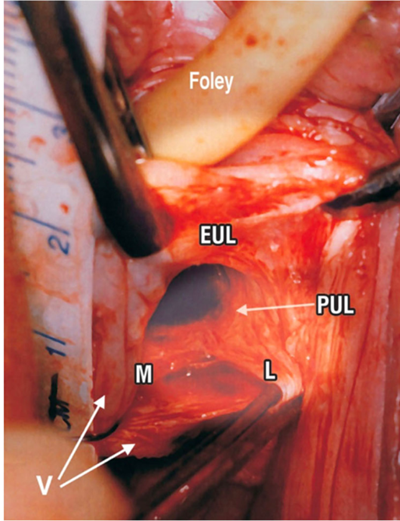
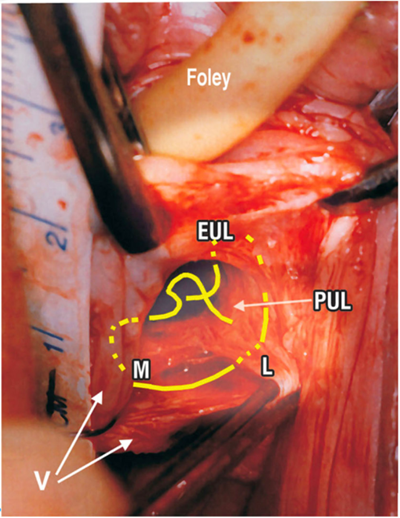
A longitudinal incision is made in the paraurethral groove from the external urethral orifice to the bladder neck, with a length of about 3–4 cm, to fully expose the underlying structures such as the pubourethral ligament (PUL), external urethral ligament (EUL), and pubococcygeus muscle (PCM).
Suture Position and Ligament Plication
- Medially: the urethral and pubic parts of the pubourethral ligament, as well as the external urethral ligament;
- Laterally: part of the pubococcygeus muscle.
Knotting and Fixation
Take care not to tie the knots too tightly to avoid postoperative dysuria.
Case History
Patient Information
Chief Complaint
History of Present Illness
Past History
Obstetric and Gynecologic History
Menstrual History
Gynecological Examination
- Vulva: normal development.
- Vagina: unobstructed, small amount of white, odorless discharge.
- Cervix: smooth, atrophic, medium consistency, no tenderness on motion or swinging.
- Uterus: anteverted, atrophic, medium consistency, mobile, non-tender.
- Bilateral adnexa: no masses palpable, non-tender.
- Cough test: positive.
- Marshall test (digital pressure test): positive.
Auxiliary Examinations
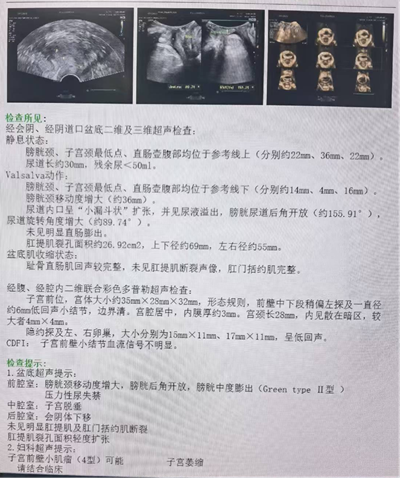
- Anterior compartment: increased bladder neck mobility, moderate cystocele (Green type II), open posterior urethral angle, stress urinary incontinence.
- Middle compartment: uterine prolapse.
- Posterior compartment: perineal body descent.
No obvious rupture of levator ani or anal sphincter; mild expansion of levator ani hiatus area.
2.Gynecological color Doppler ultrasound: small myoma in the anterior uterine wall, uterine atrophy.
Admission Diagnosis
- Stress urinary incontinence
- Hypertension
Uterine myoma
Surgical Procedure
Postoperative Condition
The urinary catheter was removed on the 2nd postoperative day.
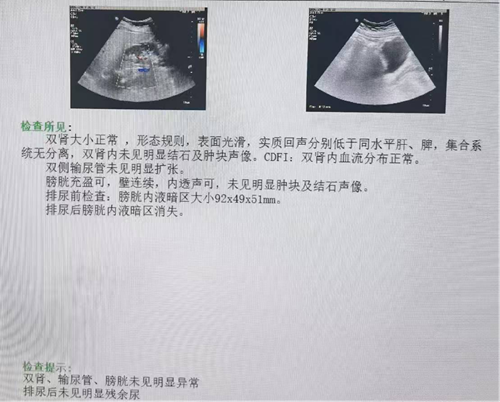
Postvoid Residual Urine Examination
About the Surgeon

Xiao Binmei
Chief Physician, Department of Gynecology, Xiangya Hospital, Central South University- Visiting Scholar, Red Cross Hospital Chemnitz, Germany; and University of California Davis Medical Center, USA
- Vice Chairman, Youth Committee of the 1st Committee of Gynecology Branch, Chinese Geriatrics Society
- Expert Member, Professional Group of Minimally Invasive Treatment for Female Genital Reconstruction, Chinese Association of Plastics and Aesthetics
- Vice Chairman, Pelvic Floor Professional Group, Hunan Female Physicians Association
- Vice Chairman, Pelvic Floor Professional Committee, Hunan Rehabilitation Medicine Association
- Vice Chairman, Hunan Professional Committee for Prevention and Treatment of Female Pelvic Floor Dysfunction
About the Supervising Expert
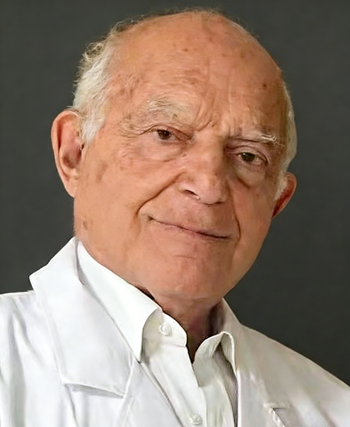
- Doctor of Science (University of Western Australia)
- Doctor of Surgery (University of Western Australia)
- Doctor of Medical Sciences (Uppsala University)
- Bachelor of Medicine/Bachelor of Surgery (University of Sydney)
- Doctor of Medicine (University of Sydney)
- Fellow, Royal College of Obstetricians and Gynaecologists (London)
- Fellow, Royal Australian and New Zealand College of Obstetricians and Gynaecologists
- Pelvic floor surgeon, gynecologist and urogynecologist
In 1990, together with the late Professor Ulmsten of Uppsala University, he co-proposed the Integral Theory, a major breakthrough from the previous view that urinary incontinence originated from the bladder itself. The theory holds that stress urinary incontinence and urge urinary incontinence are mainly caused by relaxation of the vagina or its supporting ligaments. Based on this theory, he pioneered various anti-incontinence surgeries such as TVT-O and UPL (Urethral Pubic Ligament Plication), and published more than 360 pelvic floor-related papers and studies.